The best bedroom colour trends 2026 UK decorators are leaning into feel softer, warmer and more personal than the grey-and-white bedrooms that filled Rightmove for years. The useful bit is not copying a paint brand’s mood board; it is choosing a colour that still works at 7am in a north-facing UK room, under warm bedside lamps, with your actual bedding and furniture.
In This Article
- What’s In for Bedroom Colour Trends 2026
- What’s Out for UK Bedrooms
- Match the Colour to Your Bedroom Light
- Build a Scheme That Doesn’t Date by June
- What a Bedroom Colour Refresh Costs in the UK
- Test Before You Paint the Room
- Use Bedding, Curtains and Wood to Carry the Trend
- Frequently Asked Questions
What’s In for Bedroom Colour Trends 2026
2026 bedroom colour is moving away from flat grey and towards colours with a bit of body: inky blues, warm neutrals, muted greens, soft browns, dusky pinks and plaster-like clay tones. The common thread is warmth. Even the blues are less icy and more relaxed.
Dulux has pushed this clearly with its 2026 Colour Family, built around three indigo blues: Slow Swing, Mellow Flow and Free Groove. The useful takeaway is not that every bedroom needs to be blue. It is that blue is being treated as a flexible base colour rather than a nautical accent. Dulux describes the 2026 family as cooling, calming and creative, which is why it makes sense for bedrooms when used with off-white, timber, linen, oatmeal, olive or tobacco tones.
Indigo and smoky blue
Indigo is the strongest 2026 bedroom trend I would actually use. It gives a bedroom depth without the dead look you can get from charcoal. In a small room, use it behind the headboard or on fitted wardrobes rather than all four walls. In a bigger room, a smoky blue on every wall can feel expensive with warm white trim and oatmeal bedding.
If you are changing the walls and the bed together, check the size first with our UK mattress size guide because a bigger headboard changes how much colour sits behind it. Good UK paint options to price up:
- Dulux retail matt from B&Q: about £25 for 2.5L in standard wall colours, or about £32 for Dulux Easycare if you want a more wipeable finish.
- Dulux Heritage Velvet Matt: listed from about £27.01 inc VAT, with richer shades and a softer finish.
- Farrow & Ball Estate Emulsion: usually from about £57.50 for 2.5L, better if the exact colour is the point rather than the budget.
I would spend more on the paint if you are doing one strong feature wall and less if you are repainting a whole spare room. One 2.5L tin often covers roughly 25-35m2 for one coat depending on paint, colour change and wall condition, so a medium double bedroom usually needs two tins for a proper two-coat job.
Warm neutrals with depth
The beige comeback is real, but the good versions are not magnolia. The 2026 look is warmer and more layered: oat, mushroom, biscuit, stone, putty and pink-beige. These work especially well in UK bedrooms because they soften grey daylight and sit happily with oak, walnut, brass and rattan.
The trick is to avoid choosing a neutral from a tiny card under shop lighting. A colour that looks soft in B&Q can turn peach, yellow or muddy at home. We have tested enough sample patches on cold walls to know the only useful test is the boring one: paint a large card or a 50cm wall patch, leave it for two full days, then check it in morning light, grey afternoon light and lamp light.
Green, olive and brown
Muted green is still in, but the fresher 2026 bedroom version is muddier and calmer than the sage-everywhere look from a few years ago. Think olive, eucalyptus, lichen and brown-green rather than pastel sage. These colours are good behind natural wood beds and cream bedding because they make a bedroom feel grounded rather than themed.
Chocolate brown, tobacco and soft clay are also coming through. They can look brilliant in period bedrooms, attic rooms and spaces with picture rails. I would not use deep brown in a cramped room with low daylight unless the ceiling, curtains and bedding are kept deliberately light. Dark colours are not automatically cosy; used badly, they just make the laundry pile look moodier.
What’s Out for UK Bedrooms
The colours falling away are mostly the ones that made rooms look clean in photos but cold in real life. A bedroom has to survive winter mornings, low sun, artificial light and bedding changes. That exposes weak colour choices fast.
Cool grey walls
Cool grey is the easiest one to retire. It still has a place in a very bright, south-facing room with warm wood and textured textiles, but most UK bedrooms make it look blue, thin or office-like. If you already have grey carpet or a grey divan base, adding more grey to the walls usually flattens the room.
A better 2026 move is greige, mushroom or warm stone. You still get a neutral room, but it feels less like a serviced apartment. Dulux Egyptian Cotton, Dulux Knotted Twine and similar warm neutrals at B&Q are usually around £25-£32 for 2.5L depending on finish, which makes them a sensible low-risk repaint.
Brilliant white everywhere
Brilliant white works in some modern rooms, but in bedrooms it can feel harsh once the big light is on. It also shows every wall imperfection. If you want a pale room, a warm white, chalk white or barely-there stone is kinder.
White is still useful on ceilings, skirting and doors. Just do not assume white walls are the cheapest route to a calmer bedroom. You may save £5-£10 on paint and then spend £150 on curtains, cushions and lamps trying to warm the room back up.
Feature walls that fight the room
Feature walls are not dead, but the random feature wall is. The good version has a reason: it frames the bed, hides a chimney breast, strengthens alcoves or balances fitted wardrobes. The weak version is one wall in navy because the other three walls felt too much.
If you want one 2026 feature wall, choose a colour repeated elsewhere in smaller amounts: a blue stripe in the bedding, a green ceramic lamp, a warm brown throw, a print above the bed. Without that repetition, the wall looks like a sample pot won an argument.
Match the Colour to Your Bedroom Light
Bedroom colour trends 2026 UK advice has to start with light, because a colour trend from a bright showroom can behave badly in a Victorian terrace, a new-build box room or a loft conversion. The direction your windows face matters more than the shade name.
North-facing bedrooms
North-facing rooms get cooler, flatter light. Pale greys, icy blues and bright whites can look hard. Warm neutrals, muted pink-beige, olive, clay and smoky blue usually behave better.
Good choices:
- Main wall colour: warm stone, mushroom, muted olive or plaster pink.
- Trim: warm white rather than blue-white.
- Bedding: ivory, oatmeal, rust, soft green or washed blue.
- Avoid: pale grey, lilac, high-chroma blue and brilliant white walls.
If you still want blue in a north-facing bedroom, go deeper and dirtier. A pale clean blue can look chilly; a smoky indigo behind the bed can feel deliberate.
South-facing bedrooms
South-facing rooms can take cooler shades because the daylight does some of the warming. This is where pale blue, green-grey, warm white and deeper blue work well. The risk is glare. If the room gets bright afternoon sun, a very white wall can make it harder to relax.
A matt finish is usually better than silk or sheen in a bedroom because it softens light and hides uneven plaster. Dulux standard matt at around £25 per 2.5L is fine for adult bedrooms with low scuffing. For a child’s room, spare room used as a dressing space, or walls near a bed frame, a tougher washable paint at about £32 per 2.5L is often worth the extra.
East and west-facing rooms
East-facing bedrooms can look bright and cheerful at breakfast, then cooler by evening. West-facing rooms do the opposite. These are the rooms where sample testing matters most. A colour that looks perfect when you paint it on Saturday morning can feel flat by bedtime.
For east-facing rooms, I prefer warm neutrals, green-beige and soft clay. For west-facing rooms, muted blue, olive and warm white usually work. If the room has blackout blinds, test the colour with the blinds partly closed too; that is how many bedrooms actually look for most of the morning.
Build a Scheme That Doesn’t Date by June
The fastest way to make a trend look tired is to use it everywhere at once. A bedroom scheme lasts longer when the expensive pieces stay calmer and the trend sits in paint, bedding or smaller finishes.
Use the 60-30-10 rule loosely
You do not need a designer formula, but 60-30-10 is a decent guardrail:
- 60% base colour: walls, carpet, curtains or wardrobes.
- 30% supporting colour: bedding, headboard, bedside tables or rug.
- 10% accent: cushions, lamps, artwork, throws or small decor.
For example, a 2026 indigo scheme might use warm white walls, a smoky blue headboard wall, oak furniture, oatmeal bedding and two rust cushions. That looks current without turning the room into a paint catalogue.
Keep the fixed items honest
Before choosing the wall colour, list the fixed things you are not changing: carpet, wardrobes, bed frame, blinds, radiator, sockets, lampshades. Most failed bedroom colour schemes ignore one of those.
Grey carpet is the classic trap. If your carpet is cool grey, warm beige walls can sometimes make it look more purple. In that case, smoky blue, green-grey or a soft off-white may be safer. If you have oak furniture, warmer neutrals and muted greens usually work. If you have black metal bed frames, deeper blue, clay and white bedding can look sharper.
Use colour drenching carefully
Colour drenching means painting walls, trim and sometimes ceilings in one shade or close tones. It is still around for 2026, but in bedrooms it needs restraint. A small loft room painted entirely in dark blue can feel brilliant at night and gloomy on a rainy Tuesday morning. If you are also changing the bed frame, our guide to wooden, metal and upholstered bed frames is worth reading before you commit to a wall colour.
The version I like is softer: walls in a muted colour, skirting and wardrobes in the same colour but a tougher finish, ceiling in a warm white. You get the wrapped-up feeling without losing all the lift. Budget for different finishes: wall matt, eggshell or satinwood for woodwork, and a proper primer if you are painting wardrobes.
What a Bedroom Colour Refresh Costs in the UK
A sensible UK bedroom colour refresh can cost under £100 if you are repainting walls yourself and keeping furniture. It can also creep past £800 if you add curtains, bedding, lamps and paid decorating. The paint is rarely the whole bill.
DIY paint budget
For a typical double bedroom, allow:
- Tester pots or peel-and-stick samples: about £2-£5 each. Buy at least three.
- Wall paint: about £25-£32 per 2.5L for Dulux retail matt or washable matt from B&Q; about £27-£50+ for trade or heritage ranges depending on size and colour.
- Premium paint: about £57.50+ per 2.5L for Farrow & Ball Estate Emulsion.
- Roller, tray, brush, tape and dust sheet: about £20-£45 if you do not already own decent kit.
- Filler and sanding pads: about £6-£15 from Screwfix, B&Q or Wickes.
My usual buy would be mid-range washable matt for a busy family bedroom and standard matt for a low-traffic spare room. The washable paint is not exciting, but it earns its keep near headboards, switches and wardrobes. If the colour refresh is part of a wider low-spend makeover, our cosy bedroom on a budget guide has the order of changes I would follow.
Decorating labour
If you pay a decorator, a small bedroom repaint may be roughly £250-£450 for labour, depending on prep, location and whether woodwork is included. A larger room with ceiling, walls, skirting, door, radiator and minor filling can be £500-£800+. London and the South East can sit above that.
Do not judge quotes only on the day rate. The difference between a clean bedroom and a slightly bodged one is usually prep: filling dents, sanding edges, caulking gaps, spot-priming stains and cutting in properly. A £60 saving disappears fast if you stare at lumpy paint above the bed every night.
Soft furnishing budget
Paint changes how bedding and curtains look, so leave some budget for fabric:
- Duvet cover set: about £25-£60 from Dunelm, John Lewis, M&S or La Redoute.
- Curtains: about £45-£180 depending on size, lining and fabric.
- Cushions or throw: about £15-£50 for a useful accent rather than clutter.
- Bedside lampshade: about £12-£35 if your old shade turns the new wall colour odd at night.
If money is tight, paint the walls and change one fabric layer first. A £32 tin of washable paint and a £40 duvet cover can shift the room more than six small accessories.
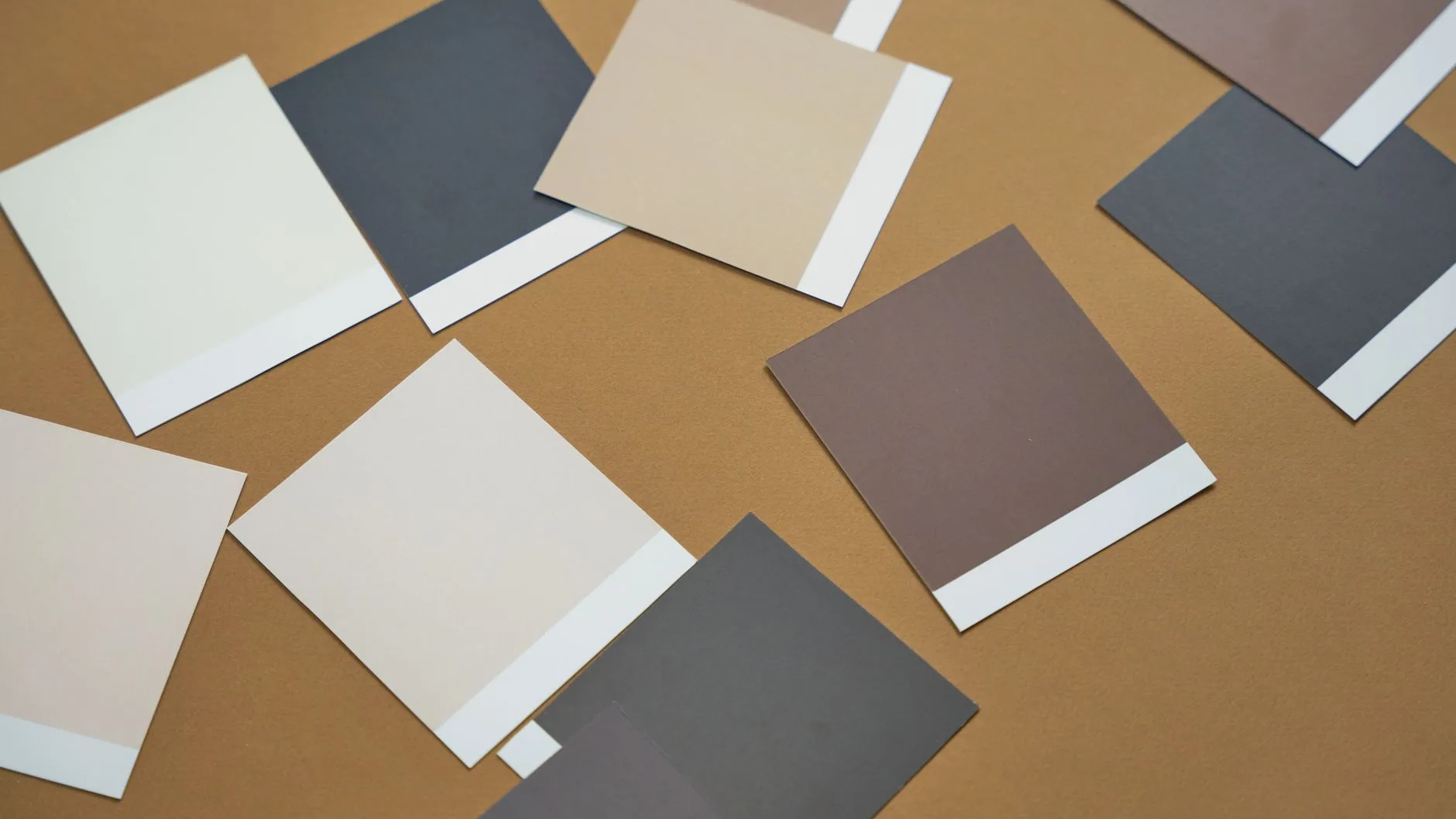
Test Before You Paint the Room
This is the unglamorous step that saves the most money. Bedroom paint mistakes usually happen because people test too small, too close together, or only in daylight.
Test large patches
Tiny colour chips lie. Paint at least an A4-size patch, preferably bigger, on lining paper or card so you can move it around the room. Test behind the bed, opposite the window, near wardrobes and beside the curtains.
Give each sample two coats and label the back, not the front. Then leave it alone for 48 hours. Check it:
- Morning: does it look fresh or cold?
- Afternoon: does it turn muddy?
- Evening: does it still work under bedside lamps?
- With bedding: does it fight the duvet cover?
- With curtains closed: does the room still have enough lift?
The best bedroom colour is the one that survives all five checks. Not the one that wins at noon.
Check the bulb temperature
Warm white bulbs around 2700K make most bedrooms look better. Cool white bulbs can make beige look green and blue look hard. If you are changing colour, check your bulbs before blaming the paint.
The NHS’s general sleep advice focuses on winding down and creating the right conditions for rest, which is why lighting matters as much as the paint itself. A moody wall colour under a harsh ceiling bulb is not relaxing. It is just moody with bad lighting. For a deeper lighting pass, use our bedroom lighting for sleep quality guide alongside your paint samples.
Keep a sample for touch-ups
Write the paint brand, colour, finish and room on the tin or a piece of masking tape. Keep a small amount for touch-ups. Bedroom walls get scuffs from bed frames, vacuum cleaners, laundry baskets and moving bedside tables. If you have used a mixed colour, take a photo of the mixing label too.
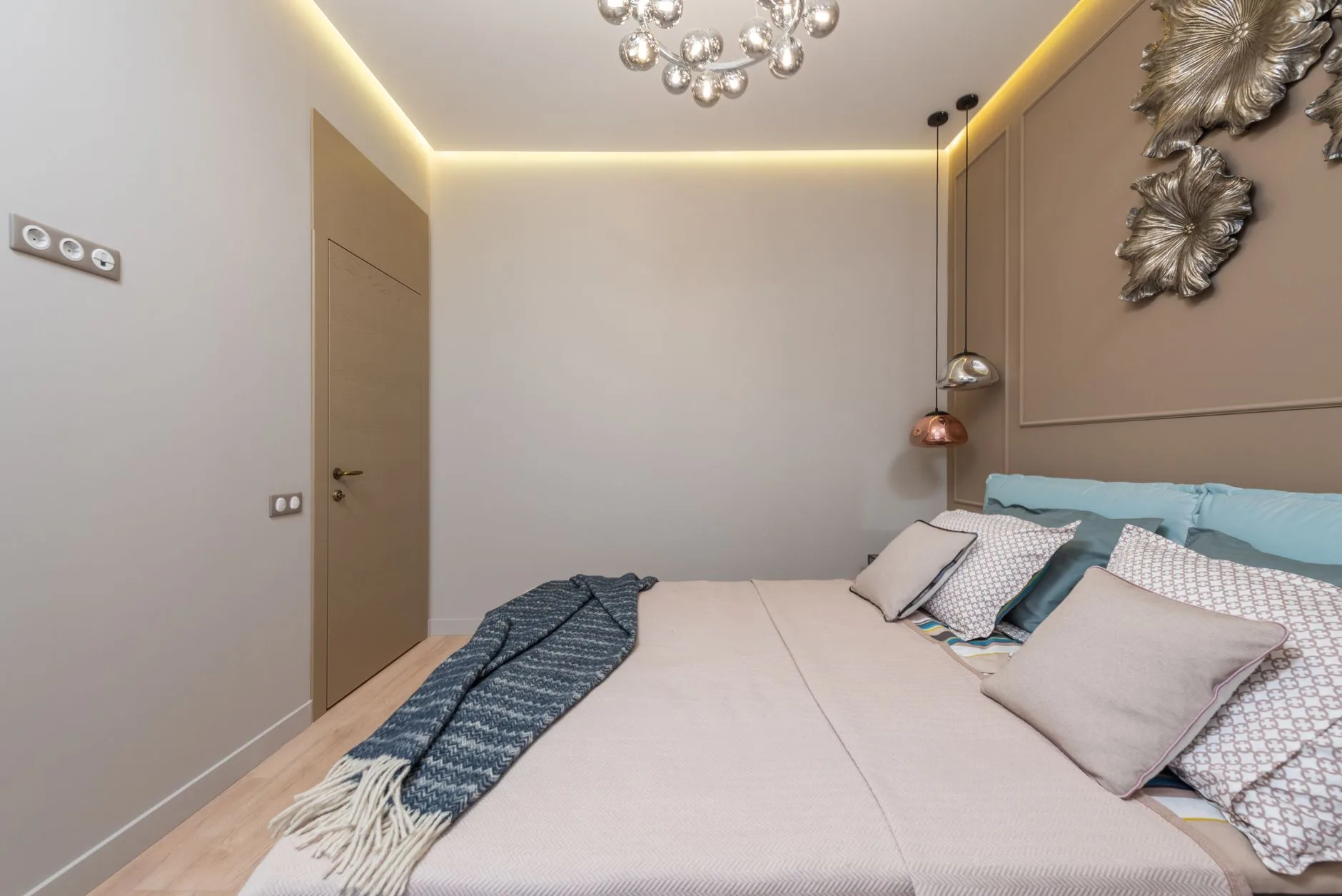
Use Bedding, Curtains and Wood to Carry the Trend
The easiest bedroom trend to live with is usually not on the wall. Bedding, curtains, headboards and timber can bring in 2026 colours without forcing you to repaint when tastes shift.
Bedding does the heavy lifting
If you like indigo but worry it will be too dark, use it in a duvet cover, quilt or headboard. If you like clay or terracotta, try it in a throw before painting a whole wall. Bedding is also where trend colours look less forced because bedrooms are already textile-heavy.
Good combinations:
- Smoky blue walls: oatmeal bedding, walnut furniture, brass lamps.
- Warm stone walls: olive throw, rust cushion, white linen.
- Muted green walls: cream bedding, oak, black reading lamps.
- Clay wall behind bed: white sheets, jute rug, dark wood bedside tables.
I would avoid matching everything. A green wall, green cushions, green curtains and green lampshade can look like a hotel room that tried too hard. Let one colour lead and the others support it.
Curtains change the colour temperature
Curtains can make a wall colour warmer, cooler, darker or busier. If you are buying curtains after painting, take your sample board to the shop. If you already own curtains, test the paint beside them before you buy.
Blackout lining is worth considering for sleep, but it changes how curtains hang and how dark the fabric looks. John Lewis, Dunelm and M&S all sell ready-made blackout curtains, often from about £45-£120 depending on width and drop. Made-to-measure can easily run £200-£500+ for a larger bedroom, so do not choose a paint colour that forces a curtain replacement unless you meant to spend that money. Our guide to choosing curtains for better sleep covers the fabric and lining side in more detail.
Wood and metal finishes matter
Oak warms up blue and green. Walnut makes clay, brown and off-white look richer. Black metal adds definition to pale rooms. Chrome can make warm neutrals feel cooler, which is useful if the room is turning too beige.
This is why bedroom colour trends 2026 UK advice should never stop at paint names. A colour only works as part of a room. The same blue can look calm with oak and oatmeal, smart with black metal and white linen, or cold with grey carpet and chrome lamps. If the room is mainly being changed for rest rather than looks, compare the colour plan with our earlier guide to bedroom colour schemes for better sleep so the trend does not work against the room.
Bottom line: the strongest bedroom colour trends for 2026 are warm neutrals, smoky blues, muted greens, clay tones and deeper browns. The weakest choices are cold grey, brilliant white everywhere, random feature walls and colours chosen from tiny samples.
If I were repainting a UK bedroom now, I would start with the light: warm stone or mushroom for a north-facing room, smoky blue or green-grey for a brighter room, and one richer colour behind the bed only if the bedding and furniture repeat it. Budget about £60-£120 for a careful DIY paint refresh, or several hundred pounds if labour, curtains and bedding are changing too.
Frequently Asked Questions
What bedroom colours are in for 2026 in the UK? Warm neutrals, smoky indigo blues, muted greens, clay tones and soft browns are the strongest 2026 bedroom colours. The useful trend is warmth and depth rather than one single shade.
Is grey still fashionable for bedrooms? Warm grey and greige can still work, but cool grey walls are fading because they often look cold in UK light. If you have grey carpet, test warmer wall colours carefully before committing.
What is the safest bedroom colour for resale? Warm stone, off-white, mushroom and soft greige are safest. They look current without being too personal, and they work with most bed frames, curtains and bedding.
How much paint do I need for a double bedroom? Many UK double bedrooms need two 2.5L tins for two coats on the walls, depending on ceiling height, colour change and coverage. Buy after measuring, and keep leftover paint for touch-ups.
Should I paint a bedroom feature wall in 2026? Yes, if it frames the bed or solves a real design problem. Avoid a random feature wall unless the colour appears elsewhere in bedding, artwork, lamps or furniture.
Are dark bedroom colours a bad idea? No, but they need enough softness around them. Dark blue, olive or brown can feel restful with warm lighting, pale bedding and timber; they feel heavy if the room is already small, cold and cluttered.