A coverless duvet removes the job of wrestling a duvet into a fresh cover, but it moves the laundry job onto the entire duvet. That is the real choice in a coverless duvet vs traditional duvet comparison: easier changeovers versus a smaller, more flexible wash load. If you cannot wash and dry the whole duvet when it needs cleaning, the convenience disappears quickly.
In This Article
- Coverless duvet vs traditional duvet: the short answer
- Bed-making: what changes on ordinary days and changeover days
- Laundry: a cover change or a whole-duvet wash
- Drying space and turnaround
- Fabric, filling and seasonal flexibility
- Cost, upkeep and replacement
- Which duvet setup suits your household?
- Frequently Asked Questions
Coverless duvet vs traditional duvet: the short answer
A coverless duvet has its outer fabric integrated with the filled duvet. You put the complete item on the bed and, where its care label allows, wash the complete item. A traditional setup has a separate duvet insert and removable cover. You normally wash the cover more often than the insert. The Fine Bedding explanation of coverless construction shows one manufacturer’s approach; other brands can use different materials, quilting and care instructions.
The decision in one glance
| What matters | Coverless duvet | Duvet with removable cover |
|---|---|---|
| Fresh bed change | Replace or wash the whole duvet; no cover to fit. | Remove the used cover and fit a clean one around the insert. |
| Routine laundry load | The whole filled item may need washing, subject to its label. | The cover can usually be washed separately; the insert has its own care schedule. |
| Drying | Plan space and time for the filling as well as the outer fabric. | A spare cover can go on while the washed cover dries. |
| Changing the look or feel | Change the whole duvet or add another layer. | Change only the cover’s colour, weave or fabric. |
| Damage to the visible outer | Repair or replace the integrated item, depending on the fault. | A damaged cover can often be replaced without replacing the insert. |
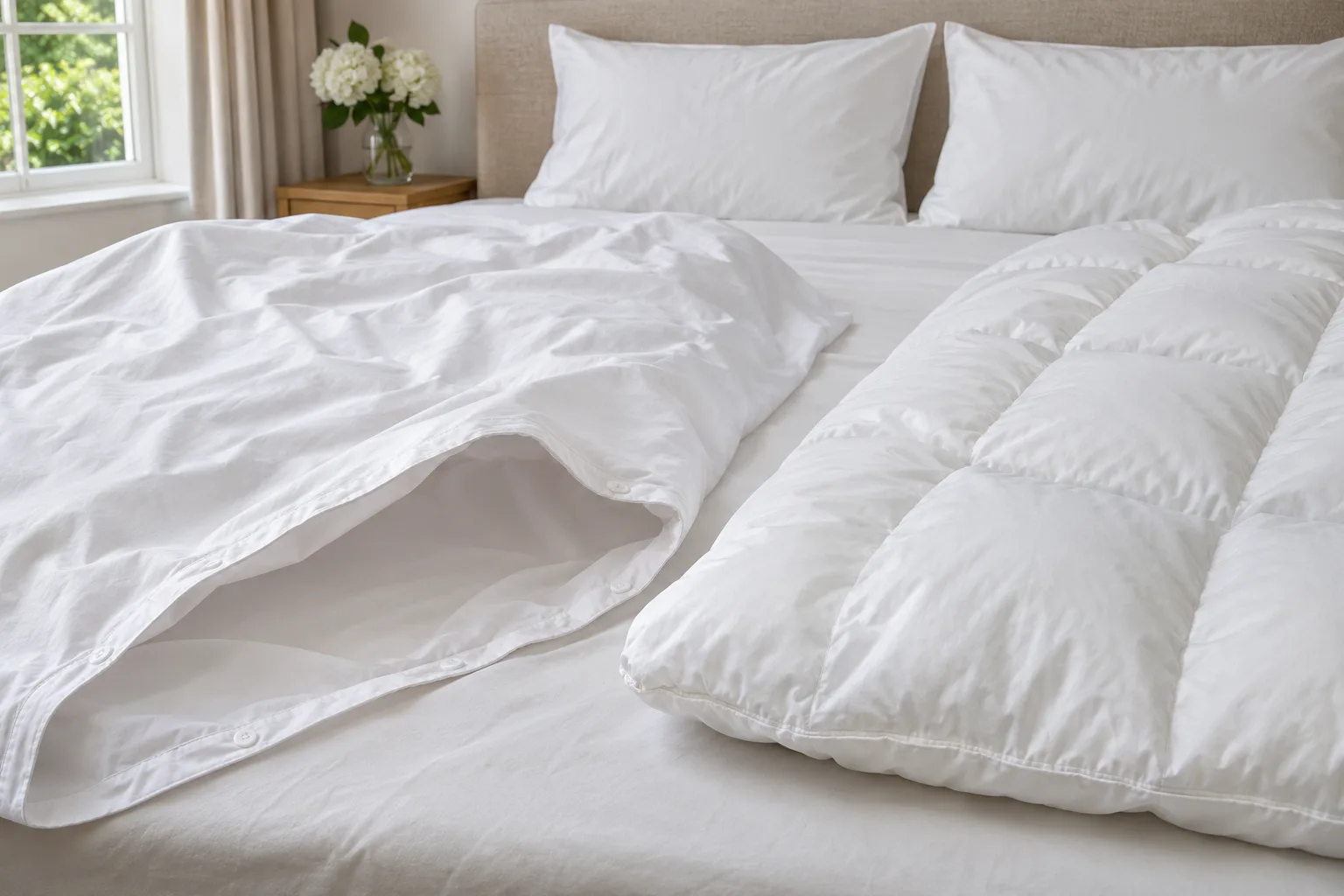
Neither type is automatically warmer, cleaner or better made. Tog, size, filling, outer fabric and care label vary within both formats. The visible bed can look similar; a photo of two white beds cannot prove which has a sewn-on outer. Judge the construction and washing instructions, not the lifestyle image.
The choice is not just about time spent making a bed. It is about which chore you would rather own. A coverless duvet makes a fresh bed change simpler, especially if fitting covers is awkward. A conventional duvet lets you wash, dry and swap a relatively light fabric layer without putting the bulky insert through every cover-change cycle. That distinction matters most on a wet Tuesday when you need the bed ready again by evening.
Bed-making: what changes on ordinary days and changeover days
On an ordinary morning, both types need much the same quick straighten: pull the duvet up, smooth it and deal with the pillows. The dramatic difference is at a fresh-linen change. A coverless duvet can go straight onto the bed once it is clean and dry. With a removable cover, you must get the insert into the cover and line up its corners. Our hotel-style bed-making guide covers presentation, but a crisp fold is possible with either system.
A quicker change is not the same as a quicker wash
If putting a cover on a double or king-size duvet is the task you dread, coverless has an obvious attraction. There is no inverted-cover manoeuvre, no shaking the insert down into corners and no corner ties to fasten. It can be especially appealing for someone who struggles to lift, grip or reach across a large bed. That is a practical advantage, not a promise that every stage of bedding care becomes easier.
The saved minutes on changeover day may be offset later by moving a bulky, wet duvet. Think of the complete job: strip the bed, get the item into the washer, dry it thoroughly, then remake the bed. For some households the first half is the pain point; for others the laundry half is. A traditional cover is fiddly to fit, but it is much easier to carry to a machine than a waterlogged filled duvet.
What about spare bedding?
A second clean cover is relatively easy to fold into a cupboard. A spare complete coverless duvet takes more storage space. If the washed item cannot be ready that night, you need another usable duvet, a suitable alternative layer or a realistic laundry plan. The same applies to a conventional duvet if its insert is being washed, but the routine cover change does not usually remove that insert from service.
For a guest room used occasionally, the fast bed change may be worth more than a cupboard full of spare covers. For a busy family bed, the ability to switch a stained cover immediately can be worth more. Neither answer is universal; the relevant question is what you change most often.
Laundry: a cover change or a whole-duvet wash
A removable cover acts as the washable outer layer in a traditional setup. You can take it off and put a fresh one on while the insert stays on the bed. A coverless duvet’s visible outer is part of the filled item. When that outer needs a full wash, the fill comes too. That can make a nominally simple bed change a larger machine load.
Check the item, not the category label
Many coverless ranges advertise whole-item machine washing, but the exact size, tog, material and care label decide what is permitted. A traditional insert may also be washable, while some require different treatment. The GINETEX guide to care symbols explains why the symbols for washing and drying should govern the treatment of the particular item. Do not take an online product-category claim as permission to use a temperature or tumble-dryer setting that its sewn-in label forbids.
The rated kilogram capacity of your washing machine is only a starting point. A large duvet can be too bulky to move properly even when its dry weight looks acceptable. You also have to get it in and out without forcing the door. Our separate coverless duvet washing and drying guide takes you through that fit check and the care-label-led process; this comparison is about whether that routine suits you at all.
Hygiene without the marketing leap
It is tempting to call the whole-item wash more hygienic because you clean the outer and fill together. That is too broad. What matters is how often bedding is cleaned, whether the chosen programme follows the label, and whether the item dries completely. A separate cover makes frequent outer-layer changes simple; it does not make insert care optional. A coverless item can be washed thoroughly if the equipment and care instructions allow, but it is not self-cleaning between washes.
Our bedding wash-frequency guide helps plan sheets and covers. With either system, deal promptly with spills and follow the manufacturer’s instructions for the duvet itself. A household with young children, pets or regular spills should weigh how often it actually needs a freshly washed outer, not merely how easy the bedding looks in a product photo.
A useful home test is to imagine the worst plausible week: the bedding needs cleaning, the weather is wet and the usual machine is already busy. Which item can you clean and replace without delaying sleep? That answer often decides the format more reliably than a claim about convenience.
Drying space and turnaround
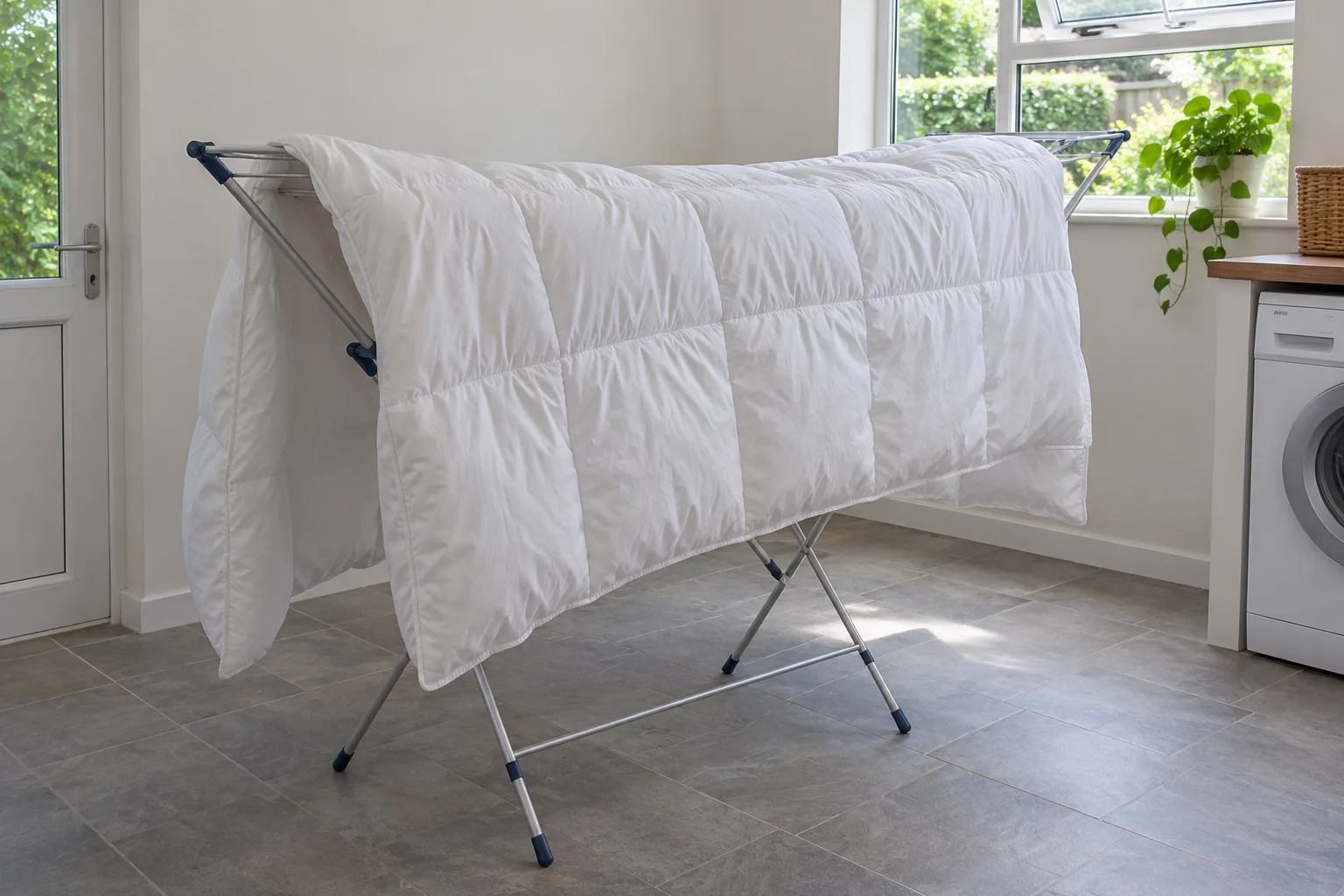
Drying is the part most likely to be missed when comparing the formats. A removable cotton cover can be taken off, washed and replaced by a spare while it dries. With a coverless duvet, the filling must dry too. The outer can feel dry before a thick centre or quilted corner is ready. Putting a damp filled item on the bed or sealing it in a cupboard is a poor shortcut.
The same-day-bed question
Before buying a coverless duvet, decide where the entire item will dry and what you will sleep under while it does. An outdoor line can help in suitable weather if the label allows air drying, but a UK winter may offer little usable drying time. Indoors, you need enough room to open the item out with airflow around it. A permitted tumble-dry cycle is useful only if your dryer fits the duvet with room to move and its care label allows that heat and method.
This is not a claim that all coverless duvets take the same number of hours. Size, filling, spin result, room conditions and appliance all change the answer. Nor is a conventional insert exempt: when you eventually wash that, you face a similar whole-duvet drying job. The difference is frequency and timing. A conventional cover can usually be changed without waiting for the insert to dry.
Small flat, large bed
A king-size duvet in a flat with one compact airer is a different proposition from a single duvet in a home with a utility room. If a whole item will not fit the washer or dryer comfortably, a suitably equipped laundrette or laundry service may be possible. That adds an errand and a cost to the convenient-bed-making story. Do not assume access to a large machine merely because the duvet’s sales page says “machine washable”.
A backup bedding layer matters too. Our seasonal bedding-layering advice can help you decide what usable warmth is already in the cupboard. If you would need to buy and store another complete duvet solely to cover wash day, include that in the decision. A spare cover takes less cupboard space, even before comparing prices.
Fabric, filling and seasonal flexibility
The cover is not just decoration. It is the fabric you touch and see. With a traditional duvet, you can change that surface while keeping the same insert: crisp cotton in one season, a softer weave in another, or a different colour when the room changes. You can choose an insert separately by warmth and filling. With coverless, the surface and fill come as one selected combination. You can still choose among coverless variants, but changing only the visible fabric is no longer a simple cover swap.
Warmth comes from the specification, not the format
A coverless duvet is not inherently cooler or warmer than a covered one. Look at the tog rating, size and material information for the exact item. A cover also affects the feel against your skin, but it cannot turn an unsuitable insert into the right warmth by itself. If you sleep hot, focus on the complete bedding combination and room conditions rather than assuming the word “coverless” solves overheating.
Our duvet filling explainer separates down, synthetic, wool and silk trade-offs without treating any one filling as universally best. A coverless range may offer several fillings or tog choices, but the options differ by maker. A conventional setup gives you a broader mix-and-match route because the insert and cover are separate purchases.
One duvet across seasons, or several?
If you already rotate a lighter and warmer insert, a traditional cover may work across both. If you use a coverless duvet, changing warmth can mean storing another whole item. Some families are happy with that: they already keep different duvets for summer and winter, and removing the cover-fitting step is welcome each time. Others prefer one insert with layered blankets, or an all-seasons combination. Our all-seasons duvet guide is the next step if changing warmth is your main buying problem.
The same logic applies to aesthetics. If you change bedroom colour schemes often, a removable cover is a flexible, relatively compact way to do it. If you consistently choose plain white bedding and rarely change its feel, that flexibility may have little value to you. It is a real feature, but only if you use it.
Cost, upkeep and replacement
There is no honest single price verdict without comparing specific sizes, fills, fabrics and care requirements. A coverless purchase includes the visible outer and filling in one item. A traditional setup needs an insert plus at least one cover, and many households keep a spare cover. An inexpensive coverless duvet is not automatically cheaper over time, just as a premium separate insert is not automatically better value.
Compare the complete kit
Price the combination you would actually use. For a conventional bed, that means the insert, two covers if you want a clean spare, and any seasonal insert you plan to store. For coverless, include a second duvet if you need one for wash-day turnaround, plus any large-machine or laundry-service visits your home setup would require. Compare like sizes and warmth levels. A single-bed setup can behave very differently from a king-size one.
Do not pay for theoretical flexibility. If you never rotate covers, three decorative sets are not a necessary cost of the traditional format. Conversely, if you enjoy changing the fabric and colour, treating one fixed outer as all you will need may understate the coverless cost. Retail prices change; calculate the basket from current listings when you are ready to buy rather than relying on a fixed headline figure.
What happens when something wears out?
A removable cover can often be replaced independently if its zip breaks, the fabric stains or the colour fades. The insert can remain usable if it is still in good condition. With a coverless duvet, the outer is integrated: a local repair may be possible, but you cannot simply buy a fresh cover to hide or replace that original surface. If the filled item loses loft or is damaged, both systems may require an insert or whole-duvet replacement.
Look at actual construction and care information, not an unsupported lifespan promise. Stitching, fabric, fill and how an item is washed affect durability. Check whether the exact coverless model has a repair or warranty route if that matters to you. A more expensive item that you can wash properly and keep in service may suit you better than a cheap one that overwhelms your machines.
Which duvet setup suits your household?
The best choice is the one whose awkward job fits your home. A coverless duvet is a good fit when cover changes are the chore you most want to remove, the whole duvet fits your washing setup, and you can dry it fully with a spare sleeping plan. A traditional duvet is the safer default when you want quick outer-layer swaps, fabric and colour choice, or a smaller routine laundry load.
Choose coverless if these are true
- Bed changes are the bottleneck: fitting a cover is difficult or time-consuming, especially on a larger bed.
- Whole-item care is realistic: the exact size and tog fit your available washer and drying method within the label instructions.
- A fixed outer suits you: you like its fabric and appearance and do not need frequent cover changes.
- Wash-day backup exists: another usable bedding layer is available if complete drying takes longer than expected.
If those points fit, look at our coverless duvet buying guide for the model-specific next decision. Check the care label and machine fit before choosing a colour or tog.
Keep a removable cover if these matter more
- Frequent fresh outer layers: children, pets, spills or personal preference mean covers are changed often.
- Limited drying space: a whole filled duvet cannot be opened out and dried reliably at home.
- Fabric choice: you want to swap cotton, linen or other cover fabrics without changing the insert.
- Separate replacements: replacing a worn cover without discarding a sound insert matters to you.
The biggest switching mistake is buying a coverless duvet because putting on a cover is annoying, then discovering that the whole duvet cannot be washed and dried in your home. Measure that constraint first. If the complete care routine works, coverless can make bed changes pleasantly simple. If it does not, a removable cover remains the more practical system, however tidy the coverless product photo looks.
Frequently Asked Questions
Is a coverless duvet the same as a duvet without a cover? No. A purpose-made coverless duvet has its outer fabric integrated with the filled item. A conventional duvet insert used without a cover is a different setup and must be cared for under its own label.
Do you wash a coverless duvet more often than a traditional duvet? The routine differs: a traditional cover can be washed separately while its insert stays in use, whereas the coverless outer is part of the whole item. Follow the label and clean bedding according to use and soiling rather than a universal interval.
Can a coverless duvet go in any washing machine? No. Check the exact item’s care label and whether the whole dry duvet has room to move in your machine. A machine’s kilogram rating alone does not prove a bulky duvet fits.
Does a coverless duvet dry faster than a duvet cover? Not necessarily. A removable cover dries without the insert; a washed coverless duvet must dry through its filling too. Actual turnaround depends on size, materials, equipment and conditions.
Can you change the look of a coverless duvet? You can choose a different coverless design or use other bed layers, but you cannot normally swap just its integrated outer fabric as you can with a removable cover.
Which is better for a small flat? A traditional duvet and spare cover is often easier when washer capacity and drying space are tight. A coverless duvet can still work if its exact size fits your machines and you have a reliable full-drying plan.