The Cotton Comfort brushed-cotton fitted sheet is the best winter bed sheet for most UK bedrooms. Its 100% brushed cotton surface feels warmer on first contact than crisp cotton without the dense insulation of teddy fleece. Choose the Olivia Rocco teddy sheet for the warmest feel, the Rapport Home set when replacing all your sheets, or the Bedsure jersey sheet if you warm up during the night.
Warmth depends on more than the word “thermal”. Fibre, surface texture, fabric weight, room temperature and the rest of your bedding all matter. Check the selected size and mattress depth carefully because some products below are single sheets while others are complete sets.
In This Article
- Quick answer
- Winter sheets at a glance
- Six winter-sheet recommendations
- What makes sheets feel warm
- Choose the right material
- Match sheets to your bedroom
- Fit, care and pilling
- The Bottom Line
- Frequently Asked Questions
Warm Bed Sheets for Winter: Quick Answer
Start with brushed cotton if you are unsure. The raised fibres reduce the cool, smooth first touch associated with percale while cotton remains more adaptable than plush polyester fleece. The Cotton Comfort sheet is the all-round fitted choice; the Rapport set is better if you also need a flat sheet and pillowcases.
If the room is genuinely cold and you remain cold after settling, teddy fleece offers a warmer-feeling surface. If you are cold only when getting into bed, jersey or brushed cotton is less likely to become oppressive later. The Sleep Charity’s winter guidance also recommends layering bedding and keeping bedrooms warm rather than relying on one product.

Best Winter Bed Sheets at a Glance
The comparison is CTA-free so you can choose by material and fit first. Product variants change, so confirm the retailer page shows your required UK bed size and pocket depth.
| Sheet | Best for | Material | Selected size | Fit / contents |
|---|---|---|---|---|
| Cotton Comfort Brushed Cotton | Best overall | 100% brushed cotton | Double fitted | 30cm pocket |
| Rapport Home Candy Stripe Set | Best complete set | 100% brushed cotton | King set | Fitted, flat and two pillowcases |
| Olivia Rocco Teddy Fleece | Warmest feel | Teddy fleece | Double fitted | 30cm pocket |
| Extra-Deep Flannelette Sheet | Best for deep mattresses | 100% brushed cotton | Double fitted | 40cm pocket |
| Rayyan Linen Flannelette Flat Sheet | Best flat sheet | 100% brushed cotton | Double flat | 229 × 254cm |
| Bedsure Cotton Jersey Sheet | Best for mixed-temperature sleepers | 100% cotton jersey | King fitted | 40cm pocket |
Our Six Winter Bed-Sheet Recommendations
1. Cotton Comfort Brushed Cotton — Best Overall

The Cotton Comfort fitted sheet is the safest all-round winter choice here. It uses 100% brushed cotton, so the surface feels less cool when you first get into bed while retaining more airflow than thick synthetic fleece. The selected double size has a stated 30cm pocket, which suits many standard and moderately deep mattresses.
Choose it when you want a warmer first touch without making the whole bed feel heavily insulated. It is a fitted sheet only, so pillowcases and a flat sheet need to be bought separately. No dependable fabric weight is stated, so the material and fit are firmer reasons to choose it than an unverified warmth label.
- Buy it if: you want breathable winter warmth and a familiar cotton feel.
- Skip it if: you need a full matching set or have a mattress deeper than 30cm.
- Main compromise: the selected product is one fitted sheet, not a bedding bundle.
2. Rapport Home Candy Stripe Set — Best Complete Set

The Rapport Home set is the most complete option. The selected king-size bundle includes a fitted sheet, flat sheet and two matching pillowcases in 100% brushed cotton. That makes it useful when replacing a whole summer set rather than adding one warmer bottom sheet.
A flat sheet adds another adjustable layer between the sleeper and duvet. Cold sleepers can keep it tucked in, while warmer partners can fold it down on their side. Check the exact fitted-sheet depth before buying because the title and supplied feature data do not state it clearly.
- Buy it if: you want a coordinated brushed-cotton set with a flexible flat layer.
- Skip it if: you need an extra-deep fitted pocket.
- Main compromise: the candy-stripe design is less neutral than plain bedding.
3. Olivia Rocco Teddy Fleece — Warmest Feel

The Olivia Rocco teddy-fleece sheet gives the warmest immediate feel in this group. Its plush pile creates more insulation between your body and the mattress than a lightly brushed cotton surface, and the selected double sheet has a stated 30cm pocket.
That warmth can become the drawback. Teddy fleece is synthetic, bulkier to wash and more likely to feel too hot for anyone who warms up after falling asleep. It suits a genuinely cold room or a consistently cold sleeper better than a couple with different temperature preferences.
- Buy it if: you dislike the cold first contact of ordinary sheets and stay cold overnight.
- Skip it if: you sweat easily, share with a warm sleeper or prefer natural fibres.
- Main compromise: maximum cosiness comes with less temperature flexibility.
4. Extra-Deep Flannelette Sheet — Best for Deep Mattresses
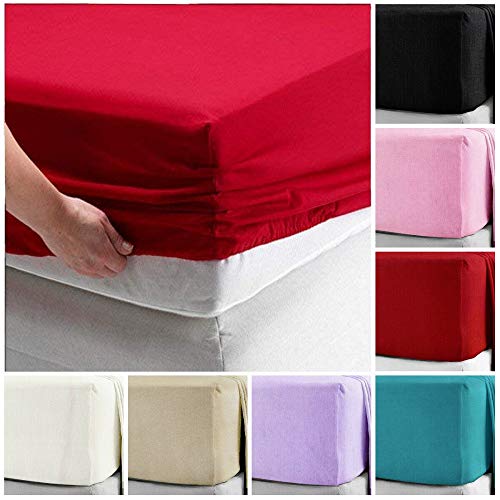
This extra-deep flannelette sheet solves a fit problem that fabric comparisons often overlook. The selected double version is listed with a 40cm pocket, giving more room for a deep mattress or a mattress-and-topper combination. It is made from 100% brushed cotton and is sold as a fitted sheet only.
Do not buy an oversized pocket automatically. Excess fabric can bunch if your mattress is shallow. Measure from the bottom edge to the highest point, including any topper, then allow enough margin for the sheet to tuck securely underneath.
- Buy it if: ordinary winter sheets pull off the corners of a deep mattress.
- Skip it if: your mattress is slim and a 25–30cm pocket already fits neatly.
- Main compromise: it is a functional plain sheet rather than a matching set.
5. Rayyan Linen Flannelette Flat Sheet — Best Flat Sheet

The Rayyan Linen flat sheet is the most adaptable layer here. The selected double size is listed at 229 × 254cm and uses 100% brushed cotton. It can sit above a fitted sheet and below the duvet, or provide a lighter cover during the transition into autumn.
A flat sheet is especially helpful for couples who disagree about warmth because it can be folded or tucked differently on each side. It does require more bed-making than a fitted sheet, and the selected product does not include matching pillowcases.
- Buy it if: you want an adjustable extra layer without replacing the fitted sheet.
- Skip it if: you dislike tucking sheets or want an all-in-one set.
- Main compromise: versatile layering adds another item to wash and remake.
6. Bedsure Cotton Jersey Sheet — Best for Mixed-Temperature Sleepers

The Bedsure cotton-jersey sheet is the least overtly wintry option, which is precisely why it suits bedrooms that are cool at bedtime but comfortable later. Jersey knit feels similar to a soft T-shirt, with a warmer first touch and more stretch than crisp woven cotton. The selected king sheet has a stated 40cm pocket.
It will not feel as insulating as teddy fleece or heavily brushed flannelette. Choose it for a gentler seasonal change, a deep mattress or a household where overheating is a bigger concern than maximum warmth.
- Buy it if: you want softness and stretch without the plushest winter surface.
- Skip it if: the bedroom is very cold and you need the warmest-feeling sheet.
- Main compromise: jersey is comfortable rather than heavily insulating.
What Makes Bed Sheets Feel Warm?
A sheet does not generate heat. It changes how quickly warmth moves away from your skin and how the surface feels when you first touch it. Brushing raises tiny fibres that hold small pockets of air, while fleece uses a deeper pile for greater insulation. Knitted jersey feels less crisp and cold because its looped construction is soft and flexible.
Thread count is a poor shortcut for winter warmth. It describes yarn density, not surface texture, fibre quality or fabric weight. A modest brushed-cotton sheet can feel warmer than a high-thread-count smooth sheet because the finishes are different.
The duvet still supplies most of the insulation above you. Before buying the plushest sheet, review your duvet filling, sleepwear and room conditions. Age UK’s winter advice recommends keeping the bedroom window closed at night when it is cold and maintaining a safe indoor temperature.
Choose the Right Winter Sheet Material
Brushed Cotton and Flannelette
These are the default choice for many UK homes. They feel soft and warm at bedtime but are still cotton, making them easier to combine with different duvet weights. The trade-off is pilling: raised fibres experience friction and can form small bobbles over time.
Teddy Fleece
Teddy fleece gives the strongest cosy effect and dries relatively quickly after washing. Its synthetic pile can retain more warmth and feel less breathable than cotton. It is best for an unambiguously cold sleeper rather than as a universal upgrade.
Cotton Jersey
Jersey sits between crisp everyday sheets and winter flannelette. It stretches around deeper mattresses and has a soft, casual feel. It is the sensible transition-season choice or compromise for couples with different temperature preferences.
Match Sheets to Your Bedroom and Sleeper
For a cold but dry bedroom, brushed cotton plus an appropriate duvet is the balanced starting point. Teddy fleece is worth considering when that combination still feels cool. If condensation or damp is present, sheets are not the solution: address ventilation, heating and moisture sources rather than trying to trap more warmth in the bed.
Mixed-temperature couples should use adjustable layers. A brushed-cotton flat sheet can stay tucked on one side and folded down on the other. Separate blankets are another practical option; our seasonal bedding-layer guide shows how to change one layer at a time.
For children, avoid assuming that the fluffiest surface is automatically best. Use age-appropriate bedding, keep the sleep space clear and follow the product care label. Our guide to children’s bedding covers the broader setup.

Fit, Care and Pilling
Measure Mattress Depth
Measure the mattress at its deepest point and include any topper. If a topper is causing ordinary sheets to lift, compare our guide on mattress toppers before choosing a 40cm pocket. Deep is useful only when there is enough material to tuck beneath the mattress without leaving loose folds.
Wash with Less Friction
Follow the exact care label. Washing brushed sheets with towels, zips or rough garments increases friction, which can worsen pilling. Separate dark colours, avoid overloading the machine and use the permitted drying temperature. Teddy fleece is bulky, so check that the drum has room for it to move.
Rotate two sets rather than washing and replacing the same sheet continuously. Store them fully dry and keep winter bedding breathable during the off-season. If you prefer crisp, cool fabric once spring arrives, compare our guide to sheets for hot sleepers.
The Bottom Line
The Cotton Comfort brushed-cotton fitted sheet is the best winter choice for most sleepers: warmer to the touch than crisp cotton, more adaptable than teddy fleece and available with a useful 30cm pocket in the selected double size. Choose the Rapport Home set for a complete bedding change or the Olivia Rocco teddy sheet when maximum cosiness matters most.
Material is only half the decision. Confirm bed size, measure mattress depth and decide whether you need one fitted sheet, a flat layering sheet or a complete set before buying.
Frequently Asked Questions
What bed-sheet material feels warmest in winter? Teddy fleece usually feels warmest immediately because its plush pile creates an insulating surface. Brushed cotton is a better-balanced choice for many sleepers because it feels warmer than crisp cotton while allowing more airflow.
Are brushed cotton and flannelette the same? The terms often overlap in UK bedding. Flannelette normally describes cotton fabric brushed to raise a soft nap. Check the fibre content because some warm-feel products use polyester instead.
Are fleece sheets too hot? They can be for warm sleepers or well-heated rooms. Fleece suits consistently cold sleepers better; brushed cotton or jersey gives more temperature flexibility.
What depth fitted sheet do I need? Measure the full mattress depth, including any topper, then choose a pocket deep enough to tuck underneath securely. A very oversized pocket can bunch, so closer fit is preferable.
Do warm sheets replace a higher-tog duvet? No. A sheet changes the surface feel and adds a light layer, while the duvet supplies most insulation above you. Adjust the whole bedding combination and room conditions together.
How should winter sheets be washed? Follow the care label for the exact product, wash dark colours separately and avoid excessive heat. Brushed surfaces can pill through friction, so washing with rough items may shorten their tidy appearance.