It’s 11pm on a Tuesday in January. You’ve been in bed for twenty minutes, scrolling your phone with the best of intentions — just checking tomorrow’s weather, then you’ll sleep. An hour later you’re still awake, your brain buzzing, staring at a ceiling. Research published by the Sleep Foundation confirms that screen light before bed delays melatonin production you can’t quite see in the dark. The irony is that the screen you were staring at is a big part of why you can’t drift off. Not because of what you were reading. Because of the light itself.
The relationship between light and sleep is something scientists have understood for decades, but most of us only became aware of it when phones started offering “night mode” settings around 2016. Since then, the conversation around blue light and sleep has become mainstream — and also muddled with marketing hype. Even simple things like choosing the right mattress size can affect sleep quality more than people realise, dodgy blue-light-blocking glasses, and claims that range from solid science to complete nonsense.
Here’s what actually happens when different wavelengths of light hit your eyes, why it matters for sleep, and what you can realistically do about it. If your sleep timing is already off, our guide to fixing your sleep schedule covers the practical steps — particularly if you live in a country where it gets dark at half three in the afternoon for months on end.
How Light Controls Your Sleep
Your body runs on an internal clock called the circadian rhythm. It’s roughly a 24-hour cycle that tells your brain when to be alert and when to wind down for sleep. Light is the primary signal — the zeitgeber, if you want the German term — that sets this clock every day.
Here’s the simplified version of how it works:
Morning light → wake up signal. When bright light hits special cells in your retina called intrinsically photosensitive retinal ganglion cells (ipRGCs), they send a signal to the suprachiasmatic nucleus (SCN) in your brain. The SCN suppresses melatonin production and triggers cortisol release, which makes you feel alert and awake.
Evening darkness → sleep signal. As light levels drop in the evening, the SCN allows the pineal gland to start producing melatonin. Melatonin doesn’t knock you out — it’s not a sedative. It signals to your body that sleep is coming, lowering your core temperature, slowing your heart rate, and preparing your systems for rest. Melatonin levels typically start rising about two hours before your natural bedtime, peak in the middle of the night, and drop off before dawn.
The problem: This system evolved over millions of years when the only light sources were the sun, fire, and moonlight. None of those produce the intense, blue-rich light that LED screens, fluorescent bulbs, and energy-efficient lighting blast into our eyes for hours every evening.
Blue Light: What It Is and What It Does
Light travels in waves, and the colour of light depends on its wavelength. Blue light sits at the short-wavelength end of the visible spectrum, between about 380 and 500 nanometres (nm). The specific range that most affects sleep is around 460-480nm — a cool, sky-blue wavelength that’s abundant in sunlight during the day.
Why Blue Light Matters for Sleep
Those ipRGC cells in your retina are most sensitive to blue light in this wavelength range. When blue light hits them in the evening, they send the same “it’s daytime” signal to the SCN that morning sunlight would. The result: melatonin production is suppressed, and your brain thinks it’s earlier than it is.
Research has confirmed this repeatedly. A well-known 2014 study published in Proceedings of the National Academy of Sciences compared people who read on an iPad before bed with people who read a printed book. The iPad readers:
- Took longer to fall asleep (about 10 minutes extra on average)
- Had reduced melatonin secretion in the evening
- Felt less sleepy at bedtime
- Had delayed REM sleep timing
- Felt groggier the next morning
And that was with regular use — not even extreme screen time. The effect is dose-dependent: the brighter the screen and the longer the exposure, the bigger the impact.
Sources of Blue Light in Your Home
It’s not just phones and tablets. Blue light comes from:
- Smartphone and tablet screens — the most common evening offender because people hold them close to their face
- Laptop and computer monitors — less intense per square centimetre than a phone held at arm’s length, but larger total area
- LED televisions — some blue light exposure, but you’re typically sitting further away, which reduces the effect
- LED and fluorescent ceiling lights — often overlooked, but a bright white LED ceiling light in the bedroom can suppress melatonin as much as a screen
- LED bathroom lights — particularly problematic because people often have a bright white bathroom lit like an operating theatre, and the last thing they see before bed is 4000K-5000K white light bouncing off white tiles
The Blue Light Glasses Question
Blue-light-blocking glasses have become a massive market, with prices ranging from about £8 on Amazon UK to £300+ from designer frames. But do they work?
The honest answer is: sort of, but probably not enough to justify the marketing claims.
Glasses with amber or orange-tinted lenses do filter out some blue light, and a few small studies have shown they can modestly improve sleep onset if worn for 2-3 hours before bed. But the effect is inconsistent across studies, and the cheaper glasses on Amazon often block far less blue light than they claim.
The bigger issue is that blocking blue light while still staring at a bright screen doesn’t address the overall light intensity, which also matters for melatonin suppression. We tested this ourselves with a lux meter and various screen settings. A bright screen with reduced blue light can still affect sleep more than a dim screen with full-spectrum light.
My take: Save the money. Dim your screens, turn down the room lights, and use your phone’s built-in night mode instead. It’s free and probably more effective than glasses.
Red Light: Why It’s Different
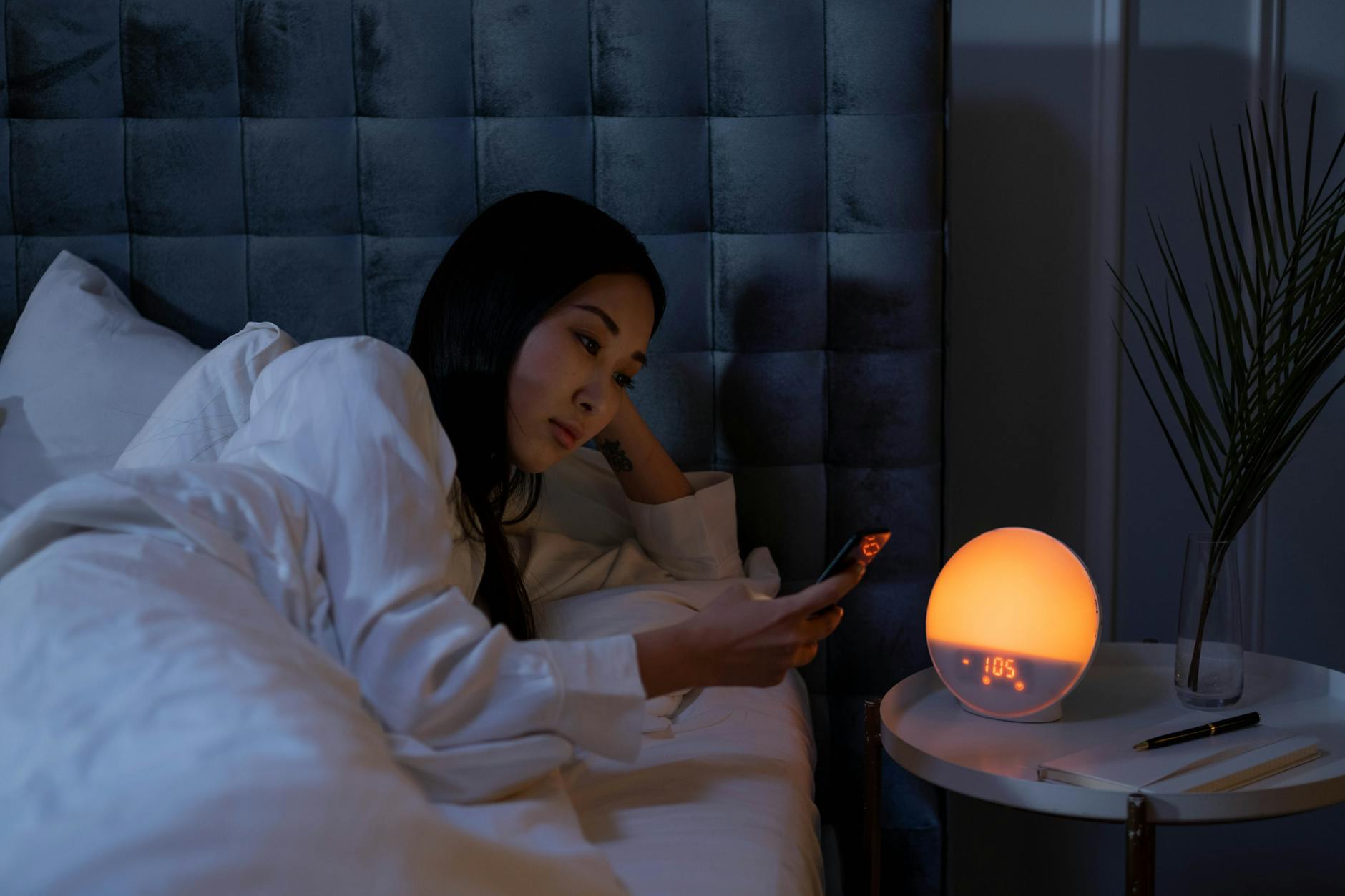
Red light sits at the opposite end of the visible spectrum, with wavelengths between about 620 and 700nm. It’s the warm glow of a sunset, a campfire, or an old-fashioned incandescent bulb.
The key thing about red light is what it doesn’t do: it has almost no effect on those ipRGC cells that suppress melatonin. Red wavelengths are essentially invisible to the circadian system, which means you can have red light on in the evening and your brain won’t interpret it as a daytime signal.
The Research on Red Light and Sleep
Several studies have looked at the effect of red light exposure before and during sleep:
- A 2012 study in the Journal of Athletic Training found that elite female basketball players who received 30 minutes of red light therapy at night for 14 days had improved sleep quality and increased melatonin levels compared to a control group.
- Research on shift workers exposed to red-enriched environments during night shifts showed better subjective sleep quality on recovery days.
- Studies on premature infants in neonatal units found that red-shifted lighting cycles helped establish healthier sleep patterns.
The evidence isn’t as overwhelming as the wellness industry sometimes implies — you’ll see red light therapy devices marketed as cure-alls for everything from sleep to skin ageing to joint pain, and the sleep-specific evidence is still building. But the basic mechanism is sound: red light doesn’t suppress melatonin the way blue light does.
Red Light in Practice
You don’t need a fancy red light therapy panel to benefit from this. The practical takeaway is that shifting your evening lighting from cool white to warm amber or red tones helps create an environment that supports melatonin production rather than fighting it.
Ways to do this:
- Smart bulbs with adjustable colour temperature. Philips Hue bulbs (from about £15 each, or £50-80 for a starter kit with the bridge) let you schedule warm amber or red tones for the evening. IKEA TRÅDFRI bulbs (about £9-12 each) are cheaper and do the same thing with fewer features.
- Salt lamps. A Himalayan salt lamp (about £15-30 from Amazon UK or TK Maxx) gives off a warm amber glow that’s about as sleep-friendly as lighting gets. They’re dim enough to use as a bedroom lamp without suppressing melatonin.
- Red LED night lights. If you need light in the hallway or bathroom at night — for kids, or just to avoid walking into door frames — a red LED night light (about £5-10 from Amazon UK) is far better than switching on the main light.
- Candles. Firelight is almost entirely red and amber wavelengths. There’s a reason a candlelit room feels relaxing — your circadian system isn’t being stimulated. Just don’t fall asleep with them lit, obviously.
The British Winter Problem
All of this takes on a particular edge in the UK, where the interplay between natural light and artificial light is shaped by geography and weather in ways that most sleep advice (written by people in California) completely ignores.
Not Enough Light During the Day
In midwinter, large parts of the UK get less than 8 hours of daylight, with sunrise after 8am and sunset before 4pm. In Scotland, it’s worse — Edinburgh gets about 7 hours of daylight at the solstice, and the light quality is often grey and flat even at midday.
This matters for sleep because your circadian system needs bright daytime light to set the clock properly. Without it, the whole cycle drifts. You feel sluggish during the day, don’t get the cortisol spike in the morning that you should, and then melatonin onset in the evening is delayed or reduced because the daytime signal was too weak to create a strong contrast.
What helps:
- Get outside in the morning. Even 15-20 minutes of outdoor light on a cloudy day gives you about 10,000 lux, which is far more than indoor lighting (typically 100-500 lux). This is the single most effective thing you can do for your circadian rhythm.
- Consider a SAD lamp. A 10,000 lux light therapy lamp (about £30-80 from Amazon UK, Argos, or John Lewis) used for 20-30 minutes in the morning mimics the bright daylight your brain is missing. The Lumie Arabesque (about £60-70) and the Beurer TL30 (about £35-40) are popular options. Use them at breakfast — the effect is best within an hour of waking.
- Sit near windows during work. If you work from home, position your desk near a window. Natural daylight, even on an overcast British day, is better than any artificial light for maintaining your circadian rhythm.
Too Much Artificial Light in the Evening
The flip side of short winter days is long winter evenings. When it’s dark by 4pm, you’re spending 6-7 hours under artificial light before bed. That’s a lot of blue-rich LED exposure — from ceiling lights, screens, and lamps — and it accumulates.
In summer, the transition from daylight to evening happens gradually and naturally. In winter, you walk in the front door, flick on every light in the house because it feels dark and miserable outside, and your brain gets hours of “daytime” signals before you try to sleep.
What helps:
- Dim the lights after sunset. You don’t need to sit in the dark. Just reduce the overall brightness. Turn off ceiling lights and use table lamps or floor lamps with warm-toned bulbs (2700K or below).
- Create a lighting transition. Bright lights in the kitchen for cooking, dimmer lights in the living room for relaxing, very dim or warm lights in the bedroom for winding down. This mirrors the natural light progression from afternoon to evening.
- Use night mode on screens from about 7-8pm. Both iOS and Android have built-in screen warmth settings. Set them to activate automatically. They don’t fix the problem completely, but they help.
A Practical Evening Routine for Better Sleep
Rather than trying to remember the science, here’s a simple framework that applies it.
From About 7pm
- Switch to warmer lighting. Turn off overhead LED lights in the rooms you’re spending time in. Use table lamps with warm bulbs or, if you have smart bulbs, shift to a warm amber or orange tone.
- Activate night mode on screens. If your phone, tablet, or laptop has an automatic schedule, set it for 7pm onwards. If not, do it manually.
- Reduce screen brightness. Especially if you’re reading on a phone or tablet in a darker room. The brightness contrast between screen and room amplifies the effect.
From About 9pm (or 1-2 Hours Before Bed)
- Consider putting screens away entirely. This is the advice nobody wants to hear, but it’s the most effective thing on this list. Read a physical book, listen to a podcast or music, have a conversation, do some gentle stretching. Your melatonin will thank you.
- If you can’t ditch screens, at least use the dimmest setting and keep the content low-stimulation. Scrolling through news or social media is a double hit — blue light plus psychological arousal.
- Keep bedroom lighting minimal. A salt lamp, a dim bedside lamp with a warm bulb, or smart bulbs set to deep amber. Avoid overhead lights in the bedroom entirely.
During the Night
- If you wake up, don’t check your phone. The bright screen in a dark room is the worst possible combination for melatonin. If you need to see, use a red LED night light.
- If you need to use the bathroom, a dim red light (either a plug-in night light or a smart bulb set to red) means you can see without waking up your circadian system.
What About Children?
Everything above applies to children too, often more strongly. Children are thought to be more sensitive to blue light’s melatonin-suppressing effects than adults, and the bedtime screen battle is a familiar one in most UK households.
The practical advice is the same: dim the lights, warm the screen colours, and ideally switch off screens at least 30-60 minutes before bedtime. For younger children, a red or amber night light is better than a white one — it provides enough light for comfort without interfering with sleep.
Many children’s bedrooms have bright white LED ceiling lights that parents switch on for bedtime stories or getting changed. Swapping the bulb for a warm white (2700K) or amber alternative costs about £3-5 and makes the whole bedtime routine more conducive to winding down.
Separating Fact from Marketing
The light-and-sleep space has attracted a lot of products and claims that range from evidence-based to pure snake oil. Here’s a quick guide to what’s worth your money and what isn’t.
Worth It
- SAD lamp / light therapy lamp (£30-80): Evidence-based for seasonal mood and circadian regulation. Use it in the morning.
- Smart bulbs with warm scheduling (£9-15 per bulb): Practical, affordable, and the automated scheduling means you don’t have to think about it.
- Red/amber night lights (£5-10): Cheap, useful, and based on sound science.
- Screen night mode (free): Built into every modern phone, tablet, and computer. No reason not to use it.
Probably Not Worth It
- Blue-light-blocking glasses (£15-300): Inconsistent evidence, often over-claimed benefits, and screen settings do the same job for free.
- Blue-light screen protectors (£10-30): Same issue as the glasses. Marginal effect at best.
Overpriced for What They Do
- Red light therapy panels (£100-500+): The large LED panels marketed for skin, recovery, and sleep benefits. The sleep evidence specifically is limited and the prices are steep. If you want red light in the evening, a £15 salt lamp or a £9 smart bulb does 90% of the job.
The Bottom Line
Your body was designed to wake up with blue-rich morning light and wind down under the warm amber and red tones of sunset and firelight. Modern life — LED lighting, screens, and long dark winters — disrupts this cycle, and the result for many people is poor sleep.
The fix isn’t complicated or expensive. Get bright light in the morning (go outside if you can, or use a SAD lamp). Shift your evening lighting to warmer tones after sunset. Reduce screen brightness and use night mode. Put screens away before bed if you can manage it. Use red or amber lighting for nighttime navigation.
None of this requires buying expensive gadgets or overhauling your life. Small changes to how you manage light in the evening can knock 10-20 minutes off the time it takes to fall asleep and improve the quality of the sleep you get. In a country where winter evenings start at 4pm and the temptation to sit under bright lights with a screen for six hours is very real, paying attention to this stuff isn’t neurotic — it’s practical.
Your ancestors had firelight and starlight. You’ve got Philips Hue and a salt lamp from TK Maxx. Work with what you’ve got.