You’ve found a mattress you love online. The reviews are stellar, the price is right, and you’re ready to click “buy.” Then you notice it comes in EU Double, not UK Double. Are they the same? (They’re not.) Will your existing sheets fit? (Which? has flagged this as one of the top mattress-buying mistakes) (They won’t.) And now you’re down a rabbit hole trying to work out whether your bedroom can even fit a king size, or whether you’ve been sleeping on one this whole time without knowing it.
UK mattress sizing is one of those things that should be simple but somehow isn’t. The names are confusing, the measurements vary slightly between manufacturers (our best mattresses 2026 guide has specific recommendations for each size), and the moment you start looking at European or American sizes, everything falls apart. After measuring and cross-referencing dozens of mattresses from major UK retailers, this guide gives you every UK standard mattress size with exact dimensions, tells you which size actually suits your situation, and clears up the EU vs UK confusion that catches people out every time.
UK Standard Mattress Sizes at a Glance
Here are the standard UK mattress sizes. These are the dimensions you’ll find at most British retailers — John Lewis, Dreams, Bensons for Beds, IKEA UK, Simba, Emma, and the rest.
| Size | Width (cm) | Length (cm) | Width × Length (inches) |
|---|---|---|---|
| Small Single | 75 | 190 | 30″ × 75″ |
| Single | 90 | 190 | 36″ × 75″ |
| Small Double (¾) | 120 | 190 | 48″ × 75″ |
| Double | 135 | 190 | 54″ × 75″ |
| King | 150 | 200 | 60″ × 79″ |
| Super King | 180 | 200 | 72″ × 79″ |
| Emperor | 200 | 200 | 79″ × 79″ |
A few things jump out from this table. First, every size from small single up to double shares the same 190cm length. It’s only when you hit king size that the length increases to 200cm — worth knowing if you’re tall. Second, the jumps between sizes aren’t even. Going from single to small double adds 30cm of width. Going from double to king adds only 15cm. But that 15cm makes a surprising difference when two people are sharing it.
Now let’s go through each size properly.
Small Single — 75cm × 190cm
The small single is the narrowest standard mattress you’ll find in the UK. At 75cm wide, it’s designed for children’s beds, bunk beds, and narrow spaces where a full single won’t fit.
Who it’s for:
- Toddlers moving out of a cot bed. A small single is a natural next step — wide enough for a child to sleep comfortably, narrow enough that they’re unlikely to roll off (especially with a bed guard).
- Bunk beds. Many bunk bed frames, particularly European-designed ones, take a small single rather than a full single. Measure the frame before ordering a mattress — getting this wrong is annoying and expensive.
- Very narrow rooms. In older terraced houses where bedrooms can be surprisingly tight, a small single might be the only option that leaves room for a wardrobe and a chest of drawers.
Who it’s not for: Any adult sleeping on this regularly. At 75cm, there’s barely room to turn over without hanging an arm off the edge. It’s fine for a child, but even teenagers will outgrow it quickly.
UK price range: About £80-250, depending on type (foam, spring, hybrid).
Single — 90cm × 190cm

The single is the standard UK mattress for one person. It’s what you’ll find in most guest rooms, children’s bedrooms, university halls, and spare rooms across the country.
At 90cm wide and 190cm long, it gives a single sleeper enough room to shift around comfortably during the night. Most adults can sleep on a single without feeling cramped, though anyone over about 180cm tall will notice their feet getting close to the end.
Who it’s for:
- Children and teenagers. A single is big enough to last from about age 5 or 6 through to adulthood. If space allows, it’s better to start with a single rather than a small single — you won’t need to replace it as they grow.
- Guest rooms. The most practical size for a spare room. It’s narrow enough to leave floor space for other furniture, and guests won’t complain about it for a night or two.
- Adults living alone in smaller flats. Plenty of adults sleep on singles by choice, particularly in London and other cities where bedroom sizes make a double feel impractical.
UK price range: About £100-400. Mid-range options from Silentnight, Slumberland, or the Simba Hybrid are around £200-350 and will last years.
Small Double (Three-Quarter) — 120cm × 190cm
The small double — sometimes called a three-quarter or ¾ bed — is an underrated size that deserves more attention than it gets.
At 120cm wide, it’s 30cm wider than a single but 15cm narrower than a full double. That extra 30cm over a single makes it feel spacious for one person, and at a push, two people can sleep on one — though “at a push” is doing a lot of work in that sentence.
Who it’s for:
- Single adults who want more space. If you’ve got the room for it, a small double is a luxury upgrade from a single. You can stretch out, keep a book and a phone on the mattress beside you, and actually roll over without falling off.
- Teenagers. Bigger than a single but smaller than a double — fits most teenage bedrooms without dominating the space.
- Guest rooms that can’t quite fit a double. If your spare room is between 2.5m and 3m wide, a small double gives guests a more generous sleeping space than a single without the room feeling cramped.
- Couples in small flats — temporarily. It works for two people who don’t mind being close together, but long-term, most couples will want a full double or bigger.
The IKEA factor: IKEA’s standard double beds are actually 140cm wide — which sits between a UK small double (120cm) and a UK double (135cm). This causes no end of confusion when people try to put IKEA bedding on a UK mattress or vice versa. If your bed frame is from IKEA and you’re buying a mattress separately, check whether it needs a 140cm IKEA-sized mattress or a 135cm UK double.
UK price range: About £150-450. Fewer options available compared to single or double, but Silentnight, Emma, and Eve all make small double mattresses.
Double — 135cm × 190cm
The double is the most commonly sold mattress size in the UK. It’s considered the minimum acceptable size for two adults sharing a bed, and it’s what most people picture when they think of a “normal” bed.
At 135cm wide, each person gets 67.5cm of space — which is actually narrower than a single. Think about that for a moment. Two people sharing a double bed each have less width than a child sleeping in a single. It works because couples tend to sleep closer together, but if either of you is a restless sleeper, a starfish, or someone who radiates heat like a furnace, a double can feel tight.
Who it’s for:
- Couples in smaller bedrooms. If your bedroom is around 3m × 3m or smaller, a double might be all you can fit with bedside tables and a wardrobe. It works — millions of couples sleep on doubles every night — but don’t expect luxurious personal space.
- Single adults who want a bigger bed. A double for one person is brilliant. All the space you need, easy to find sheets for, and widely available in every type and budget.
- First homes and rentals. Doubles are the default in furnished flats and the most affordable option when you’re setting up from scratch.
The upgrade question: If your bedroom can fit a king, get a king. The extra 15cm of width and 10cm of length make a bigger difference than you’d expect. The price premium is usually only £50-100 for the same mattress model, and your sleep quality will improve noticeably. But if space genuinely doesn’t allow it, a good double is perfectly fine.
UK price range: About £150-600 for mainstream brands. The sweet spot is around £300-500, where you’ll find excellent options from Emma (Original around £350-400), Simba (Hybrid around £400-500), and Silentnight (various models from £200-400).
King — 150cm × 200cm
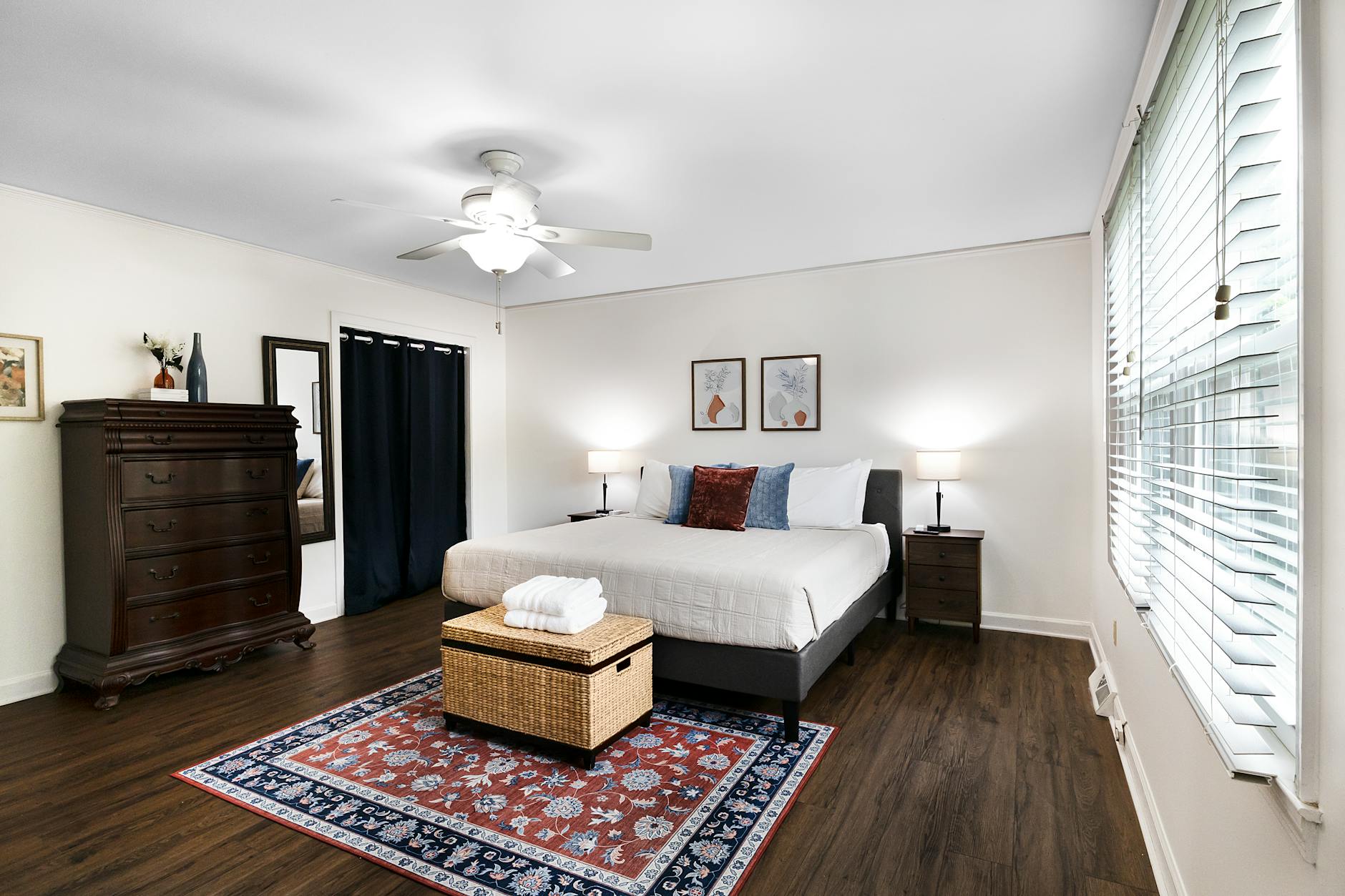
The king is the size most sleep experts recommend for couples. If you’re choosing between popular brands, our Emma vs Simba vs Eve comparison covers which suits different sleeper types, and once you’ve slept on one, going back to a double feels like a downgrade.
At 150cm × 200cm, you get 75cm per person — that’s the width of a small single each, with 10cm more length than a double. The extra length is particularly welcome for taller people. Anyone over about 183cm (6 foot) will appreciate not having their feet dangling off the end.
Who it’s for:
- Couples who have the space. This is the size to aim for. The difference between a double and a king sounds modest on paper (15cm wider, 10cm longer), but in practice it’s the difference between sleeping comfortably and waking up when your partner rolls over.
- Anyone over 180cm tall. The 200cm length means you’re not curled up trying to keep your feet on the mattress.
- People who share with pets. If your dog or cat sleeps on the bed — and statistically, about 40% of UK pet owners admit to this — a king gives everyone room.
Room size for a king: You’ll want a bedroom at least 3.5m × 3.5m, ideally wider. The mattress itself is 150cm wide, and you need about 60cm on each side for bedside tables and walking space, plus room at the foot for getting in and out without climbing over the end. In a standard 3m × 3.6m bedroom (common in newer UK builds), a king fits but doesn’t leave much room for anything else.
UK price range: About £250-800. The Emma Original King is around £450-550, the Simba Hybrid King about £550-650, and the Hypnos Orthocare range starts around £700 at John Lewis.
Super King — 180cm × 200cm
The super king is the largest standard UK mattress size, and it is glorious. At 180cm wide, each person gets 90cm — the same width as a full single bed. You can stretch out, roll over, and barely disturb the person next to you.
Who it’s for:
- Couples who want the best sleep possible. If your bedroom can fit it, there’s no reason not to go super king. The sleep quality difference is real — less disturbance from partner movement, more room to find a comfortable position, and space to sleep without someone’s elbow in your ribs.
- Larger individuals. If either partner is broad-shouldered or simply prefers more space, a super king provides it without compromise.
- New builds with big master bedrooms. Many newer houses have master bedrooms designed around super king beds. If yours does, take advantage of it.
Room size for a super king: You need at least 4m × 4m to fit a super king comfortably with bedside tables and walking space. In a room that’s 3.5m wide, you can technically fit the bed (180cm leaves 170cm for both sides combined), but it’ll feel squeezed.
The practical downside: Everything costs more. Sheets, duvets, mattress protectors, bed frames — all of it carries a premium for super king sizing. A decent super king duvet set costs about £40-80 compared to £25-50 for a king. Delivery is also more challenging — make sure a 180cm mattress can get through your front door, up the stairs, and around the landing. Measure the tightest point on the route, not just the bedroom.
UK price range: About £350-1,200+. Budget options from Silentnight start around £350-400. Premium brands like Hypnos, Vispring, and Harrison Spinks run into thousands.
Emperor — 200cm × 200cm
The emperor isn’t technically a “standard” UK size — most high-street retailers don’t stock it — but it exists and is worth mentioning for people with large bedrooms and a love of sleeping space.
At 200cm × 200cm, it’s a perfect square. You need a bedroom of at least 4.5m × 4.5m to make it work comfortably, and you’ll almost definitely need to order the mattress, bed frame, and bedding as special sizes.
Who it’s for: People with the space and the budget who want the most bed possible. Often found in luxury hotels and large period homes where the bedrooms can handle it.
UK price range: About £600-3,000+. Most are custom-made.
EU vs UK Mattress Sizes: The Confusion Explained
This is where people get caught out, particularly when buying from IKEA, ordering from European websites, or buying a mattress for a bed frame they got from a continental retailer.
| Size Name | UK (cm) | EU (cm) | Difference |
|---|---|---|---|
| Single | 90 × 190 | 90 × 200 | EU is 10cm longer |
| Double | 135 × 190 | 140 × 200 | EU is 5cm wider, 10cm longer |
| King | 150 × 200 | 160 × 200 | EU is 10cm wider |
| Super King | 180 × 200 | 180 × 200 | Same! |
The critical takeaway: EU and UK sizes are NOT interchangeable below super king. A UK double mattress on an EU double bed frame will leave a 5cm gap across the width and a 10cm gap at the foot. It won’t look right, it won’t feel right, and the mattress will slide around.
IKEA: A Special Case
IKEA uses EU sizing in all its stores worldwide, including in the UK. Their “double” mattress is 140cm × 200cm, not the UK standard 135cm × 190cm. This means:
- IKEA mattresses don’t fit standard UK bed frames (and vice versa)
- IKEA bedding is sized for EU mattresses — their double fitted sheets are 140cm wide
- If you have an IKEA bed frame, you need an IKEA mattress or an EU-sized mattress from another brand (Emma and Simba both offer EU sizes)
This isn’t a problem if you buy everything from IKEA — it all fits together perfectly. It only becomes an issue when you mix IKEA with non-IKEA, which happens all the time.
Buying from European Brands
Many popular mattress brands in the UK — Emma, Eve, Simba — sell both UK and EU sizes on their websites. When ordering, make completely sure you’ve selected the right one. The websites usually make this clear, but it’s easy to click the wrong option if you’re in a hurry.
Which Mattress Size Should You Actually Buy?
Forget the measurements for a moment. Here’s the practical advice based on who’s sleeping in the bed and where.
For a Child’s Room
Start with a single (90 × 190cm) unless the room is too small, in which case go for a small single. A single will last from early childhood through to when they leave for university. Don’t bother with a double for a child unless the room is large — they don’t need the space, and you might want it for furniture, a desk, or floor play area.
For a Teenager’s Room
A single is fine if they’re not fussed. A small double (120 × 190cm) is a nice upgrade if the room fits it — gives them the feeling of having a proper “grown-up” bed and handles the inevitable growth spurt that turns them into a six-footer overnight.
For a Couple’s Main Bedroom
King (150 × 200cm) if at all possible. It’s the minimum size where both people reliably get a good night’s sleep without disturbing each other. If the room allows it, super king (180 × 200cm) is even better.
If the room only fits a double, it’ll work — but consider whether you can rearrange the room to squeeze in a king. Even removing one bedside table to make space for a wider bed is usually a worthwhile trade.
For a Guest Room
Double (135 × 190cm) is the sweet spot. It accommodates a single guest generously or a couple adequately for a few nights. A single is acceptable but makes couples who visit feel slightly unwelcome. A king is generous but probably wastes space in a room that needs to serve other purposes too.
For a Studio Flat or Small Bedroom
Small double (120 × 190cm) hits the best balance. Bigger than a single so it doesn’t feel like student digs, but smaller than a double so it doesn’t eat the room. If you’re in a London flat where the “bedroom” is barely bigger than the bed, a single might be the only realistic option — and that’s completely fine.
Bedding and Accessories: Size Matters Here Too
Once you’ve chosen your mattress size, everything else needs to match. Here’s a quick reference for the bedding you’ll need.
- Fitted sheets must match the mattress size exactly — they won’t stretch across a larger size or stay put on a smaller one
- Flat sheets and duvets should be one size up from the mattress for comfortable overhang. A king duvet (230 × 220cm) on a double bed stops the nightly tug-of-war — one of the best sleep hacks going
- Mattress protectors must match exactly, like fitted sheets
- Bed frames vary by manufacturer even within the same named size — always check the internal dimensions, not just the size label
Room Size Recommendations
Here’s a realistic guide to the minimum room size for each mattress, assuming you want bedside tables on both sides, a clear path around the bed, and space for a wardrobe.
| Mattress Size | Minimum Room Size | Comfortable Room Size |
|---|---|---|
| Single | 2.1m × 3m | 2.5m × 3.5m |
| Small Double | 2.5m × 3m | 3m × 3.5m |
| Double | 3m × 3.3m | 3.5m × 3.8m |
| King | 3.3m × 3.5m | 3.7m × 4m |
| Super King | 3.7m × 3.5m | 4.2m × 4.2m |
These are working minimums. “Comfortable” means you can walk around the bed freely, open wardrobe doors without hitting the bed, and not feel like the room is entirely bed.
Final Advice
Don’t buy the biggest mattress that physically fits in your room — buy the biggest that fits comfortably with space to move around. A king-size bed in a room that’s technically big enough but practically cramped will make the whole room feel stressful rather than restful.
Measure the room. Measure the route from the front door to the bedroom. Decide on the size. Then spend your time choosing the right type of mattress — spring, memory foam, hybrid — rather than agonising over whether to go king or super king. Both are great choices for couples. Both will serve you well for years.
And if you’re currently on a double and considering upgrading to a king: do it. The extra 15cm per side and 10cm in length is one of the best investments in daily comfort you’ll ever make. You spend a third of your life in bed. Make it count.
NHS sleep guidance is useful context when judging whether a bedding or routine change is likely to help. the relevant guidance.
If you are refining the same bedroom setup, compare this with How to Choose a Mattress: The Complete UK Guide, Do You Need to Flip Your Mattress? A Complete Guide, Mattress Foundations Explained: Slats, Platform & Box Spring, Mattress Certifications Explained: CertiPUR, OEKO-TEX & More.
Frequently Asked Questions
What is the quickest useful check for Mattress Sizes UK: Single, Double, King & Super King Explained? Start with the practical constraint: room size, sleeping position, heat level, budget or existing bed base. That usually narrows the decision faster than comparing every specification.
Does Mattress Sizes UK: Single, Double, King & Super King Explained matter for most UK bedrooms? Yes, if it affects comfort, temperature, support or routine. It matters less when the change is mainly cosmetic or duplicates something your current setup already does well.
What should you avoid when deciding on Mattress Sizes UK: Single, Double, King & Super King Explained? Avoid choosing only by price or marketing claims. Check measurements, materials, care instructions and return terms before buying or changing your setup.
What should I check first with Mattress Sizes : Single, Double, King & Super King Explained? Start with the real use case, then check size, compatibility, running costs and maintenance. A product that looks good on paper can still be the wrong fit if it does not suit the room, routine or budget.
How do I avoid wasting money on Mattress Sizes : Single, Double, King & Super King Explained? Avoid buying on one headline feature alone. Compare the practical details, read the warranty or returns terms, and choose the option that solves your main problem rather than the one with the longest specification list.