The Lumie Bodyclock Glow 150 is the best sunrise alarm clock for most UK bedrooms. It offers adjustable 20, 30 or 45-minute sunrises, 10 optional sounds and an auto-dimming display without requiring an app or subscription. Its controls cover the features that materially affect waking, while remaining easier to live with than the more elaborate premium models.
Choose Philips HF3519 if you want an adjustable 20–40-minute, 300-lux Philips light with FM radio and two alarms; Lumie Shine 300 for a longer 15–90-minute sunrise and weekly schedules; Philips HF3531 for seven rather than five wake sounds, USB phone charging and a midnight-light function; Hatch Restore 3 for app-built bedtime routines; or LIORQUE if you want to try the idea at a lower cost. None can compensate for too little sleep, and a wake-up light is not automatically the same as a medical 10,000-lux SAD lamp.
In This Article
- Our direct answer
- Comparison table
- Six recommendations
- How to choose
- Setup and placement
- Sleep and SAD claims
- Who should skip one
- Final verdict
- Frequently asked questions
Best Sunrise Alarm Clock UK: Our Direct Answer
Buy the Lumie Bodyclock Glow 150 if your priorities are an adjustable coloured sunrise, a dark bedroom display and uncomplicated bedside controls. It has enough range to tune the routine without adding radio presets, Wi-Fi or a phone app. For most people, that balance is more useful than the longest specification sheet.
The Philips HF3519 is the closest alternative. It reaches a manufacturer-stated 300 lux, offers 20 brightness levels, an adjustable 20–40-minute sunrise, FM radio and two alarms. Pick Philips if radio and separate alarm times matter; pick Lumie Glow 150 for its 20, 30 or 45-minute choices, 10 rather than five wake sounds and simpler controls. Neither is a bad answer, but Glow is easier to recommend across different routines.
The biggest mistake is buying by maximum brightness alone. Placement, display dimming, alarm scheduling and the minimum usable light level matter every night. A bright device hidden behind a water bottle will do less than a modest lamp positioned where the dawn reaches your eyes.
The Best Sunrise Alarm Clocks at a Glance
Match the award to your routine rather than assuming premium means better. Sunrise duration is only useful when you can adjust it to avoid waking too early, and smart features are worthwhile only if you will maintain the routine.
| Alarm clock | Our award | Sunrise timing | Wake sounds | Extra |
|---|---|---|---|---|
| Lumie Bodyclock Glow 150 | Best overall | 20, 30 or 45 mins | 10 sounds | No radio |
| Philips HF3519/01 | Best Philips value | 20–40 mins | 5 sounds | FM radio; 2 alarms |
| Lumie Bodyclock Shine 300 | Best with radio | 15–90 mins | 15 sounds | FM radio |
| Philips HF3531/01 | Best premium non-app | 20–40 mins | 7 sounds | FM radio |
| Hatch Restore 3 | Best smart routine | Custom in app | App sound library | Wi-Fi/app |
| LIORQUE Wake Up Light | Best budget | Up to 60 mins | 30 sounds | No radio |
Published durations and sound counts are manufacturer or current product claims for the selected variants. Sound libraries and paid-app features can change, so check what is included before ordering a connected model.
Our Six Sunrise Alarm Clock Recommendations
1. Lumie Bodyclock Glow 150 — Best Overall

The Bodyclock Glow 150 is the best sunrise alarm clock for most people because it gives useful control without turning bedtime into an app project. Lumie documents 20, 30 and 45-minute sunrise and sunset options, adjustable final intensity, 10 optional sounds, tap snooze and an auto-dimming display. That is enough flexibility for most dark UK mornings.
Its mixed warm-white, orange and red LEDs create a coloured transition rather than merely brightening a white bulb. The display can fade low or switch off, which matters if even a small clock readout bothers you. At 19 × 16 × 12cm and 0.565kg, it is compact enough for an ordinary bedside table but still needs an unobstructed position where the light reaches your face.
There is no radio, phone charging or weekday/weekend schedule. The simpler controls are the benefit as well as the limitation. Choose Shine 300 if schedules and FM matter; choose Glow 150 if you want a strong core wake-up light without Wi-Fi, subscriptions or an overloaded menu.
- Buy it if: you want adjustable sunrise length, good display dimming and no app.
- Skip it if: you need radio or separate alarm schedules.
- Main compromise: excellent core functions, few connected extras.
2. Philips HF3519/01 — Best Philips Value
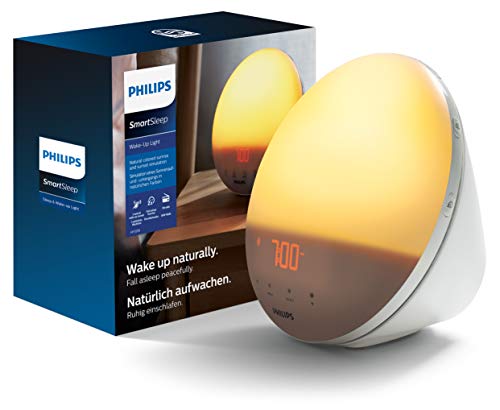
The Philips HF3519/01 is the sensible Philips value choice. Philips specifies an adjustable 20–40-minute coloured sunrise, five wake sounds, FM radio, two alarms, sunset simulation, 20 brightness settings and up to 300 lux at maximum intensity.
The gradual colour change and broad brightness range are more relevant than novelty sounds. Start below maximum, then move the lamp nearer or increase intensity if the light does not reach you before the audio begins. A bedside lamp cannot compensate for a wardrobe, tall stack of books or sleeping mask blocking it.
This model gives finer minute-by-minute sunrise adjustment than the Lumie Glow 150’s three preset durations, although Glow offers twice as many wake sounds. It remains a good middle choice for someone who wants a well-documented wake-up light, FM radio, two alarms and simple tap snooze. Choose the HF3531 instead only if seven rather than five wake sounds, USB phone charging and its midnight-light function justify the upgrade.
- Buy it if: you want a 300-lux Philips model with an adjustable 20–40-minute sunrise, FM radio and two alarms.
- Skip it if: you specifically want seven wake sounds, USB phone charging or a midnight light.
- Main compromise: it lacks those HF3531 extras and provides five wake sounds.
3. Lumie Bodyclock Shine 300 — Best with Radio
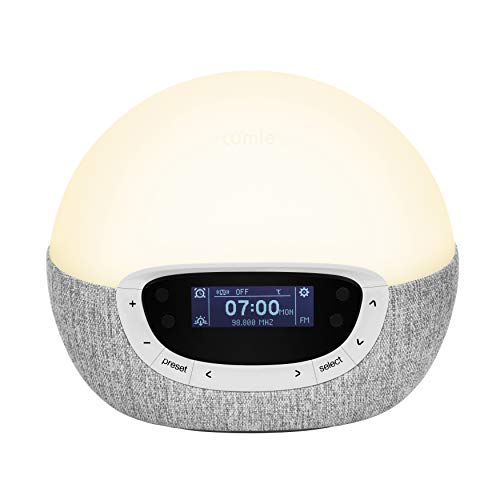
The Shine 300 is the best pick for households that want a long, highly adjustable sunrise and radio in one bedside unit. Lumie specifies a 15–90 minute sunrise and sunset, 15 sleep/wake sounds, FM radio with five presets, adjustable final intensity and daily or weekly alarm scheduling.
That 90-minute maximum is unusually flexible, but longer is not automatically better. A light that begins too early can disturb a partner or wake you before you have completed enough sleep. Start around 30 minutes and alter one variable at a time. The weekly schedule is more useful than it sounds because it avoids resetting workday and weekend times repeatedly.
Shine 300 costs more and asks you to learn more controls than Glow 150. It earns the upgrade when you will use its radio, presets or schedule. If those features will remain untouched, the cheaper Glow is the cleaner recommendation.
- Buy it if: you want FM radio, flexible 15–90 minute timing and weekly alarms.
- Skip it if: you want a minimal set-and-forget clock.
- Main compromise: greater control brings a busier setup.
4. Philips HF3531/01 — Best Premium Non-App
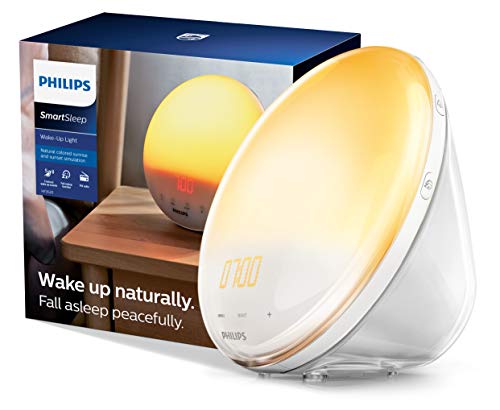
The Philips HF3531/01 is the premium choice for people who want extensive bedside controls without depending on an app. Philips lists a 20–40 minute adjustable coloured sunrise, 20 brightness settings up to 300 lux, seven sounds, FM radio, two alarms, self-adjusting display brightness, tap snooze and a USB charging port.
Compared with the HF3519, the HF3531 adds seven rather than five wake sounds, USB phone charging and a dim orange midnight-light function. The midnight light is useful for moving around without switching on a harsh ceiling light. Both Philips models provide FM radio, two alarms and an adjustable 20–40-minute sunrise, so those shared features do not justify choosing one over the other.
Do not buy it merely because the feature count is longer. The circular body occupies a sizeable footprint at about 19.2cm high, 19.9cm wide and 14.6cm deep, and an old-fashioned radio may be irrelevant if you stream everything. Choose it for dual alarms, radio and 300-lux adjustment; otherwise Glow 150 delivers the central sunrise function for less.
- Buy it if: you need two alarms, FM radio and strong non-app controls.
- Skip it if: one alarm and a smaller feature set are enough.
- Main compromise: premium cost and a substantial bedside footprint.
5. Hatch Restore 3 — Best Smart Routine

Hatch Restore 3 is less a traditional clock and more a programmable evening-and-morning routine device. It combines a sunrise alarm, coloured light and sound machine with physical controls for starting a wind-down routine, moving between steps, adjusting volume, snoozing and disabling the alarm.
The important caveat is connectivity. Hatch says setup requires the free app, a Bluetooth-enabled phone or tablet and 2.4GHz Wi-Fi. Some sounds and sunrise choices are included, while a wider library sits behind the optional Hatch+ subscription. Check the current included-versus-paid content before buying; the device should still satisfy you without assuming a continuing subscription.
Restore 3 suits someone who wants to pair the morning light with an organised screen-free wind-down. It is a poor fit for anyone who distrusts app setup, has unreliable bedroom Wi-Fi or wants a conventional radio alarm. The physical big button makes nightly operation simpler once routines are configured.
- Buy it if: you want app-built wind-down and sunrise routines with physical controls.
- Skip it if: you want offline setup or dislike optional subscriptions.
- Main compromise: the broadest routine system is also the most connected.
6. LIORQUE Wake Up Light — Best Budget

The LIORQUE is the low-cost route into gradual light. The current product information describes a sunrise lasting up to 60 minutes, 30 sound choices, 30 volume levels, warm and cool white lamp modes, 12 brightness levels, 30–180 minute sleep timers and five display levels including off.
That looks generous on paper, but the specification comes from the current retail product information rather than the depth of independent manufacturer documentation available for Lumie, Philips and Hatch. Treat its many modes as convenience features, not evidence that it matches the light quality, controls or long-term support of the established models.
It is the sensible experiment for someone unsure whether simulated dawn will help their routine. Keep the returns process and seller support in mind, and test whether the display truly becomes dark enough for your bedroom. Move to Glow 150 if reliable documentation and simpler controls matter more than the longest feature list.
- Buy it if: you want to try sunrise waking at a lower entry cost.
- Skip it if: manufacturer documentation and long-term support are priorities.
- Main compromise: abundant modes with less authoritative product support.
How to Choose a Sunrise Alarm Clock
Sunrise Duration and Intensity
Adjustable timing is valuable for tuning, not for chasing the longest number. Around 20–30 minutes is a sensible starting point. If the light wakes you too early, shorten it or lower the final intensity. If the sound always arrives first, move the lamp, lengthen the transition or increase brightness gradually.
Display Dimming and Bedside Controls
A clock that glows all night can undo the appeal of a gentle morning. Look for display off or a genuinely low setting, plus controls you can operate when half awake. Tap snooze is convenient, but an obvious alarm-off control prevents frantic menu hunting. Our guide to red and blue light around sleep explains why evening colour and brightness deserve attention too.
Alarms, Radio and Sound
Two alarms help couples and variable schedules; weekly programming helps ordinary Monday-to-Friday routines. Radio only adds value if you use it. A large sound count can be less useful than one pleasant sound with enough volume range. If masking noise matters more than light, compare a dedicated white-noise machine.
Apps, Wi-Fi and Subscriptions
App control works well for multi-step routines, but check three things: whether core alarms work during an internet outage, which content is included permanently and whether setup supports your home Wi-Fi. Do not pay a recurring fee merely to recreate the fixed sunrise and sound available on a conventional clock.
How to Set Up a Wake-Up Light
Put the light close enough to reach your face but not where bedding can cover it. Follow the manufacturer’s clearance, power-adaptor and moisture warnings. Keep drinks away, do not place the unit on a soft surface that blocks ventilation, and use the supplied power equipment.
- First night: use a moderate final intensity and a 20–30 minute sunrise.
- After three mornings: change only timing, brightness or sound—not all three.
- If you wake early: shorten the sunrise or reduce its final brightness.
- If only sound wakes you: clear obstructions, move the lamp nearer, then raise intensity.
Blackout curtains can improve sleep but also make winter mornings darker. A sunrise light can complement them if placed well; see our guide to choosing curtains for better sleep. Keep the schedule broadly consistent rather than using radically different wake times each day.
Sunrise Alarms, Sleep and SAD Claims
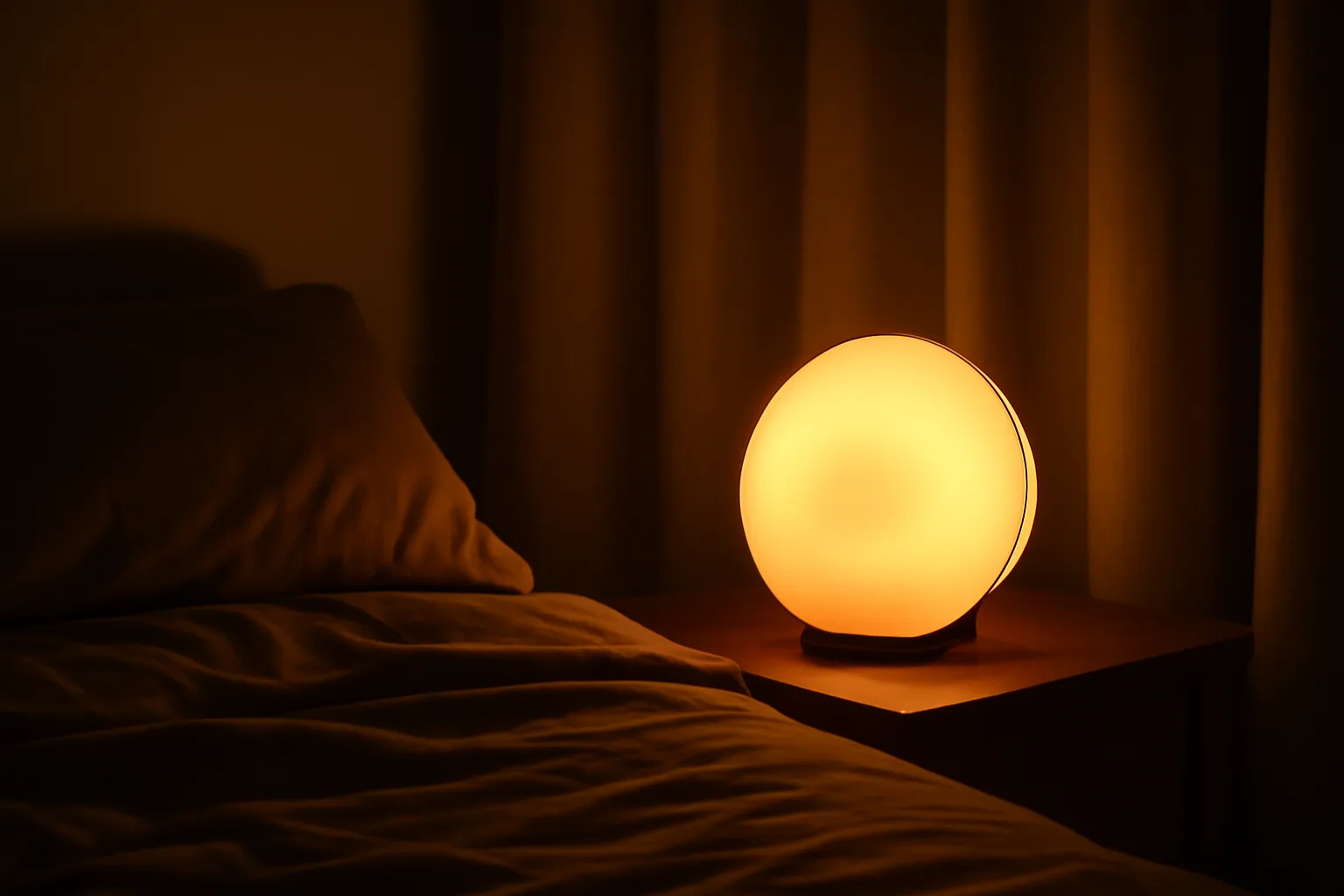
Morning light is a real cue for the body clock. Royal Papworth Hospital’s sleep guidance notes that early-morning light helps regulate circadian rhythm. That supports the logic of dawn simulation, but it does not mean every person will feel transformed by every bedside lamp.
Separate wake-up lights from dedicated bright-light therapy. A device intended to ease waking may deliver hundreds of lux at the bedside, while SAD lamps are commonly designed around much brighter therapeutic exposure at a stated distance. Lumie classifies Glow 150 and Shine 300 as Class I medical devices, but use still needs to follow the exact instructions and suitability guidance.
Persistent low mood, severe daytime sleepiness, insomnia or difficulty waking can have causes that an alarm clock cannot diagnose. Speak to a GP or another qualified professional where symptoms affect daily life. Our sleep tracker comparison makes the same point: consumer data and devices can inform a routine, not replace clinical assessment.
Who Should Skip a Sunrise Alarm?
Skip one if your sleeping partner rises much later and the spreading light will disturb them. It may also be unsuitable if you sleep with an eye mask, cannot position it safely, or need vibration or very loud audio for reliable waking. Heavy sleepers should retain a dependable backup until they know the light works for them.
Shift workers need more than a simulated sunrise. Room darkness, noise control, schedule timing and daytime light exposure all matter. For travel or shared rooms, sleep headphones or a vibrating wearable may create fewer conflicts, though each has its own comfort and safety trade-offs.
Which Sunrise Alarm Clock Should You Buy?
Buy the Lumie Bodyclock Glow 150 for the best overall mix of adjustable sunrise timing, sound choice, dark-room display control and simplicity. Choose Philips HF3519 for an adjustable 20–40-minute, 300-lux Philips model with FM radio and two alarms, or Lumie Shine 300 when a longer sunrise range and weekly scheduling will be used regularly.
Philips HF3531 is the premium non-app choice when seven rather than five wake sounds, USB phone charging and a midnight-light function matter. Hatch Restore 3 suits people who actively want connected bedtime routines and understand the optional subscription. LIORQUE is the lower-cost experiment. The right clock is the one whose timing, controls and bedside footprint fit your actual mornings—not the one with the longest list of modes.
Frequently Asked Questions
Do sunrise alarm clocks really work? They can make dark-morning waking feel less abrupt by increasing bedroom light before the alarm, but results vary. They do not replace enough sleep, consistent timing or medical advice for persistent sleep problems.
How long should a sunrise alarm be set for? Start at about 30 minutes unless the manufacturer advises otherwise. Shorten it if you wake too early; lengthen it or increase intensity if the sound always wakes you before the light has any effect.
Where should a wake-up light be placed? Put it on the bedside table where light can reach your face, without covering it or placing it near water. Follow the stated safe distance and ventilation instructions for the exact model.
Can a sunrise alarm help with seasonal affective disorder? A wake-up light is not automatically a 10,000-lux SAD treatment lamp. If low mood is persistent or severe, speak to a healthcare professional and use a medical light device only as directed.
Will a sunrise alarm wake a sleeping partner? It can. Light spreads through the room before the set time, so partners on different schedules should discuss placement, intensity and duration or use a different alarm method.
Should I choose a sunrise alarm with an app? Only if routines and remote customisation are worth the setup, Wi-Fi dependence and possible paid content. A non-app Lumie or Philips model is simpler and keeps core alarm functions local.