For a diagnosed house-dust-mite allergy, the leading choice is a breathable, fully enclosing barrier whose allergen performance has been independently assessed. Allergy UK recommends covers that completely enclose the mattress, duvet and pillows and have been tested to prevent house-dust-mite allergen escaping. Among the products checked here, Astex PRISTINE is the clearest verified example; the other six products serve different care and protection needs but should not be treated as equivalent to that standard.
Allergy bedding works as one part of a wider plan: washable covers, cleaning, ventilation and moisture control all matter. The seven recommendations below cover a tested breathable allergen-barrier encasement, an ordinary washable protector, a zipped waterproof encasement, replacement pillows, a washable duvet and a combined protector set. None is a treatment or a guarantee that symptoms will improve.
In This Article
- Our direct answer
- Comparison table
- Seven recommendations
- How to choose
- Product types explained
- Care routine
- Final verdict
- Frequently asked questions
Best Hypoallergenic Bedding: Our Direct Answer
Start by deciding which job the cover must do. The Slumberdown mattress protector is an open, strapped, washable care layer. The IMFAA surrounds the mattress and is sold as waterproof, but no independent allergen-barrier testing, pore-size evidence or relevant certification could be verified for this exact encasement. Neither should be presented as the same thing as a tested breathable allergen barrier.
For diagnosed house-dust-mite allergy, Allergy UK’s current guidance says a barrier cover should be breathable, completely enclose the item and be tested to prevent allergen escape. Astex PRISTINE is Allergy UK approved, uses tightly woven 5.9-micron fabric, fully encloses the item with a lined zip and is documented as preventing 99% of house-dust-mite allergens from passing through. The double mattress encasement is currently purchasable in the UK in a 135 × 190 × 27cm UK size. Check the dimensions before ordering.
Replace the pillows or duvet only when their support, filling, size or washability is wrong. The Slumberdown pillows and Silentnight duvet are practical synthetic choices, while the Comfortnights set suits a king-size bed needing duvet and pillow covers together. The biggest mistake is buying a product marked “hypoallergenic” without checking fit, closure and laundering.
Hypoallergenic Bedding at a Glance
| Product | Award | Type | Selected size | Key point |
|---|---|---|---|---|
| Astex PRISTINE Mattress Encasement | Best verified allergen barrier | Breathable full encasement | 135 × 190 × 27cm | 5.9-micron fabric; Allergy UK approved |
| Slumberdown Anti Allergy Mattress Protector | Best washable protector | Open strapped protector | 135 × 190cm | Anti Allergy filling; Allergy UK approved |
| IMFAA Zipped Mattress Encasement | Best zipped waterproof cover | Six-sided encasement | 137 × 190cm; 40cm depth | No verified allergen-barrier test |
| Silentnight Anti Allergy Pillow Protectors | Best pillow protectors | 2 protectors | Standard pillow | Machine washable |
| Slumberdown Anti Allergy Pillows | Best pillows | 2 pillows | 48 × 74cm | Medium support |
| Silentnight Deep Sleep 10.5 Tog Duvet | Best duvet | Double duvet | 200 × 200cm | 10.5 tog; washable |
| Comfortnights SleepShield Set | Best combined set | Duvet and pillow protectors | King size | Zipped protectors |
Sizes refer to the selected variants only. Measure the mattress depth and bedding before ordering; “double” and “king” do not resolve every fit question.
Our Seven Hypoallergenic Bedding Recommendations
1. Astex PRISTINE Mattress Encasement — Best verified allergen barrier
Astex PRISTINE is the specialist choice here for diagnosed house-dust-mite allergy. Allergy UK lists it as an approved, breathable, fully zipped encasement made from tightly woven 5.9-micron fabric and documents a 99% barrier to house-dust-mite allergen passing through. The current UK double mattress version measures 135 × 190 × 27cm.
It is a mattress encasement, not a complete allergy plan. Check the mattress dimensions and care instructions before ordering, and use it alongside the cleaning, ventilation and medical guidance relevant to the allergy.
- Buy it if: you need a breathable, fully enclosing mattress barrier with independent support for its allergen claims.
- Skip it if: you only need an inexpensive washable top layer or waterproof spill protection.
- Main compromise: stronger product-specific evidence, but careful sizing and specialist care are required.
2. Slumberdown Anti Allergy Mattress Protector — Best washable protector

The Slumberdown is an ordinary quilted mattress protector designed to make mattress care easier. The selected double is 135 × 190cm and uses elasticated straps, leaving the underside and parts of the sides open. According to Slumberdown’s current specification, it uses an Anti Allergy filling intended to help reduce the build-up of dust mites and bacteria and is Allergy UK approved. The manufacturer does not describe a separate treatment for this exact protector.
Choose it as a removable washable layer, not as a tested allergen-barrier encasement. Its open strapped construction cannot completely enclose the mattress. Check the 135 × 190cm size and 30cm fit against the mattress before ordering.
- Buy it if: you want an easy-to-wash Allergy UK-approved care layer for a double mattress.
- Skip it if: you need a fully enclosing, independently tested allergen barrier.
- Main compromise: easy removal, but open strapped coverage.
3. IMFAA Zipped Mattress Encasement — Best zipped waterproof cover
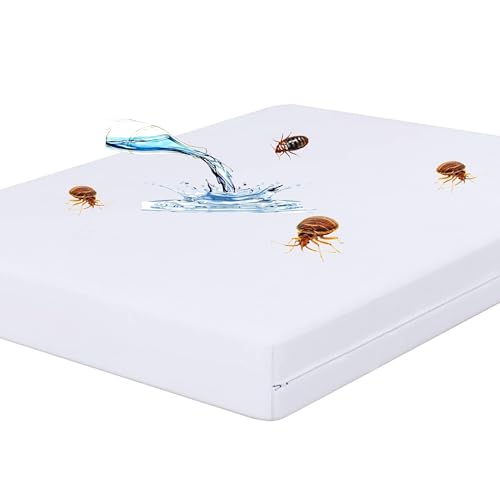
The IMFAA cover surrounds the mattress on six sides, closes with a zip and is sold as waterproof. The selected variant is listed at 137 × 190cm with a 40cm depth. Its construction offers more physical coverage than an open strapped protector, but enclosure alone does not prove that a product blocks house-dust-mite allergen.
No independent allergen-barrier testing, pore-size evidence or relevant certification could be verified for this exact IMFAA model. Describe it only as a zipped waterproof encasement, not as dust-mite-proof or medical-grade. Measure carefully: a loose cover can wrinkle, while one that is too shallow may strain the zip. Follow its care label rather than assuming it tolerates frequent hot washing.
- Buy it if: you want a zipped waterproof cover around all six sides.
- Skip it if: you need documented allergen filtration or certified breathable barrier performance.
- Main compromise: full physical coverage without verified allergen-barrier evidence.
4. Silentnight Anti Allergy Pillow Protectors — Best pillow protectors

Silentnight’s two-pack adds a washable layer around standard pillows, which collect skin flakes, moisture and dust close to the face. Pillow protectors are useful even when the pillows themselves are washable because they are quicker to remove and can reduce how often the whole pillow needs cleaning.
These are washable protectors rather than fully enclosing, independently tested allergen barriers. Confirm the closure and exact dimensions on arrival, then keep ordinary pillowcases over them. Replace any protector whose fabric, seam or closure has failed.
- Buy it if: you want a recognised washable two-pack.
- Skip it if: you require fully sealed pillow encasements.
- Main compromise: convenient routine protection rather than a complete barrier.
5. Slumberdown Anti Allergy Pillows — Best pillows

The Slumberdown pillows suit buyers replacing old, difficult-to-clean pillows. The selected pair measures 48 × 74cm, uses medium support and is described as washable, UK-made and Allergy UK approved. Medium support is generally aimed at back sleepers, though comfort still depends on build and mattress firmness.
Do not replace a comfortable pillow solely because another one carries an anti-allergy label. A washable protector may be the better first move. Choose these when the existing pillows are worn, unsuitable or not realistically washable.
- Buy it if: you need washable medium-support replacement pillows.
- Skip it if: your current pillows are supportive and can take protectors.
- Main compromise: washability and certification, but support will not suit everyone.
6. Silentnight Deep Sleep 10.5 Tog Duvet — Best duvet

The Silentnight Deep Sleep duvet is the practical washable duvet choice. The selected double measures 200 × 200cm and has a 10.5 tog rating, making it a middle-weight option rather than a specialist summer or very warm winter duvet. Its synthetic microfibre construction avoids feather filling and the whole duvet is described as machine washable.
Check washing-machine capacity before buying. A duvet can be labelled washable but still be too bulky for a domestic drum, especially when wet. A protector can reduce cleaning frequency, but it does not remove the need to follow the duvet’s own care label.
- Buy it if: you need a washable synthetic double duvet.
- Skip it if: you sleep hot or need a different tog.
- Main compromise: easy-care filling, but bulky laundering.
7. Comfortnights SleepShield Set — Best combined set

The Comfortnights set combines zipped duvet and pillow protectors in one king-size package. It is the most coherent option when several pieces need a barrier at once and avoids mixing closures or care routines across separate products.
The selected variant is king size, so it is wrong for double bedding. A protector set does not replace sheets, pillowcases or routine washing, and “anti-allergy” does not mean symptoms are guaranteed to improve. Buy it for coordinated coverage and check every dimension.
- Buy it if: you need matching king-size duvet and pillow protectors.
- Skip it if: you only need one item or use another bed size.
- Main compromise: broad coverage, but less flexible than buying separately.
How to Choose Hypoallergenic Bedding
Match the product to the problem
For easier mattress care, an ordinary washable protector can be useful. For spills, a waterproof zipped encasement covers more of the mattress. For diagnosed house-dust-mite allergy, look for a breathable cover that completely encloses the item and has product-specific evidence that it prevents allergen escape. Cambridge University Hospitals’ dust-mite guidance also emphasises reducing exposure across the home rather than relying on one purchase.
Check evidence, then fit and closure
Words such as “hypoallergenic”, “anti-allergy”, “encasement” and “waterproof” do not establish the same performance. Look for independent testing, a stated pore size or relevant certification that applies to the exact product. Then measure length, width and depth and check how the zip, seams and closures are constructed. A breathable full enclosure such as Astex PRISTINE is the stronger evidence-led choice for diagnosed house-dust-mite allergy; a strapped protector remains the easier washable care layer.
Buy for a realistic wash routine
Check temperature, drying method and machine capacity before buying. A washable king duvet is not useful if it cannot move freely in the drum. Our guide to how often to wash bedding helps turn care labels into a routine.
Protectors, Encasements and Washable Fillings
An ordinary washable protector sits over the top and sides to simplify cleaning. A fully zipped six-sided encasement surrounds the mattress, but that construction alone does not establish allergen filtration. A breathable allergen-barrier cover adds a third requirement: product-specific evidence—such as independent testing, documented pore size or relevant certification—that it prevents allergen escape. Allergy UK lists Astex PRISTINE as a 5.9-micron, fully zipped, breathable barrier with its Seal of Approval. The Slumberdown and IMFAA products have different, narrower roles.
Washable synthetic duvets and pillows can simplify care, but synthetic does not mean allergen-free. Support and temperature still matter. Compare duvet filling types and pillow types before replacing comfortable bedding solely for a label.
Allergy Bedding Care Routine
- Weekly: wash sheets and pillowcases according to their labels.
- Regularly: wash removable protectors and dry them completely.
- Periodically: inspect zips, seams and elastic for failure.
- Daily: ventilate the room and address condensation rather than trapping moisture.
Avoid layering so many waterproof covers that the bed becomes hot and damp. Keep care manageable and record which items tolerate which cycles. For children, check product suitability and our guidance on children’s bedding.
Which Hypoallergenic Bedding Should You Buy?
For diagnosed house-dust-mite allergy, the evidence-led choice is the breathable Astex PRISTINE full encasement, provided its size and care requirements suit the bed. Choose the Slumberdown protector for easier washable mattress care, or IMFAA when a zipped waterproof six-sided cover is wanted without assuming verified allergen-barrier performance. Add Silentnight pillow protectors before replacing supportive pillows.
Choose the Slumberdown pillows when washable medium support is needed, the Silentnight 10.5 tog duvet for an easy-care double duvet, or the Comfortnights set for coordinated king-size duvet and pillow protection. Fit, closure and cleaning are the decision—not the most dramatic allergy claim.
Frequently Asked Questions
What is the best hypoallergenic bedding for diagnosed house-dust-mite allergy? Allergy UK recommends breathable covers that completely enclose mattresses, duvets and pillows and have been tested to prevent allergen escape. Astex PRISTINE is the strongest verified specialist option discussed here. Bedding is only one part of an allergen-management plan.
Is the Slumberdown mattress protector a dust-mite barrier? It is an open, strapped, washable protector with Anti Allergy filling intended to help reduce the build-up of dust mites and bacteria, and it is Allergy UK approved. It does not fully enclose the mattress and should not be described as equivalent to a tested barrier encasement.
Is the IMFAA encasement dust-mite-proof? The exact IMFAA model is a zipped waterproof six-sided encasement, but no independent allergen-barrier testing, pore-size evidence or relevant certification could be verified. It should not be treated as a medical-grade or proven dust-mite barrier.
How often should allergy bedding be washed? Follow the product label and medical advice relevant to your allergy. Allergy UK advises weekly washing for bedding that is not inside barrier covers; wash at the permitted temperature, dry items fully and follow the separate care schedule for any encasement.
Are synthetic duvets better for allergies? Synthetic fillings are often easier to wash than feather or down, but fibre alone does not control allergens. Covers, washability, drying, ventilation and the wider bedroom routine matter.
Do anti-allergy products cure allergies? No. Bedding may reduce exposure or simplify cleaning, but it does not diagnose or cure allergy and benefits vary. Seek advice from a healthcare professional if symptoms are persistent, severe or affect breathing.