Organic cotton is worth paying for if you care about certified fibre sourcing, lower-impact processing and softer long-term feel, but it is not automatically cooler, stronger or better value than regular cotton. For most UK bedrooms, the practical answer is simple: buy organic cotton bedding UK shoppers can verify with GOTS or OEKO-TEX labels if you want the cleaner supply-chain story; buy good regular cotton if your priority is price, colour choice or replacing several sets at once.
In This Article
- The Short Answer: Which Cotton Bedding Should You Buy?
- What Organic Cotton Bedding Actually Changes
- Feel, Breathability and Washing Compared
- Organic Cotton Bedding UK Price Comparison: Organic vs Regular Cotton
- Certifications, Dyes and Label Checks
- Who Should Choose Organic Cotton, and Who Should Not Bother
- Frequently Asked Questions
The Short Answer: Which Cotton Bedding Should You Buy?
If I were buying one main bedding set for a grown-up bedroom and planning to keep it for years, I would choose organic cotton percale in white, cream or another easy-to-match colour. It usually costs more upfront, but the better ranges feel calmer against the skin, wash well, and avoid the vague “natural” marketing that makes ordinary cotton ranges hard to compare.
If I were kitting out a spare room, student room, rental, child’s bed or a whole family linen cupboard, I would usually buy regular 100% cotton first. You can get good breathable cotton without paying organic prices, and the savings matter once you need two fitted sheets, two duvet covers and spare pillowcases.
The biggest mistake is assuming “organic” tells you how the bedding will feel. It does not. Organic cotton can be crisp, soft, brushed, sateen, percale, thin, thick, smooth or slightly papery depending on weave, thread count and finish. Regular cotton has the same range. The label tells you more about how the fibre was grown and processed than how cosy the duvet cover will feel on a wet February night.
The quick recommendation
For most Sleep Setup UK readers, the best split is:
- Best long-term everyday buy: organic cotton percale or washed organic cotton, especially for fitted sheets and pillowcases that sit directly against skin.
- Best value buy: regular 100% cotton from M&S, Dunelm or John Lewis, especially if you need a full set and spares.
- Best for hot sleepers: cotton percale first, organic second. Weave matters more than the organic label for heat.
- Best for children: organic cotton is nice if the budget allows, but regular cotton that washes at 40°C or 60°C and survives frequent changes is often the more sensible buy.
This is similar to the advice in our guide to choosing bedding for children: the best fabric is the one that suits the sleeper, the washing routine and the budget, not the one with the most expensive-looking label.
Regular cotton is not the cheap villain
Regular cotton bedding gets unfairly dismissed in this comparison. A £25-£55 M&S pure cotton bedding set or a £16-£34 Dunelm cotton percale fitted sheet can be a better buy than a thin organic sheet with a nice sustainability story but poor finishing. If you are moving away from polyester-rich bedding, even ordinary cotton can feel like a big comfort upgrade.
Where organic cotton earns its keep is when the certification is real and the fabric quality is also good. That is the sweet spot: certified organic fibre, a weave you like, sensible washing instructions and a price that does not make you frightened to use it.
What Organic Cotton Bedding Actually Changes
Organic cotton bedding starts with cotton grown under an organic standard, then, in better ranges, continues through certified processing, dyeing and finishing. That distinction matters because a product can sound eco-friendly without giving you much proof.
The Soil Association explains that certified organic cotton is not only about growing the crop; credible certification also looks at what happens during manufacturing. That is why labels such as GOTS matter more than a hang tag that simply says “natural cotton”.
Farming and processing
Regular cotton is not one single thing. It can be cheap and heavily processed, or high-quality and made under decent manufacturing standards. Organic cotton narrows the claim: the cotton fibre should come from organic farming, and a strong textile certification should give you more confidence about the route from fibre to finished bedding.
For a bedding buyer, the practical differences are:
- Fewer vague claims: proper certification gives you something to check instead of relying on soft marketing language.
- Clearer fibre story: you know the cotton itself has been grown under an organic standard.
- Potentially better finishing: many organic ranges sit in the mid-range or premium bracket, so they often get better stitching, colours and packaging too.
- Higher starting price: certified supply chains cost money, and UK retail prices usually show it.
What organic cotton does not do is magically fix every bedding problem. It will not make a too-warm duvet cooler. It will not make a fitted sheet fit a deep mattress. It will not stop creasing if you buy crisp cotton percale and leave it in the tumble dryer. If those details matter, read the product spec before the sustainability paragraph.
Thread count still needs context
Organic cotton is often sold with thread count, but thread count is not a quality score on its own. A 200-thread-count cotton percale can feel cooler and nicer than a very high-thread-count sateen if you prefer a crisp sheet. We covered this properly in Thread Count Explained, but the short version is that weave, yarn quality and finishing matter at least as much as the headline number.
For organic cotton bedding UK retailers tend to sell a lot of 200-400 thread count options. That is a sensible range. I would be more suspicious of a bargain “1,000 thread count organic luxury” claim than of a plain 200-thread-count organic percale sheet from a retailer that shows clear certification.
Feel, Breathability and Washing Compared
Feel is where people expect organic cotton to win easily. Sometimes it does. But the reason is often that organic cotton ranges are positioned as better bedding, not because organic fibre has one fixed texture.
Percale, sateen and washed cotton
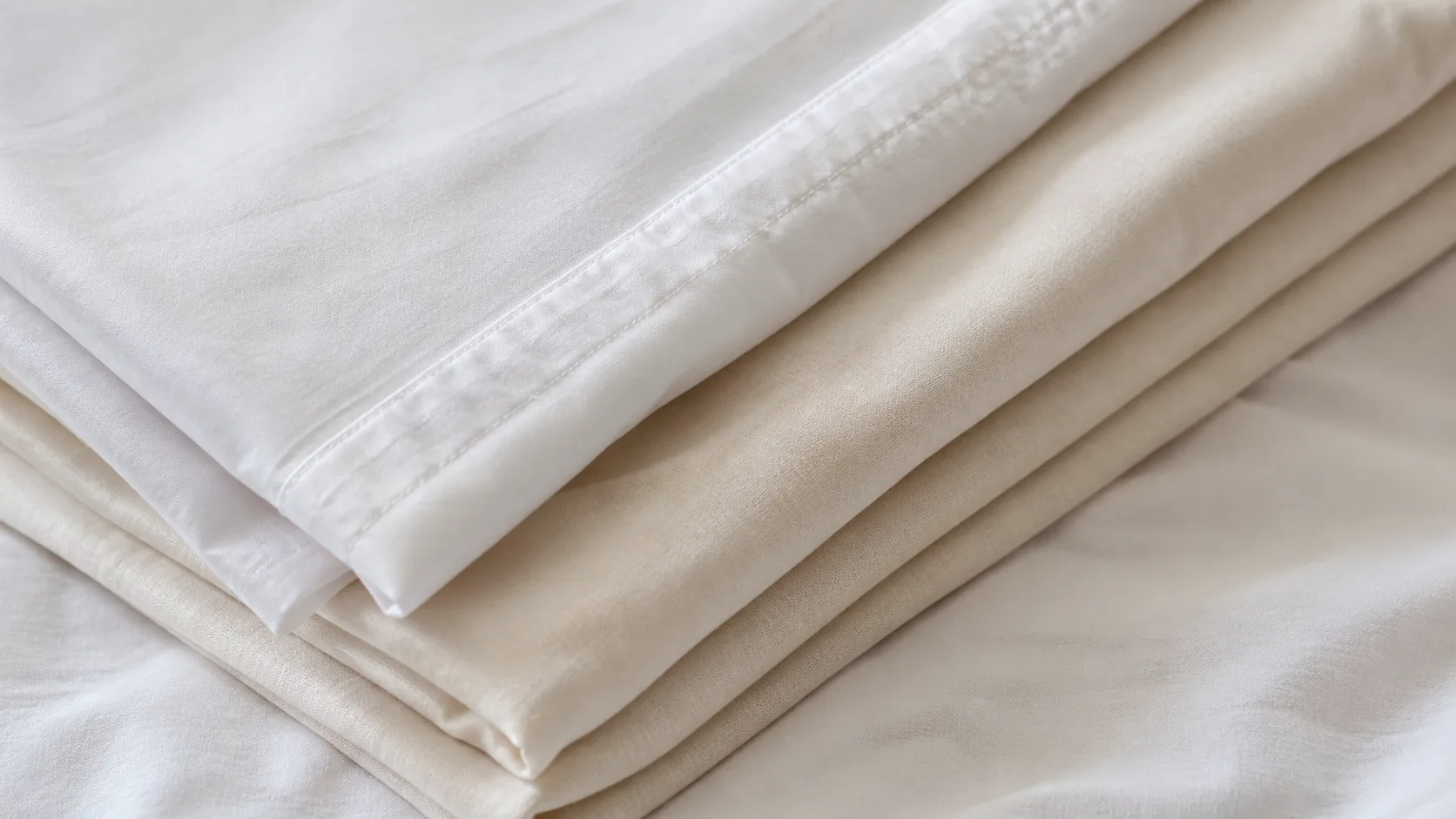
If you like cool, hotel-style bedding, look for cotton percale. It tends to feel crisp, matte and breathable. If you like a smoother, silkier finish, look for cotton sateen. It can feel warmer and drapier, which is lovely in winter but not always ideal for hot sleepers. Washed cotton sits between the two: softer, more relaxed and less formal, with a slightly lived-in look.
Those same choices exist in both organic and regular cotton. The organic label should not override the weave choice.
For hot sleepers, I would prioritise:
- Percale over sateen: crisp weaves usually feel fresher on warm nights.
- Lower to mid thread count: very dense fabric can trap more warmth.
- Natural fibres: cotton or linen usually beats polyester-rich blends for clammy summer nights.
- The right duvet: a breathable sheet will not rescue a winter duvet in July.
If heat is your main issue, our guide to bed sheets for hot sleepers is the better next read. Organic cotton can be part of the answer, but it is not the whole sleep-temperature setup.
Washing, drying and creasing
Regular cotton and organic cotton both need normal bedding care: wash before first use, avoid overloading the machine, dry fully before storing, and do not expect a crisp cotton sheet to come out looking ironed. Organic cotton is not fragile, but some ranges avoid heavy chemical finishes, so they can show creases more readily than easy-care polycotton.
That is not a bad thing. A relaxed organic cotton duvet cover can look good slightly rumpled. A formal sateen set may annoy you if you hate ironing. Before paying extra, check whether the product says washable at 40°C, tumble dry allowed, and suitable for your sheet depth.
For family bedding, I still lean practical. If a child’s bed needs changing twice in one week, a regular cotton sheet that washes quickly and costs £12-£18 can be more useful than one beautiful organic sheet you are scared of shrinking. For adults, pillowcases and fitted sheets are the organic upgrades I would make first because they get the most skin contact.
Durability is about fabric quality, not only fibre
A good regular cotton sheet can outlast a weak organic one. Look at stitching, elastic depth, return reviews, fabric weight and whether pillowcases are included. Bedding that twists after washing, bobbles quickly or shrinks away from the mattress is poor value whatever the label says.
This is where owner reviews help. Look for repeated comments about washing, colour fade and shrinkage. One review complaining about creases means nothing; twenty reviews saying the fitted sheet rides up after one wash should make you pause.
Organic Cotton Bedding UK Price Comparison: Organic vs Regular Cotton
The price gap is real, but it is not always huge. The biggest difference is at the cheapest end: regular cotton and cotton-rich bedding starts much lower, while certified organic cotton usually begins in the mid-range.
Current UK retailer examples checked during writing:
| Product type | Regular cotton examples | Organic cotton examples | Best takeaway |
|---|---|---|---|
| Fitted sheets | Dunelm cotton fitted sheets are around £8-£34, with some pure cotton pairs at £15-£27. | John Lewis organic fitted sheets are around £20-£45, with some premium organic ranges higher. | The easiest organic upgrade because you do not need to replace the whole bed. |
| Duvet cover sets | M&S cotton-rich bedding sets start around £18-£38; pure cotton sets commonly sit around £25-£55. | The White Company organic children’s duvet sets are around £40-£74; John Lewis organic duvet covers often sit higher depending on range. | The price gap shows more clearly on full sets, especially for king and super king beds. |
| Pillowcases | M&S cotton-rich pillowcases can be around £6 for a two-pack. | Organic pillowcases often land nearer £12-£25 per pair, depending on brand and finish. | A low-risk organic trial if you do not want to replace everything. |
Do not treat these prices as permanent. Bedding sales change constantly, and colours disappear quickly. The useful pattern is the spread: regular cotton is easier to buy cheaply, while organic cotton needs more care if you want value rather than just a nicer label.
What I would buy at each budget
On a tight budget, I would buy regular 100% cotton, not organic. Look for Dunelm’s cotton percale or M&S pure cotton sets and spend the saved money on a second sheet. Bedding is more pleasant when you can change it without waiting for the wash to dry.
At a mid-range budget, I would buy an organic fitted sheet and pillowcases first, then keep a regular cotton duvet cover if yours is still in good condition. You feel the sheet and pillowcases most directly. This upgrade gives you the most benefit per pound.
At a higher budget, I would buy a full organic cotton set from a retailer with clear fabric details: duvet cover, fitted sheet and pillowcases. I would choose percale for a cooler bedroom, washed cotton for a relaxed look, and sateen only if you like a smoother, slightly warmer finish.
For a spare room, I would not pay premium organic prices unless the room gets regular use. A clean regular cotton set with a good duvet will do more for guests than a lovely organic cover on a tired mattress. If the bed itself needs attention, start with our UK mattress buying guide before spending the whole budget on sheets.
Watch the set contents
Bedding prices are annoying because retailers do not all bundle the same things. Some duvet cover sets include one pillowcase for a single and two for larger sizes. Sheets are often sold separately. Extra pillowcases may cost another £12-£30. A “from £40” organic duvet set can quickly become an £80-£120 bed refresh once you add a fitted sheet and spare cases.
For a double bed, a realistic UK basket might look like this:
- Budget regular cotton: duvet cover set £18-£38, fitted sheet £8-£20, pillowcases £6-£12; roughly £32-£70 total.
- Mid-range regular cotton: better percale or sateen set £35-£70, fitted sheet £16-£34, pillowcases £10-£20; roughly £61-£124 total.
- Organic cotton: duvet cover set or cover £40-£105, fitted sheet £20-£45, pillowcases £14-£30; roughly £74-£180 total.
Those totals are why I would not tell every household to switch everything to organic cotton in one go. Start with the bits you touch most and upgrade slowly.
Certifications, Dyes and Label Checks
Certification is the part of organic cotton bedding that actually deserves attention. Without it, “organic” can become a soft word that does not tell you enough.
The main label I would look for is GOTS, especially if the retailer is making a strong organic or low-impact claim. OEKO-TEX is different but still useful: OEKO-TEX Organic Cotton certification verifies organic cotton from farm to product and includes testing for genetically modified cotton, pesticides and harmful substances. That is more meaningful than a product card that simply says “kind to skin”.
What to check before buying
Before you pay extra, look for:
- Certification name: GOTS, OEKO-TEX Organic Cotton or another recognisable textile standard.
- Material percentage: 100% organic cotton is clearer than “made with organic cotton” unless the blend is explained.
- Weave: percale, sateen, washed cotton, brushed cotton or jersey. This affects feel more than the organic label.
- Care instructions: 40°C wash is normal; 60°C may matter for allergy-prone households or children’s bedding.
- Sheet depth: measure your mattress, especially if you use a topper. Deep fitted sheets often cost more.
- Returns policy: bedding can look right online and feel wrong at home, so check the rules before opening everything.
For children’s beds, I would also check whether the colours are likely to hide marks, whether the pillowcase is included, and whether the fabric is smooth enough for sensitive skin. Our bedding washing guide is worth reading if allergies, dust or frequent hot washes are the real problem.
Beware vague green language
Be cautious with phrases such as “eco cotton”, “natural feel”, “responsibly sourced” or “sustainable cotton” if the product page does not explain the standard. Those phrases may still describe a decent product, but they are not the same as certified organic cotton.
Also watch for mixed claims. A bedding set can be organic cotton but still use synthetic buttons, plastic packaging or a dye process you know nothing about. That does not make it bad. It just means the label has limits.
The cleanest product pages tend to be boring in a good way. They state fibre percentage, weave, certification, dimensions, wash temperature and what is included in the pack. If you have to decode five lifestyle paragraphs before finding the material, I would move on.
Who Should Choose Organic Cotton, and Who Should Not Bother
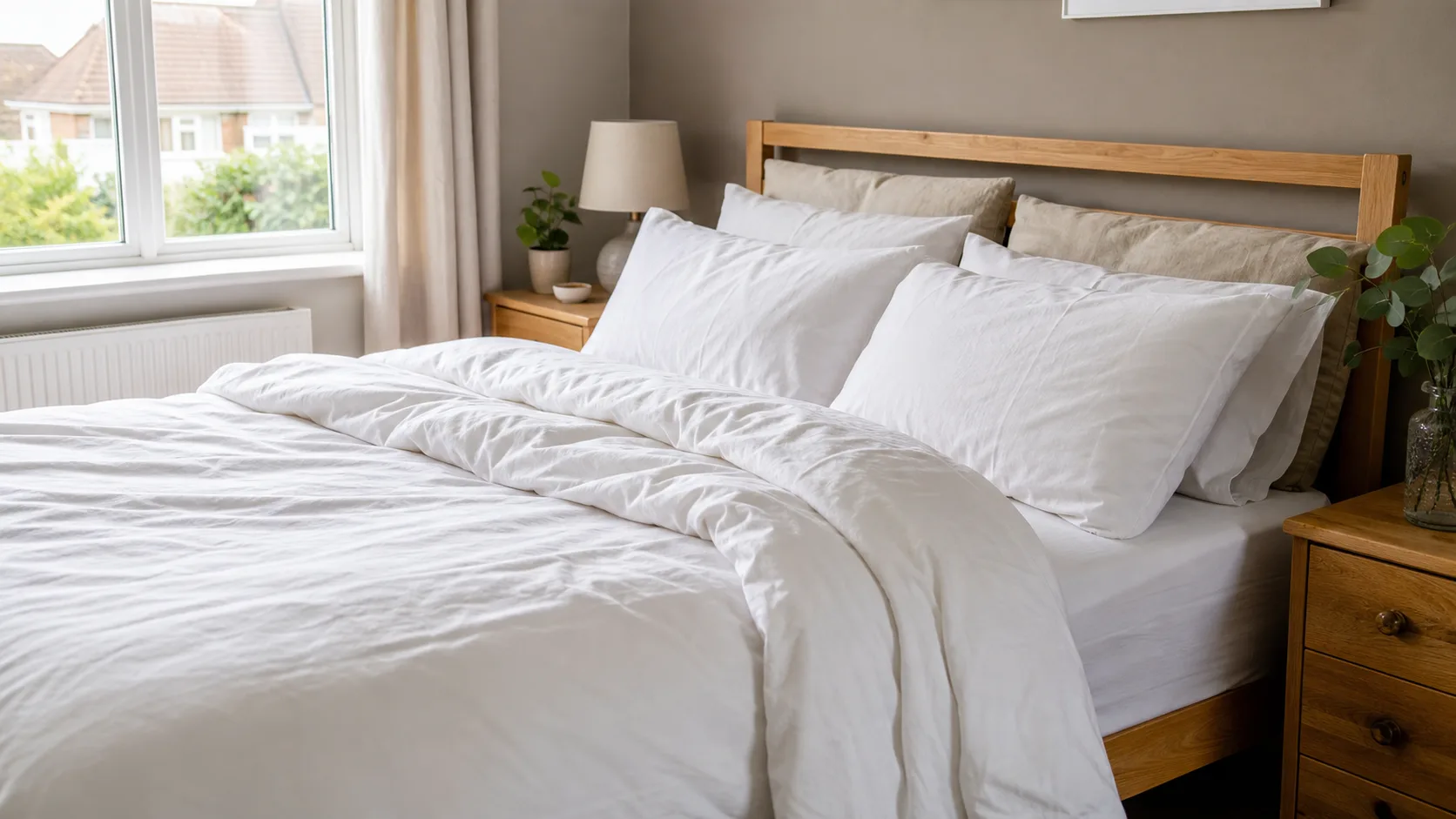
Choose organic cotton if the bedding touches your skin every night, you can verify the certification, and you are happy to pay more for a cleaner fibre story. Do not buy it because you expect a miracle sleep upgrade. A restless sleeper on the wrong mattress, under the wrong duvet, in a stuffy room will still sleep badly on organic cotton.
The NHS sleep advice points readers towards sleep-friendly habits and a comfortable sleep environment rather than relying on one product fix. Bedding helps most when it supports the wider setup: comfortable mattress, suitable duvet, regular washing, sensible room temperature and a routine you can actually keep.
Organic cotton makes most sense for these sleepers
- Sensitive-skin households: not because organic cotton is medical treatment, but because simpler certified textiles can be reassuring.
- Hot sleepers who like crisp sheets: choose organic percale rather than organic sateen if you want a fresher feel.
- People replacing one main bed set: the cost is easier to justify when you are buying one good set, not five.
- Buyers who care about traceability: certification gives you more to check than ordinary cotton marketing.
- Adults with a stable bedroom style: neutral organic bedding is easier to keep for years than a trend colour you will dislike by autumn.
Regular cotton makes more sense if you need multiple sets, expect heavy washing, want the widest colour choice, or are shopping for growing children. It also makes sense if you are still learning what fabric you like. There is no point paying premium organic prices for sateen if you later discover you prefer crisp percale.
The biggest switching mistake
The biggest mistake is switching from regular cotton to organic cotton while changing weave, thread count, colour, sheet depth and brand at the same time. If the new bedding feels better, you will not know why. If it feels worse, you may blame the organic cotton when the real issue is sateen weave or a poor fit.
Change one thing first. Buy organic pillowcases or a fitted sheet in a weave you already know you like. Wash it twice. Sleep on it for a week. Then decide whether the duvet cover is worth the extra spend.
Final answer
Organic cotton wins on traceability and can be the better long-term buy when the certification and fabric quality are clear. Regular cotton wins on price, range and practicality. For most UK homes, I would not frame this as a moral test. I would buy the best cotton bedding that suits the bed, the sleeper and the washing routine.
If the budget allows, start with certified organic cotton pillowcases and a fitted sheet. If the budget is tight, buy regular 100% cotton and avoid polyester-rich blends. Either way, get the weave right first.
Frequently Asked Questions
Is organic cotton bedding better than regular cotton? Organic cotton bedding is better for traceability and certified fibre sourcing, but it is not automatically softer, cooler or more durable. Weave, thread count, finishing and washing performance still matter.
Is organic cotton bedding cooler for hot sleepers? Organic cotton can be cool if you choose percale or another breathable weave, but the organic label alone does not make bedding cooler. Hot sleepers should prioritise percale, suitable duvet weight and natural fibres.
How much does organic cotton bedding cost in the UK? As a rough UK guide, organic fitted sheets often sit around £20-£45, organic duvet sets around £40-£105, and organic pillowcases around £14-£30. Premium brands and larger bed sizes can cost more.
Is GOTS better than just saying organic cotton? Yes. GOTS or another recognisable certification gives you more evidence about the fibre and manufacturing process. A product that only says “organic feel” or “natural cotton” is much weaker.
Should I buy organic cotton bedding for children? It can be a good choice, especially for pillowcases and sheets, but regular cotton is often more practical if you need several washable sets. For children, fit, washability and comfort matter as much as the organic label.
What is the best organic cotton bedding UK shoppers should start with? Start with the pieces against your skin: pillowcases and a fitted sheet. Choose certified organic cotton percale if you want a cooler, crisper feel, or washed organic cotton if you prefer relaxed softness.