Linen bedding is worth it if you like a relaxed, breathable bed and you are happy to pay more upfront for fabric that softens with use. It is not worth it if you want hotel-smooth sheets, hate creases, or expect a £200 duvet set to feel silky straight out of the packet.
In This Article
- Linen Bedding Worth It? The Short Answer
- Why Linen Costs More Than Cotton
- How Linen Feels To Sleep In
- UK Price Bands And What To Buy
- Care, Washing And Long-Term Value
- Who Should Skip Linen Bedding
- Frequently Asked Questions
Linen Bedding Worth It? The Short Answer
For most UK bedrooms, linen bedding is a luxury upgrade, not a must-buy. Good cotton still makes more sense if you want crispness, easy matching sets and lower prices. Linen earns its place when you value breathability, texture and that slightly rumpled look that makes the bed feel finished without looking ironed to death.
The honest answer is this: linen bedding is worth it for hot sleepers, low-maintenance adults and anyone who likes natural texture. It is poor value for people who want smooth, cool-to-the-touch bedding on night one. Fresh linen can feel dry, nubby or even a little scratchy before a few washes.
If you are comparing bedding across the year, our seasonal bedding layering guide is the better place to start. This article is about whether linen deserves the extra spend over cotton, cotton percale, cotton sateen or linen blends.
My practical verdict
I would buy linen pillowcases first, then a fitted sheet, then a duvet cover if you still like the feel. Pillowcases are the cheapest test and the quickest way to learn whether you enjoy linen against your skin.
For a double bed, expect a proper linen setup to cost roughly:
- Pillowcases: about £25-£60 per pair, depending on brand and whether they are pure linen or blend.
- Fitted sheet: about £55-£130 for double or king sizes.
- Duvet cover or set: about £80-£230 for mainstream UK options.
- Full bed bundle: easily £180-£400+ once you include sheet, duvet cover and pillowcases.
That is why “worth it” depends on how you sleep. If your current bedding already feels comfortable and you just fancy a new colour, linen is expensive decoration. If you overheat, dislike ironing and keep bedding for years, it starts to make more sense.
Why Linen Costs More Than Cotton
Linen is made from flax, and flax is not as quick or cheap to turn into bedding as cotton. The fabric is harder to process, the fibres behave differently, and good linen is usually washed or softened before sale so it does not feel like a rustic tablecloth.
It is a slower fibre to produce
Cotton dominates bedding because it is scalable, familiar and easier to weave into smooth finishes. Linen has a different cost structure. Flax fibres need careful processing, and the finished fabric is often woven in lower volumes than everyday cotton bedding.
That does not mean every linen product is automatically better. It means the starting cost is higher, so cheap linen usually compromises somewhere: thinner fabric, rougher finishing, looser stitching, awkward sizing or a blend that behaves more like cotton.
Pre-washing and finishing add cost
Most linen bedding sold for bedrooms is garment-washed, stonewashed or pre-softened. That extra finishing matters because raw linen can feel stiff. The better brands make the first few nights bearable rather than asking you to break it in like walking boots.
This is also where two duvet covers that both say “100% linen” can feel nothing alike. A £95 M&S set can be perfectly decent for the money, while a £200+ Piglet in Bed or Bedfolk set may feel heavier, softer or better finished. You are not just paying for the plant fibre; you are paying for the finishing and consistency.
Linen is often sold differently
Cotton bedding is everywhere: Argos, Dunelm, IKEA, John Lewis, M&S, supermarkets, Amazon UK. Linen is more patchy. You will find affordable linen blends on the high street, but full pure-linen sets tend to sit with John Lewis, M&S, H&M Home, The White Company, Secret Linen Store, Piglet in Bed, Bedfolk and Soak&Sleep.
That affects price comparison. A cotton duvet set might include pillowcases for £30-£60. Some linen brands price duvet covers, pillowcases and fitted sheets separately, so the total basket cost can jump quickly. No judgement if you get to checkout and quietly close the tab.
How Linen Feels To Sleep In
Linen has a dry, airy texture. It does not have the smooth glide of cotton sateen or the crisp snap of percale. It feels more textured, more relaxed and less polished. That is either the entire point or the reason you send it back.
Breathability is the main benefit
Linen is good at feeling airy because the weave and fibre do not cling in the same way as many tighter cotton fabrics. It can feel cooler in summer, but it is not magic cooling technology. If your room is 25°C, your mattress is heat-retentive and your duvet is too warm, linen sheets will not rescue the night on their own.
The NHS sleep advice includes creating the right sleep environment as part of better sleep hygiene, and bedding is only one part of that wider setup. Temperature, light, noise and routine all matter. If heat is your main issue, also read our cooling bed sheets guide before assuming linen is the only answer.
It softens, but it does not become silky
Good linen gets softer after repeated washing. It relaxes. It drapes better. The first week is not the final feel.
What it does not do is turn into cotton sateen. If you want a smooth hotel-bed feel, buy good cotton. A 200-400 thread count cotton percale or sateen set may suit you better, and our thread count guide explains why higher numbers are not always better.
Based on owner feedback, linen bedding annoys people most when they expected softness straight away. It rewards patience. That is a strange thing to say about bedding, but there we are.
Creasing is not a fault
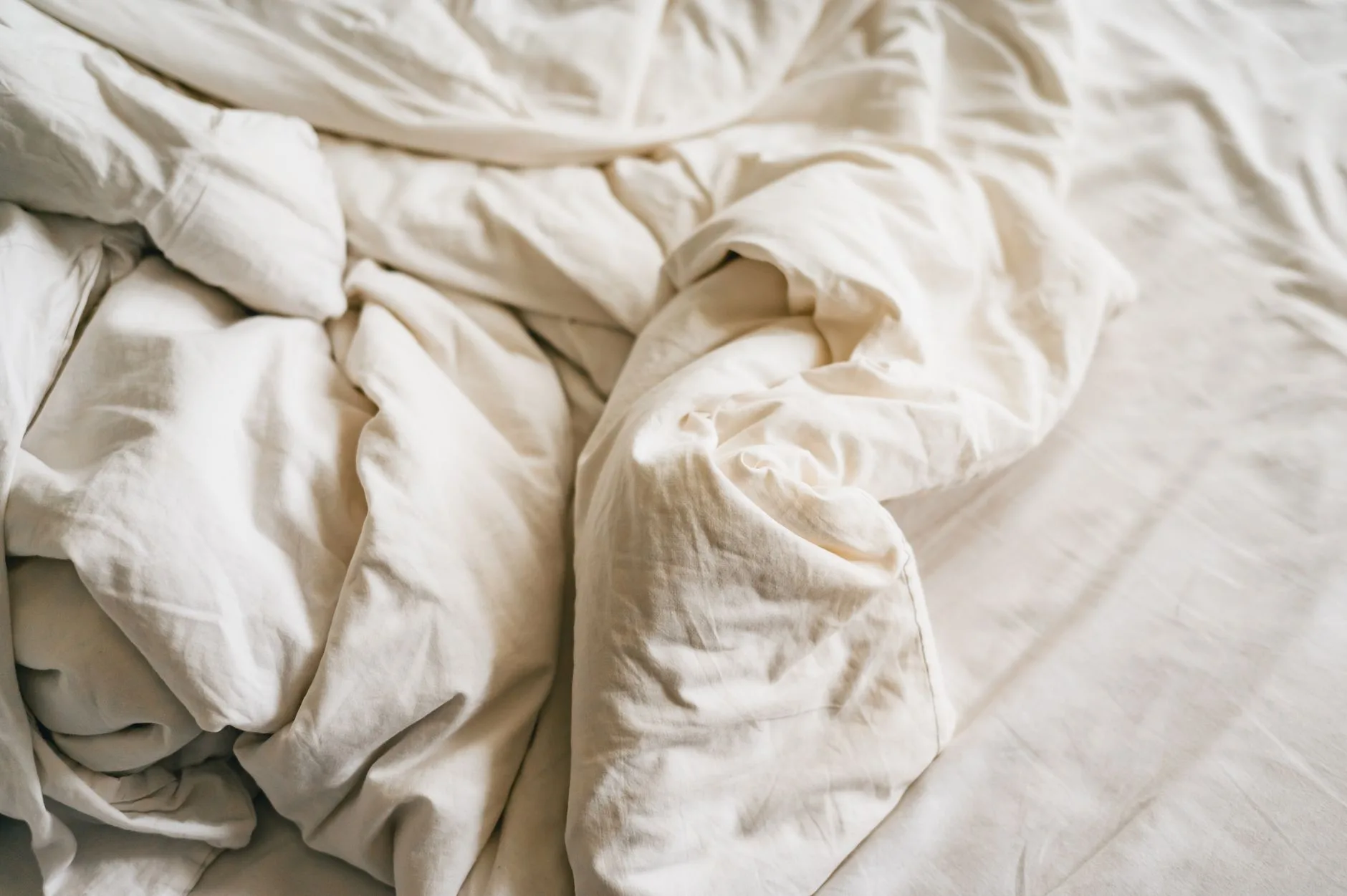
Linen creases. It creases if you look at it funny. If that relaxed, lived-in look suits your bedroom, brilliant. If you like the bed to look smooth and tucked every morning, linen will test you.
You can iron it, but I would not buy linen if ironing is part of the plan. The whole charm is that it looks better slightly rumpled. Pair it with a simple bed frame, a wool throw and plain pillowcases, and it looks intentional rather than lazy.
UK Price Bands And What To Buy
Linen bedding spans from affordable blends to premium pure linen. The trick is not to buy the most expensive set first. Start with the part of the bed that will tell you whether you like the feel.
Budget: linen blends and sale buys
Budget linen usually means a linen-cotton blend or a discounted high-street set. Soak&Sleep, for example, lists linen-cotton blend bedding from around £19.60 sale price for smaller pieces, with regular prices around £28 on some lines. H&M Home linen-blend double duvet sets often sit around £79.99, while Dunelm and Habitat-style options can be cheaper when they are cotton-linen rather than pure linen.
This is where I would start if you are curious rather than committed. A blend gives you some linen texture with less scratchiness and a lower bill. It may not breathe or age exactly like pure linen, but it is a sensible test.
Mid-range: high-street pure linen
Mid-range pure linen is where linen bedding starts to feel like a real upgrade. M&S lists pure linen bedding around £85-£150 depending on the set and size, while John Lewis washed linen pieces often sit in a similar high-street bracket before you move into specialist brands.
For most people, this is the sensible tier. You get proper linen, UK returns, normal sizing and colours that will not make your bedroom look like a student flat after one wash.
Premium: specialist linen brands
Premium linen bedding is for people who already know they like linen. Piglet in Bed, Bedfolk, Secret Linen Store and The White Company can push duvet covers and full sets well above £150-£250 depending on size and colour. Super king bundles can go past £300 without trying.
The upgrade is usually in colour range, fabric weight, finishing, stitching and the way the set hangs on the bed. Is it worth double the price of M&S? Sometimes, if the bed is a focal point and you keep bedding for years. For a spare room, no. Spend the money on a better mattress protector or pillows instead.
If you are building the whole bed, our duvet filling guide is worth checking too. Linen sheets with the wrong duvet still feel wrong.
Care, Washing And Long-Term Value
Linen’s value depends heavily on care. Treat it badly and it can shrink, roughen or wear at stress points. Treat it normally and it can last years.
Wash cooler and avoid over-drying
Most linen bedding can be washed at 30°C or 40°C, but always check the care label. Use a mild detergent, avoid heavy fabric conditioner, and do not roast it in the tumble dryer until bone dry. Over-drying makes linen feel harsher and can shorten its life.
I prefer line drying or a short low-heat tumble followed by air drying. It comes out creased either way, so do not punish yourself trying to make it perfect.
Basic routine:
- Wash weekly or fortnightly: depending on sweat, pets, allergies and whether you shower before bed.
- Separate zips and hooks: avoid washing linen with snaggy garments or rough towels.
- Rotate sets: two sets last longer than one set washed constantly.
- Skip optical brighteners: especially on coloured linen, which can fade unevenly.
For hygiene timing, our how often to wash bedding guide gives the more detailed answer.
Cost per use can work out well
A £180 linen setup sounds steep. Used for 150 nights a year over four years, it costs about 30p per sleep. That is not cheap, but it is not absurd if you genuinely prefer it.
The problem is buying linen for the wrong reason. If you buy it because Instagram bedrooms look relaxed and expensive, you may resent the texture. If you buy it because you want breathable, low-fuss bedding and you like natural fabrics, the cost per use feels more reasonable.
Fitted sheets wear fastest
If you are choosing where to spend, I would not automatically buy the matching linen fitted sheet first. Sheets take more body friction than duvet covers, and cheaper fitted sheets can thin or go baggy.
A good compromise is linen pillowcases and a linen duvet cover with a cotton percale fitted sheet. It gives you the visible relaxed look and some linen feel without putting the whole budget into the highest-wear part of the bed.
Who Should Skip Linen Bedding
Linen is not a universal upgrade. Some people are happier with cotton, bamboo viscose, wool bedding or a better duvet.
Skip it if you want crisp and smooth
If you love hotel bedding, buy cotton percale or sateen. Linen looks relaxed and feels textured. It will never give you that taut, smooth, freshly pressed look unless you iron it, and ironing linen bedding is a hobby I refuse to recommend.
Skip it if your budget is tight
There is no point buying poor linen just to own linen. A £35 cotton set from Dunelm, IKEA or M&S can be better than a thin, scratchy linen blend that sheds and twists in the wash.
If the choice is between cheap linen and good cotton, buy good cotton. If the choice is between good linen and another decorative cushion, buy the linen. At least you sleep in it.
Skip it for young children unless you like laundry
For children’s rooms, I would usually choose cotton. It is cheaper, easier to replace, smoother against sensitive skin and less annoying when someone spills water, has a nosebleed or decides bedtime is a craft session.
Our children’s bedding guide covers that in more detail. Linen can be lovely for older teens who care about their room, but it is rarely the practical first choice for younger kids.
Buy it if the feel matches your habits
Linen bedding is worth it when the material fits how you actually live: you do not iron, you like texture, you sleep warm, and you keep bedding long enough for the upfront price to settle down.
My best buy order would be:
- Start with pillowcases: spend £25-£60 and test the feel against your face.
- Add a duvet cover: choose mid-range pure linen if you still like it after a few washes.
- Upgrade the fitted sheet last: only if you want the full linen feel and accept the extra wear.
That route avoids the classic mistake: buying a full £300 bundle, sleeping on it once, then discovering you are a cotton person after all.
Frequently Asked Questions
Is linen bedding worth it for hot sleepers? Linen bedding can be worth it for hot sleepers because it feels airy and does not cling like some tighter cotton fabrics. It will not fix an overheated room, heavy duvet or heat-retaining mattress on its own.
Why is linen bedding so expensive? Linen costs more because flax is slower to process than cotton, good linen needs careful weaving and finishing, and many brands sell sheets, duvet covers and pillowcases separately rather than as cheap complete sets.
Does linen bedding get softer? Yes, good linen usually softens after repeated washing and use. It becomes more relaxed and drapey, but it does not turn silky or hotel-smooth like cotton sateen.
What is a sensible first linen bedding purchase? Start with linen pillowcases or a duvet cover rather than a full bundle. Pillowcases around £25-£60 are the cheapest way to test whether you like the feel before buying sheets and matching extras.
Is linen better than cotton bedding? Linen is better if you like breathable, textured, relaxed bedding. Cotton is better if you want smoothness, crispness, lower prices and easier replacement. Neither is automatically better for everyone.