Creating a cosy bedroom on a budget is mostly about changing what the room feels like at night: warmer light, softer layers, less visible clutter and colours that do not make the space feel cold. You do not need a new bed or fitted wardrobes first. In many UK bedrooms, £50-£150 spent carefully does more than one expensive furniture purchase.
In This Article
- Cosy Bedroom Budget Ideas: What Changes the Room Fastest
- Use Paint, Fabric and Bedding Before Furniture
- Make Lighting Feel Softer Without Rewiring
- Add Storage That Keeps the Room Calm
- Budget Layout Ideas for Small UK Bedrooms
- What to Buy at £50, £150 and £300
- Frequently Asked Questions
Cosy Bedroom Budget Ideas: What Changes the Room Fastest
The fastest cosy bedroom budget ideas are rarely the biggest purchases. They are the changes your eyes and body notice as soon as you walk in: warmer bulbs, heavier curtains, a better bedside lamp, bedding that layers properly, and somewhere for the daily clutter to disappear.
Start with this order:
- Light: swap harsh cool bulbs for warm white bulbs and add a lamp at bed height.
- Texture: layer a throw, cushions, rug or curtain fabric so the room feels less bare.
- Clutter control: clear surfaces and add one closed storage spot for the things that never look tidy.
- Colour: warm the walls, bedding or curtains before replacing large furniture.
- Layout: move the bed or bedside storage so the room feels calmer from the doorway.
That order matters because a cold bulb and messy bedside table will make even expensive bedding look flat. I would rather spend £18 on two warm LED bulbs and a simple bedside lamp than £80 on more cushions in a room that still feels stark at night.
The NHS insomnia advice says a bedroom should be dark, quiet and comfortable, with relaxing time before bed and comfortable covers. That is not interior-design fluff; it is a useful test for budget decisions. If a purchase does not make the room darker, quieter, softer, warmer or easier to keep calm, it is probably not the first thing to buy.
Work with what is already in the room
Before buying anything, remove the items that make the bedroom feel busy. Spare laundry, old packaging, visible cables, half-used skincare, books without a home and random delivery boxes all make a room feel temporary.
Then stand in the doorway and look at the first three things you notice. In many bedrooms it will be:
- The bed: creased bedding, thin pillows or a flat-looking duvet.
- The window: bare blinds, thin curtains or a cold patch of glass.
- The bedside area: harsh lamp, trailing charger, water glass, books and receipts.
Those are the places to spend first. A £12 lamp, £16 Dunelm Teddy Bear Throw, £25 pair of blackout curtains or £15 storage basket can change the room more than a new wardrobe nobody sees until the doors are open.
If the room already has a good bed frame, keep it. If the colour is wrong, soften it with bedding and lamps. If the frame is poor or damaged, use the advice in how to choose a bed frame before spending money on a replacement.
Pick a simple mood, not a theme
Themes become expensive. A cosy bedroom does not need a hotel theme, cottage theme or Pinterest board. Pick three words instead, such as warm, calm and practical. Then every cheap purchase has to fit those words.
Good budget palettes for UK bedrooms:
- Warm neutral: oatmeal, cream, taupe, warm grey, soft white.
- Deep and snug: olive, navy, muted terracotta, mushroom, charcoal accents.
- Light but not cold: off-white walls, warm wood, cream bedding, brass or linen lampshades.
Cold brilliant-white bulbs, blue-white bedding and bare grey walls can make a room feel unfinished. If you already have grey walls, add warm cream bedding, a wooden bedside table, a woven basket or a rust-coloured throw. Do not repaint first unless the walls are the main problem.
For colour decisions, bedroom colour schemes for better sleep is the deeper read. Here, the budget rule is simpler: warm up one large surface and one small detail before changing everything.
Use Paint, Fabric and Bedding Before Furniture
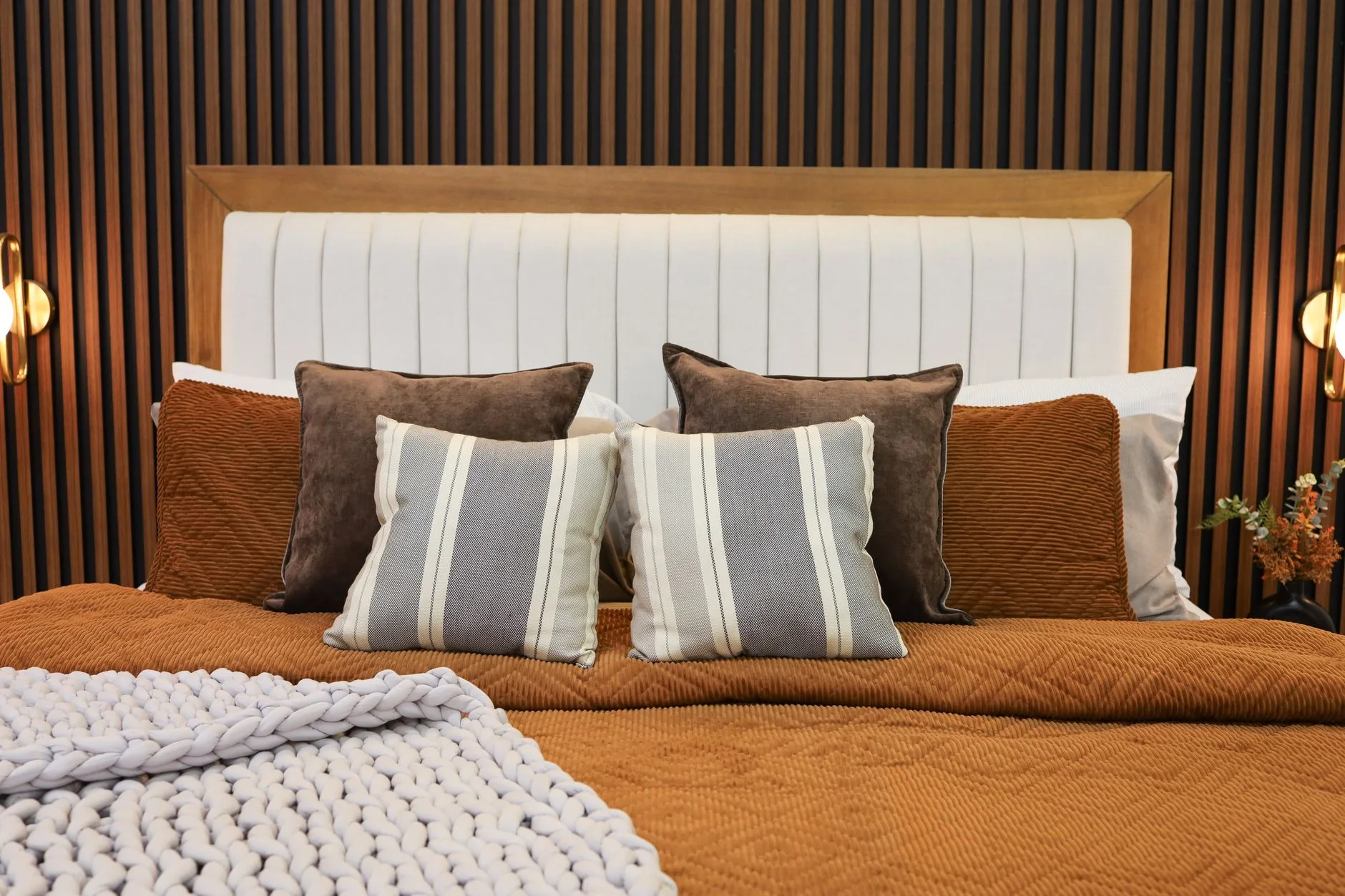
Furniture is the expensive bit. Paint, fabric and bedding are cheaper, easier to change, and often more visible.
Paint one wall or refresh tired woodwork
Painting the whole room is not always needed. One warm wall behind the bed can be enough if the rest of the room is plain. A 2.5L tin of Dulux Easycare Washable & Tough Matt is listed around £33 by Dulux, while own-brand matt emulsion from B&Q, Wickes or Homebase is often £16-£28 for 2.5L. Tester pots are usually £2-£5.
If the budget is tight, spend £5-£10 on tester pots first. Paint a large sheet of card and move it around the room. UK light changes a lot between a grey morning and a warm bedside lamp in the evening, and a beige that looks soft online can go yellow in real life.
Best budget paint moves:
- Behind the bed: creates a headboard effect without buying a headboard.
- Alcove or chimney breast: adds depth without making the whole room dark.
- Skirting and door touch-up: makes an older room feel cleaner for less money.
- Furniture repaint: useful for a tired bedside table, but only if you already have primer and time.
I would avoid very dark paint in a tiny north-facing room unless you are deliberately making it cocoon-like and have good lamps. Dark can be lovely. Dark plus one overhead bulb is just gloomy.
Upgrade bedding in layers
Bedding is where budget bedrooms often look thin. You do not need luxury linen, but you do need layers that sit well together.
A practical budget bed setup:
- Fitted sheet: £8-£20 from Dunelm, IKEA, John Lewis Anyday or M&S depending on size and material.
- Duvet cover set: £15-£45 for a double from IKEA, Dunelm, Habitat or John Lewis Anyday.
- Extra pillowcases: £5-£15, useful if you want the bed to look fuller.
- Throw: £8-£30 from Dunelm, IKEA, The Range or H&M Home.
- Two cushions: £10-£30 total if you buy simple covers and inserts.
The cheapest visual win is usually a plain duvet cover, two decent pillows and one throw across the bottom third of the bed. A Dunelm Teddy Bear Throw is often around £8-£16 depending on size, while IKEA fleece throws can be under £10. If you want a calmer look, choose texture rather than pattern.
If the bedding never feels comfortable, check the duvet and pillow before buying decor. Layering bedding for every season explains how to keep warmth flexible, which matters in UK homes where one room can be chilly in February and too warm in July.
Curtains, rugs and soft edges
Curtains make a bedroom feel finished because they cover a large cold surface. They also help with darkness, which is useful for sleep. The same NHS guidance specifically mentions making the bedroom dark and quiet, using curtains, blinds, an eye mask or ear plugs if needed.
Budget curtain options:
- Dunelm blackout curtains: often £25-£70 depending on size and fabric.
- IKEA curtains: usually £20-£55 a pair, with separate blackout liners available.
- Argos Habitat curtains: often £18-£60 for simple ready-made pairs.
- Thermal linings: around £15-£35 and useful if you already own curtains you like.
Hang curtains wider than the window if you can. It makes the window look bigger and keeps fabric from blocking light during the day. If the curtain pole is too narrow, a basic extendable pole from B&Q, Dunelm or Argos is usually £12-£35.
A rug is not essential, but it helps if the room has laminate, draughty floorboards or a hard rental carpet. Small bedside rugs start around £15-£30 from IKEA, Dunelm and The Range. Put the rug where bare feet land in the morning rather than floating it in the middle of the room.
Make Lighting Feel Softer Without Rewiring
Lighting is the budget shortcut most people underuse. A cosy room needs low, warm light in more than one place. It does not need an electrician.
Use warm bulbs and lamp height
Look for warm white bulbs around 2700K. A pack of two LED bulbs is usually £5-£10 from Screwfix, B&Q, IKEA or Amazon UK. Avoid cool daylight bulbs in bedrooms unless you need one task light for makeup or detailed work.
The easiest setup is:
- Bedside lamp: £10-£35 from IKEA, Argos, Dunelm or John Lewis Anyday.
- Warm LED bulb: £3-£6 per bulb.
- Clip-on reading light: £8-£20 if there is no bedside table.
- Plug-in dimmer or smart bulb: £10-£25 if you want lower evening light.
If you can only buy one thing, buy a proper bedside lamp. A ceiling pendant in the middle of the room makes the bed feel exposed. A lamp at bed height makes the same bedding look softer.
For a room used by a child or teenager, check the lamp is stable and the cable does not trail across a walking route. Cheap glass lamps can look nice but are not always the best choice beside a narrow bed.
The fuller guide to bedroom lighting for sleep quality is useful if you want to balance reading light with evening wind-down.
Hide harsh practical light
Some bedrooms need a bright light for getting dressed or cleaning. Keep it, but do not use it as the only evening light.
Cheap ways to soften the room:
- Fabric shade: £8-£25 for a warmer glow than bare plastic or metal.
- Battery picture light: £15-£35 above a shelf or framed print, useful in rented rooms.
- LED candle lantern: £5-£15, safer than real candles in bedrooms.
- Shade diffuser: a warmer lampshade can calm a cold bulb without replacing the fitting.
I would be careful with cheap LED strip lights. They can make a room feel fun, but exposed strips often look messy and harsh. If you use them, hide them behind a headboard, shelf or wardrobe edge and keep the colour warm.
Add Storage That Keeps the Room Calm
A bedroom does not feel cosy when every surface is doing storage duty. The aim is not perfect minimalism. The aim is fewer visible decisions when you walk in.
Bedside storage
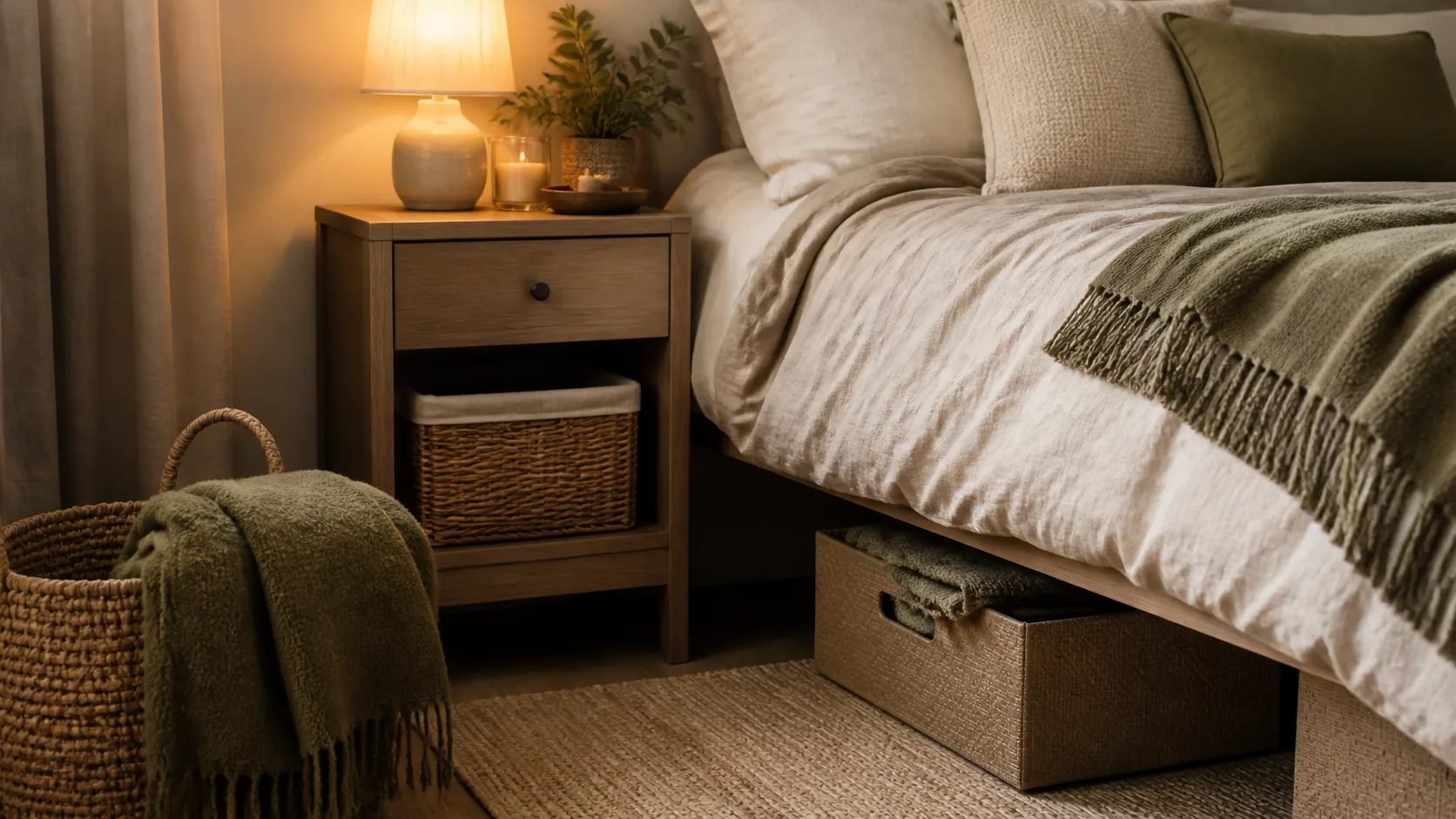
Most bedside tables are too small for modern life: phone, book, lamp, water, tissues, lip balm, charger and maybe glasses. If the top is always messy, add hidden storage rather than a bigger surface.
Good budget options:
- Bedside table with drawer: £25-£80 from IKEA, Argos, Dunelm or The Range.
- Wall shelf: £8-£25 if floor space is tight.
- Small basket: £6-£18 for chargers, sleep masks or hand cream.
- Cable clip: £3-£8 so the phone charger does not fall behind the bed.
One drawer is better than three open shelves. Open shelves look styled only when they are styled; drawers forgive normal life.
If you are planning a dressing corner too, creating a dressing area in your bedroom has more layout detail. For this budget version, the key is to stop clothes drifting onto the chair.
Clothes and laundry
The chair pile is the enemy of cosy. It usually exists because there is no place for clothes that are worn once but not ready for the wash.
Fix it with one of these:
- Over-door hooks: £5-£15.
- Wall hooks: £6-£20, but check the wall and rental rules first.
- Small laundry basket: £8-£25.
- Fabric storage cube: £5-£12 for scarves, gym kit or spare bedding.
If wardrobes are the weak point, do not rush into buying a huge new one. First add slim velvet hangers, drawer dividers and under-bed storage. Slim hangers are about £8-£18 for a pack, and under-bed boxes are usually £10-£30 each. If that still fails, compare proper options in best wardrobes for small bedrooms.
Under-bed storage without making the room feel cheap
Under-bed storage is useful, but visible plastic boxes can make the room feel like a storage unit. Use it for things you do not need daily: out-of-season bedding, spare towels, shoes, Christmas jumpers, guest bedding.
Choose low boxes with lids if dust is a problem. IKEA and Dunelm usually have under-bed boxes around £8-£25. Fabric zip bags are cheaper, often £6-£15, but they sag and are annoying if you pull them out often.
Do not store things under the bed just because there is space. If it turns the floor into a wrestling match every time you hoover, it is not making the bedroom calmer.
Budget Layout Ideas for Small UK Bedrooms
Many UK bedrooms are working with compromises: radiator under the window, chimney breast, awkward alcove, rental carpet, bed against a wall, wardrobe doors that need swing space. A cosy budget plan has to respect that.
Start from the bed view
Look at what you see when you are lying in bed and what you see from the doorway. Those two views decide whether the room feels calm.
Try these layout moves before spending:
- Move the laundry basket out of the doorway view: it makes the room look untidy instantly.
- Put the bedside lamp on the darker side: it balances the room better at night.
- Clear the surface opposite the bed: a messy chest of drawers is often the first thing you see.
- Pull the bed 5-10cm from the wall: if space allows, it helps bedding hang properly and reduces scuff marks.
If the room feels restless, borrow one idea from feng shui bedroom layout: give the bed a clear, settled position. You do not have to follow every rule. Just avoid making the bed feel like it has been shoved into leftover space.
Rented rooms and no-paint fixes
If you cannot paint, use fabric and light. Removable wallpaper can work, but cheap versions often peel or damage walls. Fabric is safer.
No-paint cosy fixes:
- Large framed print or fabric wall hanging: £15-£50 depending on size.
- Warm bedding: £25-£70 for duvet cover, sheet and throw if you shop carefully.
- Clip-on lamps: £8-£25 for beds without tables.
- Command hooks: £4-£10 for light items, if the wall finish allows.
- Rug: £20-£60 to cover cold flooring or ugly carpet patches.
Keep rental changes reversible. A cosy room is less cosy when you are worrying about the deposit.
Box rooms and tight doubles
In a box room, use fewer bigger visual blocks rather than lots of tiny bits. One large throw looks calmer than five cushions. One proper storage basket looks better than three carrier bags. One warm lamp beats a string of visible wires.
If the bed has to go against the wall, make it feel intentional:
- Add a long cushion or spare pillow along the wall side so it feels like a daybed rather than a compromise.
- Use a wall shelf as a bedside table if there is no floor space.
- Choose a narrow bedside lamp or clip-on light instead of forcing in a table.
- Use bedding that tucks neatly because messy overhang is obvious in a small room.
Small bedrooms do not need more stuff. They need fewer, warmer, more useful pieces.
What to Buy at £50, £150 and £300
Here is how I would spend the money, assuming the bed and mattress are usable.
If you have £50
Spend it on light and texture:
- Warm LED bulbs: £6-£10.
- Basic bedside lamp: £12-£25.
- Throw: £8-£16.
- Basket or cable clips: £5-£12.
This is the best tiny-budget route. The room will feel warmer at night, and the bedside area should look less messy.
If you have £150
Split the money across bedding, curtains and storage:
- Duvet cover set and fitted sheet: £30-£60.
- Blackout or warmer curtains: £30-£70.
- Lamp and bulbs: £20-£40.
- Under-bed box or bedside basket: £10-£25.
This is the strongest spend level for most bedrooms. It changes the biggest surfaces and makes the room easier to keep calm.
If you have £300
At £300, you can fix one bigger weakness as well as the soft layers:
- Paint and supplies: £30-£60.
- Bedding and throw: £50-£100.
- Curtains or blind upgrade: £50-£100.
- Bedside tables or storage: £40-£100.
- Rug: £30-£80.
I would not spend the whole £300 on one item unless the room has a serious gap, such as no curtains or a broken wardrobe. A cosy bedroom comes from the layers working together.
What to leave for later
Leave large furniture, designer bedding, expensive lamps, new flooring and decorative wall panelling until you know the basics work. They can be good upgrades, but they are poor first moves if the room still has harsh light, clutter and thin bedding.
The right budget bedroom should feel better the same evening. If it needs a full weekend, three deliveries and a drill you do not own, it may not be the best first step.
Frequently Asked Questions
What is the cheapest way to make a bedroom feel cosy? Change the lighting first. Warm LED bulbs and a bedside lamp can cost £20-£35 together and usually make the room feel softer straight away.
Which colours make a bedroom feel cosy on a budget? Warm neutrals, muted greens, soft terracotta, oatmeal, cream and warm grey work well. Avoid cold blue-white schemes unless you add plenty of warm light and texture.
How much should I spend to make a bedroom cosy? Around £50 can improve lighting and texture. Around £150 is enough for bedding, curtains, a lamp and storage. Around £300 can include paint, curtains, bedding, storage and a rug.
Do blackout curtains make a bedroom cosier? Yes, especially in UK rooms with cold windows or streetlights outside. Ready-made blackout curtains usually cost about £25-£70 depending on size and fabric.
Should I buy new furniture first? Not unless the existing furniture is broken or too small. Paint, bedding, lighting, curtains and storage usually change the feel of the room for less money.
How can I make a rented bedroom cosy without painting? Use warm lamps, layered bedding, a throw, a rug, reversible storage and wall-safe hooks or framed prints. Keep changes removable so you do not risk the deposit.