Choosing between memory foam, pocket sprung and hybrid mattresses is really a choice between hug, bounce and balance. Memory foam gives the deepest pressure relief, pocket sprung feels more traditional and breathable, and hybrid mattresses try to split the difference. If I were buying for most UK bedrooms in 2026, I would start with a good hybrid, then rule it out only if you know you love the softer sink of foam or the firmer bounce of springs.
In This Article
- Memory Foam vs Pocket Sprung vs Hybrid: Quick Verdict
- How Each Mattress Type Feels
- Support, Back Pain and Body Weight
- Heat, Motion Transfer and Partner Disturbance
- Durability, Rotation and Mattress Bases
- UK Prices and What to Buy
- My Verdict
- Frequently Asked Questions
Memory Foam vs Pocket Sprung vs Hybrid: Quick Verdict
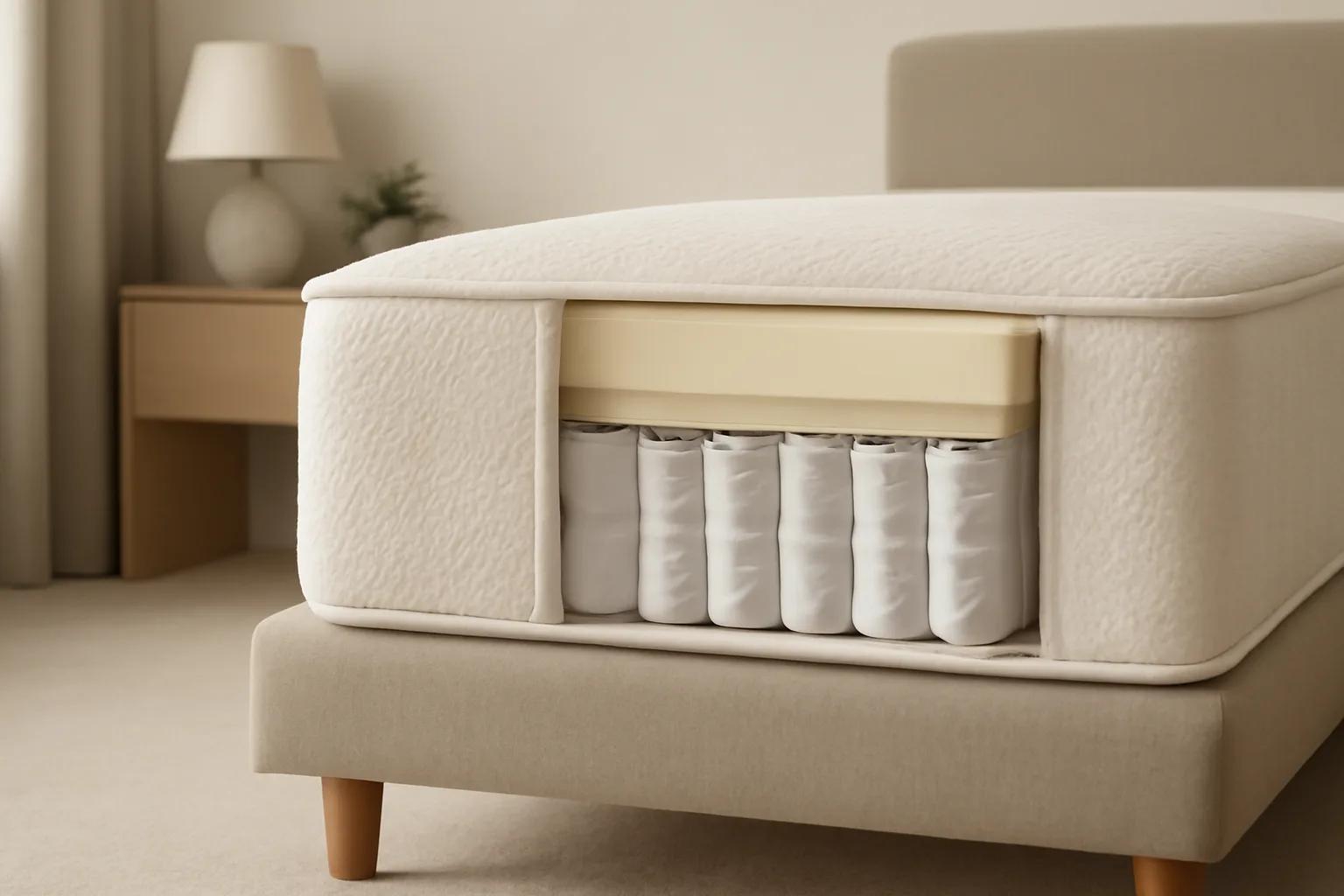
Memory foam vs pocket sprung is not about modern versus old-fashioned. It is about feel. Memory foam moulds around you and reduces pressure. Pocket sprung mattresses push back more quickly and feel airier. Hybrid mattresses combine springs with foam comfort layers, which is why they have become the safest starting point for many couples.
The best choice depends on how you sleep:
- Choose memory foam if you want close contouring, strong pressure relief and minimal partner disturbance.
- Choose pocket sprung if you prefer bounce, cooler airflow and a more traditional mattress feel.
- Choose hybrid if you want some foam comfort without losing spring support and edge stability.
There is no universal winner, but there is a most-forgiving option. For a shared bed, a medium-firm hybrid is usually the easiest recommendation because it suits more body types and sleeping positions than pure foam or pure springs. That is why so many mattress-in-a-box brands now lead with hybrid designs.
The mistake to avoid
Do not choose by marketing label alone. “Memory foam” can mean a thin foam layer over cheap support foam. “Pocket sprung” can mean anything from a basic spring unit to a hand-tufted luxury mattress. “Hybrid” can mean a proper spring-and-foam build or a token layer of micro-springs that does very little.
Look at the construction, trial period, depth, firmness and return terms. Our complete UK mattress guide covers the wider buying process, but this article sticks to the three construction types.
My short answer
If you sleep alone and love a cushioned feel, memory foam can be excellent. If you sleep hot or dislike sink, pocket sprung is still hard to beat. If two people share the bed and cannot agree, hybrid is the one I would try first.
How Each Mattress Type Feels
The easiest way to separate these mattresses is to think about response. Press your hand into memory foam and it returns slowly. Press into pocket springs and they respond immediately. Press into a hybrid and you should feel comfort on top with pushback underneath.
Memory foam: slow hug and pressure relief
Memory foam softens with body heat and spreads pressure across a wider area. Side sleepers often like this because shoulders and hips can sink in without creating sharp pressure points. People with lighter frames may also find memory foam more forgiving than a firm sprung mattress.
The downside is that some people feel trapped in it. If you change position often, a slow-response foam can make turning over feel more effortful. Cheaper memory foam can also feel warm and slightly dead, especially if the support layer underneath is basic.
Good memory foam mattresses often cost about £350 to £900 for a UK double, depending on depth, foam quality and brand. Budget models from Amazon UK or Argos can be cheaper, but they often use thinner comfort layers. Better known boxed mattresses from Emma, Eve or Nectar usually sit in the mid-range once discounts are applied.
Pocket sprung: bounce, airflow and a familiar feel
Pocket sprung mattresses use individual fabric-wrapped springs that move more independently than an old open-coil unit. You still get bounce, but a decent pocket sprung mattress should not wobble like a trampoline.
This style suits people who dislike the close hug of foam. It also tends to breathe better because air can move through the spring unit. If you grew up on traditional mattresses and want that lifted, responsive feel, pocket sprung is probably the safer emotional choice. That sounds fluffy, but comfort is partly familiarity.
A reasonable UK double pocket sprung mattress might cost £300 to £800. Premium hand-tufted or natural-fibre models from retailers such as John Lewis, Dreams, Bensons for Beds or specialist makers can run from £1,000 to £2,500+. The best pocket sprung mattresses guide is better if you want product-level picks.
Hybrid: foam comfort with spring support
Hybrid mattresses usually combine pocket springs with memory foam, latex-like foam, gel foam or other comfort layers. The aim is simple: pressure relief on top, support and airflow underneath.
The best hybrids feel balanced. You should get enough cushioning for shoulders and hips without that “stuck in wet sand” feeling cheaper foam can create. Couples often do well here because the springs add edge support and responsiveness, while foam reduces motion transfer.
Hybrid quality varies a lot. A shallow hybrid with tiny springs may feel no better than a basic foam mattress. A deeper model with a proper pocket spring core, useful comfort layers and a stable edge can be the sweet spot. Many UK doubles cost £500 to £1,200, with premium models going higher. Our best hybrid mattresses UK guide compares that category in more detail.
Support, Back Pain and Body Weight
Support is not the same as firmness. A mattress can feel soft on top and still support your spine well. It can also feel firm but fail to support you if the materials collapse under your hips.
Side sleepers
Side sleepers usually need more pressure relief around the shoulder and hip. Memory foam often works well here, especially for lighter and average-weight sleepers. A medium hybrid can also be excellent because the top layer cushions pressure while the springs stop the body sinking too far.
Very firm pocket sprung mattresses can be harsh for side sleepers unless they have a generous comfort layer. If you wake with numb shoulders, the issue may be pressure rather than lack of firmness.
Back sleepers
Back sleepers usually need a medium to medium-firm surface that keeps the pelvis from dropping. Hybrids are strong here because they combine contouring with pushback. Pocket sprung mattresses can also work well, especially with a pillow top or natural fibre layer.
Pure memory foam can be good for back sleepers if it is supportive enough. The risk is cheaper foam that lets the hips sink too far, leaving the lower back slightly arched by morning.
The NHS gives general sleep advice around routine and comfort rather than endorsing one mattress type, but its sleep and tiredness guidance is a useful reminder that mattress choice is only one part of better sleep.
Heavier sleepers
Heavier sleepers often need stronger support layers and better edge stability. A deep hybrid or robust pocket sprung mattress is usually safer than an all-foam budget model. Look for a thicker construction, firmer support, clear weight guidance and a trial period that allows proper testing.
Owner reviews are useful here. Pay attention to sagging comments from people who mention similar body weight or sleeping style. One five-star review from a guest-room user tells you very little.
Back pain
There is no magic “back pain mattress” type. The right firmness depends on body weight, sleeping position and what your current mattress is doing wrong. If your mattress hammocks under your hips, move firmer or more supportive. If it feels like sleeping on a door, add pressure relief.
Our guide to choosing a mattress for back pain goes deeper on that decision. For this comparison, I would put many back-pain shoppers on a medium-firm hybrid first because it gives the broadest support range.

Heat, Motion Transfer and Partner Disturbance
This is where the differences become obvious after a few nights. A mattress can feel lovely in a shop and still annoy you at 3am if it traps heat or bounces every time your partner moves.
Sleeping hot
Pocket sprung mattresses usually sleep cooler because the spring unit allows more airflow. Natural fillings such as wool, cotton or horsehair can also help regulate moisture, though they push prices up.
Memory foam is the riskiest for hot sleepers. Modern open-cell and gel foams are better than older dense foam slabs, but the basic behaviour is still the same: foam hugs the body, and close contact can feel warmer. If you already kick the duvet off in March, be wary of cheap deep memory foam.
Hybrids sit in the middle. Springs improve airflow, but thick foam comfort layers can still hold warmth. Look for breathable covers, moderate foam depth and trial periods. Cooling claims are everywhere; owner reviews after summer are more useful than a showroom label.
Motion transfer
Memory foam is the winner for motion isolation. If one person gets up early, foam absorbs movement better than springs. This is why many couples like foam even if one partner prefers a bouncier feel.
Pocket sprung mattresses vary. Individually pocketed springs are much better than old open coils, but you may still feel more movement than on foam. Hybrids can be very good if the foam layer is thick enough to dampen movement.
For couples with different schedules, I would shortlist memory foam and hybrid first. For couples who both sleep hot, I would lean hybrid rather than all-foam.
Edge support
Edge support matters more than people think. A weak edge makes a double mattress feel smaller because you avoid the outer 10cm. It also makes sitting on the bed to put socks on feel unstable.
Pocket sprung and hybrid mattresses usually have better edges than pure foam, especially if they use reinforced perimeter support. Foam-only mattresses can be fine, but cheaper ones often compress heavily at the sides.
If you are choosing a smaller UK double or sharing with a restless partner, edge support should be high on the list. The UK mattress sizes guide helps if part of the problem is simply that the bed is too small.
Durability, Rotation and Mattress Bases
Mattress lifespan depends on material quality, user weight, base support and rotation habits. Type matters, but build quality matters more.
Memory foam durability
Good memory foam can last well, but cheap foam is prone to body impressions. Density matters, though brands do not always publish it clearly. If a foam mattress is very cheap, very thin and heavily discounted all year, manage your expectations.
Most foam mattresses are no-turn, meaning you rotate them head-to-toe rather than flip them. That is easy, but you still need to do it. Ignoring rotation can create dips where your hips and shoulders sit every night.
Pocket sprung durability
Pocket sprung mattresses can last well if the spring unit and comfort layers are good. Natural fillings can settle, and pillow tops can compress, so occasional rotation still matters. Some traditional mattresses are turnable, which can extend lifespan, but they are heavier and more effort to manage.
Check the base too. A tired divan or wide slatted frame can shorten the life of a new mattress. Our mattress foundations guide explains slats, platforms and divans in more detail.
Hybrid durability
Hybrids have more going on, so quality control matters. A good hybrid can be durable and supportive for years. A cheap hybrid can be the worst of both worlds: thin foam that compresses and a spring layer that adds cost without much support.
Look for clear warranty terms, sensible trial conditions and depth that matches your needs. A 25cm to 30cm hybrid often feels more substantial than a 18cm budget mattress, but depth alone is not proof of quality.
UK fire-safety rules also matter when buying new or used mattresses. GOV.UK guidance on furniture and furnishings fire safety regulations explains the domestic upholstered furniture framework, and it is one reason I would be cautious with unknown second-hand mattresses.
UK Prices and What to Buy
The right budget depends on mattress size, materials and how long you expect to keep it. Do not buy the cheapest mattress you can tolerate. You use it every night, and a poor one becomes expensive if you replace it after 18 months.
Budget range: under £400 for a double
Under £400, memory foam and basic pocket sprung mattresses dominate. You can find serviceable options from Argos, Amazon UK, IKEA and Dreams sale ranges. Expect simpler materials, thinner comfort layers and less impressive edge support.
If I had to buy in this range, I would choose a basic pocket sprung mattress for a hot sleeper, or a known-brand memory foam model for a side sleeper who wants pressure relief. I would be careful with ultra-cheap hybrids because they often sound better than they feel.
Mid-range: £500 to £1,000 for a double
This is the best zone for most people. You can get a strong boxed hybrid from brands such as Emma, Simba, Otty or Nectar, often with sale pricing and a trial period. You can also find better pocket sprung mattresses from John Lewis, Bensons for Beds and Dreams.
For a shared main bed, I would start here. A double around £600 to £900 or a king around £750 to £1,200 often buys better support, better edges and a more useful trial than bargain-bin options. Our best mattresses 2026 UK guide is the broader shortlist if you want named models.
Premium: £1,200+
Above £1,200, you are paying for deeper builds, natural fillings, better spring systems, stronger edges, luxury covers and brand reputation. Some premium pocket sprung mattresses feel superb, especially if you like a more traditional hotel-bed feel.
I would spend this much only after trying the mattress or getting a strong return policy. Premium does not automatically mean right for your body. A £1,600 firm pocket sprung mattress can still be miserable for a light side sleeper.
Trial periods matter
Mattress trials are not a gimmick. Your body needs time to adjust, and showroom testing is limited. Check the small print: minimum trial period, collection fees, mattress protector rules, exchange versus refund, and whether sale items are included.
A generous trial can make a slightly risky hybrid choice much safer. Before ordering, read the retailer’s return page properly rather than relying on the headline “100-night trial” badge.
My Verdict
For most UK buyers, hybrid is the best first choice. It gives enough foam comfort for pressure relief, enough spring support for easier movement, and enough edge stability for couples. That does not make it perfect. It just makes it the least polarising option.
Choose memory foam if you want the softest pressure relief, share with a restless partner, or sleep mainly on your side. Avoid cheap deep foam if you sleep hot or hate feeling held in place.
Choose pocket sprung if you want bounce, airflow and a familiar mattress feel. It is still a strong choice for hot sleepers, heavier sleepers and people who dislike foam. Just make sure the comfort layer is not too firm for your shoulders.
Choose hybrid if you are unsure, buying for two people, or replacing an old mattress that is both uncomfortable and unsupportive. A medium-firm hybrid from a reputable UK retailer is the option I would test first in most main bedrooms.
Frequently Asked Questions
Is memory foam better than pocket sprung? Memory foam is better for pressure relief and motion isolation. Pocket sprung is better for airflow, bounce and a traditional feel. The better choice depends on how you sleep.
Are hybrid mattresses better than memory foam? Hybrid mattresses are better for many couples because they add spring support and edge stability. Memory foam can still be better for people who want maximum contouring and minimal movement transfer.
Which mattress type is best for hot sleepers? Pocket sprung is usually the safest choice for hot sleepers because it allows more airflow. Hybrids can work well too, but thick foam-heavy hybrids may still feel warm.
Which mattress type is best for back pain? Many back-pain shoppers should start with a supportive medium-firm hybrid, but there is no single best type. The right choice depends on body weight, sleeping position and where your current mattress fails.
Do pocket sprung mattresses last longer than memory foam? They can, but build quality matters more than type. A good foam mattress can outlast a cheap sprung one, and a well-made pocket sprung mattress can outlast a thin budget hybrid.
How much should I spend on a good UK mattress? For a main double bed, £500 to £1,000 is the strongest value range for most buyers. You can spend less for a guest room and more for natural fillings or premium support.