Pillow types explained properly: memory foam is best for firm, shaped support, down is best for soft luxury, and microfibre is best when you want a washable, low-cost pillow that is easy to replace. The right choice depends less on the label and more on your sleeping position, shoulder width, heat level and budget.
In This Article
- Pillow Types Explained: Quick Verdict, Which Should You Buy?
- How Memory Foam, Down and Microfibre Feel in Bed
- Best Pillow Type by Sleeping Position
- Heat, Allergies and Night Sweats
- What Each Pillow Type Costs in the UK
- How Long Each Type Lasts and How to Care for It
- Common Buying Mistakes
- The Simple Pillow Test Before You Commit
- Frequently Asked Questions
Pillow Types Explained: Quick Verdict, Which Should You Buy?
If I had to pick one pillow type for most UK bedrooms, I would start with a decent washable microfibre or down-alternative pillow rather than jumping straight to an expensive specialist option. A good pair costs about £12-£40, works with normal cotton pillowcases, and is forgiving if your sleeping position changes through the night.
That said, memory foam is the better buy if you wake with a stiff neck because your head drops too far into a soft pillow. The NHS neck pain guidance specifically recommends a low, firm pillow when easing neck pain, which is exactly where shaped memory foam can help. It is not magic, and it will not fix a poor mattress, but it gives more predictable support than loose filling.
Down is the nicest pillow to put your head on. No contest. It feels soft, light and expensive. The problem is that many down pillows flatten unless you buy enough fill and keep fluffing them, so they suit people who want softness more than strong neck support.
For a quick decision:
- Choose memory foam if you sleep mostly on your side or back and want firmer neck support.
- Choose down if you like a soft, mouldable pillow and do not need much height.
- Choose microfibre if you want easy washing, lower cost and simple replacement.
- Choose down alternative if you like the idea of down but want a vegan or allergy-friendlier option.
If your whole bed setup feels wrong, this pillow types explained comparison only solves part of the problem; read our guide to whether mattress toppers help before blaming the pillow alone. Pillow height changes depending on how much your shoulder and hip sink into the mattress.
How Memory Foam, Down and Microfibre Feel in Bed
The main difference is how each filling reacts under weight. That sounds dull, but it is the bit you notice at 3am when one pillow feels supportive and another feels like a folded towel.
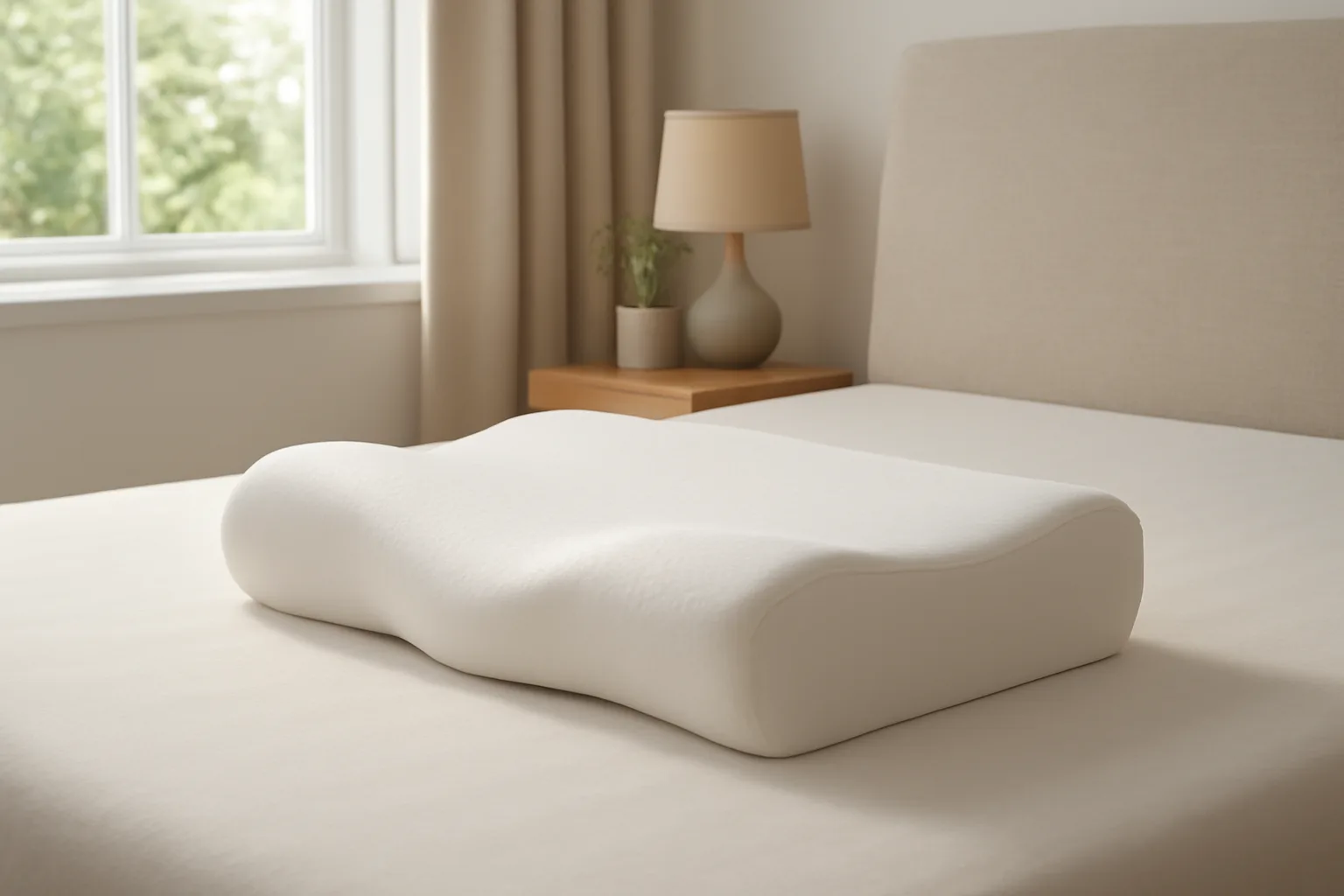
Memory foam
Memory foam compresses slowly and holds its shape. On a good pillow, your head settles into it rather than bouncing on top. This is useful if you need the pillow to keep your neck in roughly the same position all night.
The downside is that memory foam can feel too fixed. Some contoured pillows force your neck into one position, which is fine if the shape matches you and annoying if it does not. I also find cheaper solid foam pillows can feel warm and slightly dead under the head, especially in summer bedrooms.
Memory foam suits people who want:
- Firm support rather than a soft hotel-pillow feel.
- Consistent height through the night.
- Less plumping every morning.
- A shaped profile for side or back sleeping.
Down
Down is the soft under-feather layer from ducks or geese. It feels lighter and loftier than feather because it has no stiff quill. A good down pillow lets your head sink in gently, then you can scrunch the filling around your neck.
The catch is support. Down is lovely for front sleepers and people who like a lower pillow, but a soft down pillow may collapse too much for broad-shouldered side sleepers. A feather-and-down mix can add structure, though you may feel the odd quill if the cover is thin.
If you already like natural fills, our duvet filling types guide covers the same down, wool, silk and microfibre trade-offs on the duvet side.
Microfibre
Microfibre pillows use fine synthetic fibres, usually polyester, to imitate a soft down-like feel. Cheap ones can go lumpy after a few months, but better hollowfibre or cluster-fibre pillows are much better than they used to be.
The biggest strength is practicality. You can buy them in pairs, wash many of them at home, and replace them without feeling like you have wasted £100. In family bedrooms, guest rooms and rented homes, that matters. No one wants a precious pillow that needs specialist care after a child spills squash on the bed.
The weakness is lifespan. Microfibre loses loft faster than good memory foam or high-fill down. If you fold it and it stays folded, it has had its day.
Best Pillow Type by Sleeping Position
Your sleeping position matters more than the marketing name on the packet. A pillow only has one job: keep your head and neck in a comfortable line with the rest of your spine.
Side sleepers
Side sleepers usually need the most height because the pillow has to fill the gap between shoulder and ear. This is where a medium-firm memory foam pillow often wins. Look for a height that matches your shoulder width, not the tallest pillow in the shop.
A firm microfibre side-sleeper pillow can also work, especially if it has a boxed edge or gusset. Down can work for narrower shoulders, but many soft down pillows sink too much unless you use two, and two pillows often bend your neck upwards.
My pick for most side sleepers would be a medium-firm memory foam pillow around £35-£80 from John Lewis, Dunelm, Dreams or Amazon UK. Avoid the rock-hard bargain foam pillows that smell strongly out of the bag and never quite soften.
Back sleepers
Back sleepers need medium height and steady support. Too high and your chin tilts towards your chest. Too low and your head drops backwards.
Memory foam works well if the profile is not too tall. A medium microfibre pillow is the safer low-cost choice. Down suits back sleepers who like a softer feel, but it needs enough fill to stop your head sinking flat by morning.
If you are also deciding on mattress firmness, pair this with our UK mattress choosing guide. A softer mattress lets your shoulders sink, so you may need a lower pillow than you used on a firmer bed.
Front sleepers
Front sleeping is awkward for the neck because your head is turned to one side. A high pillow makes that worse. If you cannot break the habit, choose a low, soft down or microfibre pillow. Some front sleepers are better with no pillow under the head and a thin pillow under the chest or pelvis, but that depends on comfort.
I would avoid tall memory foam contour pillows for front sleeping. They are built for side and back positions, not for lying face-down with your neck rotated.
Combination sleepers
Combination sleepers need a pillow that adapts. This is where adjustable-fill microfibre, shredded foam or a soft feather-and-down pillow makes sense. A fixed contour pillow can feel good on your back, then wrong as soon as you roll onto your front.
If you swap between side and back, a medium memory foam pillow can still work. If you spend any time on your front, go lower.
Heat, Allergies and Night Sweats
Pillow filling affects temperature, but pillowcase fabric and duvet weight matter too. If your whole bed runs warm, fix the system rather than expecting one cooling pillow to save you.
Memory foam tends to sleep warm, especially dense solid foam. Gel layers, ventilation holes and “cooling” covers can help, but they do not make a foam pillow feel like linen on a cool night. If you sleep hot, choose a ventilated foam pillow and pair it with breathable cotton bedding. Our guide to cooling bed sheets for hot sleepers is worth reading before spending £100 on a pillow.
Down is usually breathable and comfortable in a cool UK bedroom. It can feel too warm if you use a high-tog duvet and brushed bedding at the same time, but the pillow itself is rarely the main culprit. The bigger issue is allergy sensitivity. Some people react to dust mites in bedding rather than the feather itself, so washable protectors and regular care matter.
Microfibre is the easiest option for allergy routines because many pillows can be machine washed at 40°C or 60°C, depending on the care label. Anti-allergy microfibre pillows from Silentnight, Slumberdown, John Lewis or Dunelm often cost about £10-£35 a pair.
For babies, the rules are different. The Lullaby Trust baby product guidance advises keeping sleep spaces simple and avoiding unnecessary soft items for young babies. Do not use adult pillow advice for cots.
What Each Pillow Type Costs in the UK
Pillow prices vary wildly, but these are useful UK ranges in 2026:
- Budget microfibre: about £8-£15 for a pair from Dunelm, Argos, Asda or Amazon UK.
- Better microfibre or anti-allergy: about £20-£40 a pair from John Lewis, Dunelm or M&S.
- Basic memory foam: about £22-£45 for one pillow from Dunelm, Argos or Amazon UK.
- Premium memory foam: about £70-£139 for one pillow from Tempur, Simba, Emma or John Lewis.
- Feather and down mix: about £20-£55 for one pillow from John Lewis, M&S or The White Company.
- High-fill goose down: about £90-£120 for one standard pillow from John Lewis or specialist bedding retailers.
For real examples, John Lewis lists Silentnight memory foam pillows around £40, its own 2-way memory foam support pillow around £50, and Tempur SmartCool pillows around £139. Dunelm often has soft-touch microfibre pairs around £12 and memory-foam-style side-sleeper pillows around £22. John Lewis Hungarian goose down standard pillows sit around £90, with premium goose down options around £120.
My value pick is not the cheapest pillow. It is a washable mid-range microfibre or down-alternative pillow at £20-£40 a pair if you are unsure what you like. Buy memory foam when you know you want firmer support. Buy down when softness is the main reason for upgrading.
If you are shopping for several bedrooms, use this pillow types explained rule of thumb: spend more on the main bed and go practical in guest rooms. A £12 microfibre pair with clean cotton pillow protectors beats an old flat “spare” pillow every time.
How Long Each Type Lasts and How to Care for It
Pillow lifespan depends on fill quality, use, sweat, washing and whether you use a protector. A pillow in the main bedroom works far harder than one in a guest room.
Memory foam care
Solid memory foam should usually be spot-cleaned rather than machine washed. The cover may be washable, but the foam core can tear or hold water if you soak it. Air it regularly, use a protector, and check the care label before doing anything heroic.
Expect a decent memory foam pillow to last around two to four years. Replace it sooner if it no longer springs back, has permanent dents, smells musty after airing, or gives you morning stiffness it did not used to cause.
Down care
Down needs plumping. Shake it in the morning and give it air when you change bedding. Some down pillows can be washed, but drying is the hard bit; trapped moisture can ruin the fill. If you wash one at home, it needs a large drum, low heat, and enough drying time to get fully dry inside.
Good down can last longer than synthetic fill if cared for properly, often three to five years or more. Cheap feather-and-down pillows may not. If the filling has clumped or the pillow smells damp, it is done.
Microfibre care
Microfibre is the easiest to live with. Many can go in a domestic washing machine, though large pillows still need room to rinse properly. Always check the label because some budget pillows flatten badly after washing.
Expect one to two years from a low-cost microfibre pillow in daily use. Better cluster-fibre pillows can last longer, but they still lose loft faster than high-quality foam or down.
For washing routines across the whole bed, use our guide to how often to wash bedding. Pillow protectors are not glamorous, but they make every fill type last longer.
Common Buying Mistakes
The first mistake is buying by firmness word alone. “Firm” means different things across brands. A firm microfibre pillow can still squash down more than a medium memory foam pillow, and a soft down pillow can feel supportive if it has enough fill.
The second mistake is copying hotel bedding. Hotels often use two medium pillows because they need broad appeal, fast laundering and a plush first impression. That does not mean two pillows are right for your neck at home.
The third mistake is ignoring pillow height. A £120 down pillow can be wrong if it is too low for your shoulders. A £22 microfibre side-sleeper pillow can be right if it fills the gap neatly. Price helps with materials, but fit wins.
The fourth mistake is assuming anti-allergy means anti-dust forever. Anti-allergy treatments help, but protectors, washing and replacement still matter. If you have asthma, eczema or persistent symptoms, bedding changes are only one part of the picture.
The fifth mistake is buying a pair before testing one. This is especially true for memory foam. If the profile is wrong, you now own two wrong pillows. Buy one first, sleep on it for a week, then match it if it works.
For children’s bedrooms, softness and washability usually matter more than luxury fill. Our guide to choosing bedding for children covers the practical side: spare sets, washable fabrics and avoiding overcomplicated bedding.
The Simple Pillow Test Before You Commit
Use a simple test before you keep a new pillow. Lie in your normal sleeping position and ask someone to look from behind or take a quick side photo. Your head should sit in line with your spine, not tipped upwards, sagging downwards or twisted forward.
For side sleeping, your nose should roughly line up with the centre of your chest. For back sleeping, your chin should not be pushed towards your chest. For front sleeping, the pillow should be very low, and if your neck feels strained after five minutes, it will not improve after seven hours.
Then test the boring details:
- Does it fit standard UK pillowcases? Oversized contour pillows can be annoying to dress.
- Does it smell after unpacking? Foam odour should fade after airing, but strong chemical smells are a bad sign.
- Can you return it? Bedding returns are often restricted once opened, so check the retailer policy.
- Can you wash the cover? At minimum, a removable washable cover helps.
- Does it work with your duvet and sheets? If you run hot, pair it with lighter bedding rather than adding more “cooling” marketing.
My final answer is simple: choose memory foam for support, down for softness, and microfibre for value and washability. If you are still unsure, start with a mid-range washable microfibre or down-alternative pillow, then move to memory foam only if you know you need firmer shape control.
Frequently Asked Questions
Which pillow type is best for neck pain? A low to medium-height firm pillow is usually the safest starting point, so memory foam often works well. The shape still has to fit your body; a tall contour pillow can make neck pain worse if it pushes your head out of line.
Is down better than microfibre? Down feels softer, lighter and more luxurious, but microfibre is cheaper, easier to wash and usually better for spare rooms or allergy routines. Down is better for comfort; microfibre is better for practicality.
Are memory foam pillows too hot? Some are. Solid dense foam can trap heat, especially in summer. Ventilated foam, breathable covers and cotton bedding help, but hot sleepers may prefer microfibre, down alternative or latex-style support instead.
How much should I spend on a pillow in the UK? Expect about £20-£40 for a decent washable pair, £35-£80 for a good memory foam pillow, and £90-£120 for a premium goose down pillow. Spend more only when the height, feel and care routine suit you.
Can I wash memory foam, down and microfibre pillows? Many microfibre pillows are machine washable. Down may be washable but needs careful drying. Solid memory foam should usually be spot-cleaned, though the cover is often washable. Always follow the care label.
Should side sleepers use memory foam or down? Most side sleepers do better with memory foam or a firm gusseted microfibre pillow because they need stable height. Down can work if it has enough fill, but very soft down often collapses too much for broad shoulders.