Your sleep schedule is probably broken. And if you’re sleeping on a mattress that’s the wrong size for your needs, that’s not helping either. If you’re reading this, you likely fall into one of two camps: you can’t fall asleep at a reasonable time, or you wake up at 3am and stare at the ceiling until your alarm goes off. Either way, you’re tired, irritable, and relying on caffeine to function. The good news is that sleep science has made enormous progress in understanding how our internal clock — the NHS sleep improvement guide is a great starting point. Researchers have made progress in understanding how our circadian rhythms work, as the NHS sleep guidance reflects, and the fixes are surprisingly practical. We’ve tested these techniques ourselves over several months. This isn’t a guide about sleep hygiene platitudes — it’s a science-backed plan for genuinely resetting your sleep schedule, with specific steps you can start tonight.
Why Your Sleep Schedule Is Broken
Your body runs on a circadian rhythm — a roughly 24-hour internal clock that regulates when you feel alert and when you feel sleepy. This clock is primarily controlled by light exposure, specifically the timing and intensity of light hitting your eyes. In a natural environment (think: camping without electricity), your circadian rhythm syncs beautifully with the sun. You get sleepy as it gets dark and wake naturally at dawn.
Modern life disrupts this system in three main ways:
- Artificial light in the evening — screens, overhead lights, and even bright bathroom lighting suppress melatonin production and delay your natural sleep onset. Your brain interprets bright light as “still daytime” regardless of the actual clock time
- Insufficient bright light in the morning — most of us wake up in a dimly lit bedroom, check our phones in bed, and don’t encounter really bright light until well into the morning. This delays the circadian clock’s wake-up signal
- Inconsistent timing — varying your bedtime and wake time by hours between weekdays and weekends creates what researchers call “social jetlag.” It’s the equivalent of flying across time zones every week
The UK’s geography makes this worse. At British latitudes, winter daylight lasts barely eight hours, and the low sun angle means even outdoor light is relatively dim. In summer, it stays light until nearly 10pm, making it harder to wind down. Our circadian systems are fighting against both artificial and natural light patterns for much of the year.
Step 1: Fix Your Wake Time First
Counter-intuitively, fixing your sleep schedule starts with your morning, not your evening. Setting a consistent wake time is more powerful than setting a consistent bedtime because it anchors your entire circadian cycle. Once your wake time is stable, your body’s natural sleep drive builds predictably throughout the day, and sleepiness arrives at a consistent time each evening.
Here’s how to implement this:
- Choose a wake time you can maintain seven days a week — yes, including weekends. This is the single hardest part and the single most effective change. If you currently wake at 6:30am on weekdays and 9am on weekends, you’re giving yourself jetlag every Monday morning
- Allow a maximum 30-minute weekend lie-in — if 6:30am is your weekday alarm, 7am on weekends is the compromise that maintains your rhythm while feeling slightly luxurious
- Set your alarm and get up when it goes off — no snoozing. Snooze cycles fragment sleep without providing restorative benefit and train your brain that the alarm doesn’t mean anything
- Accept that the first week will be difficult — if you’re shifting your wake time earlier, you’ll feel tired. This is temporary and necessary. The sleep pressure that builds from being awake longer will help you fall asleep earlier the following night
Step 2: Get Bright Light Early
Within 30 minutes of waking, expose yourself to bright light. This is arguably the most powerful tool for regulating your circadian rhythm, and it’s one that most sleep advice underemphasises.
The science: bright light in the morning advances your circadian clock, telling your body “this is morning, start the day.” It suppresses any remaining melatonin, boosts cortisol (the healthy wake-up hormone), and sets the timer for melatonin to begin rising again approximately 14-16 hours later — which determines when you’ll naturally feel sleepy that evening.
Practical light guidelines:
- Go outside for 10-30 minutes — even overcast UK daylight provides 10,000-25,000 lux. Indoor lighting typically provides only 200-500 lux. There is no indoor light that matches outdoor light intensity, even on a grey day
- Don’t wear sunglasses for this morning exposure — you need the light reaching your eyes. Normal glasses or contact lenses are fine
- A morning walk is ideal — even 10 minutes walking to the end of your road and back provides sufficient light exposure while also adding mild exercise, which independently benefits sleep
- In dark UK winters, use a light therapy lamp — a 10,000 lux SAD lamp positioned 30-40cm from your face for 20-30 minutes during breakfast is an effective substitute when sunrise is at 8am and you need to be working by 9. The Lumie Vitamin L and Beurer TL30 are popular UK options priced around £40-60
This single habit — bright light within 30 minutes of waking — makes more difference than any supplement, sleep app, or bedtime ritual. If you do nothing else from this guide, do this.
Step 3: Manage Evening Light
While morning light advances your clock, evening light delays it. Every photon of bright light hitting your eyes after sunset is pushing your natural bedtime later. You don’t need to sit in darkness from 6pm, but managing evening light exposure makes a genuine difference.
- Dim your home lighting 2-3 hours before bed — switch from overhead lights to table lamps and side lights. The intensity matters more than the colour — our red light vs blue light guide explains exactly why; very dim warm light is better than bright “warm” light
- Use night mode on all screens — Windows Night Light, macOS Night Shift, and equivalent mobile settings reduce blue light from screens. This helps, but doesn’t eliminate the problem — screen brightness is often the bigger issue than colour
- Consider blue light blocking glasses — the evidence is mixed on whether these help sleep directly, but many users report they help them feel more relaxed in the evening. At £10-20 for a basic pair, they’re low-risk to try
- The bathroom light trap — many people dim their bedroom lights beautifully then walk into a brightly-lit bathroom to brush their teeth right before bed. That burst of bright light suppresses melatonin at the worst possible time. Use a dim nightlight in the bathroom, or brush your teeth earlier
Step 4: Build Your Sleep Drive
Sleep drive (technically called “sleep pressure” or “Process S”) is the biological pressure to sleep that accumulates the longer you’re awake. It’s driven by a chemical called adenosine that builds up in your brain during waking hours. The more adenosine, the sleepier you feel. Sleep clears it away, and the cycle restarts.
Two things commonly interfere with sleep drive:
Caffeine: Caffeine works by blocking adenosine receptors in the brain. It doesn’t reduce your sleep drive — it masks it. When the caffeine wears off, all that accumulated adenosine hits you at once (the “caffeine crash”). The problem for sleep is that caffeine’s half-life is 5-7 hours, meaning half the caffeine from a 3pm coffee is still active in your system at 8-10pm.
The evidence-based guideline is simple: no caffeine after 1-2pm. This includes tea, which contains meaningful amounts of caffeine. If you’re sensitive to caffeine (and genetic variation means some people metabolise it much more slowly), you might need to cut off even earlier. Switch to herbal tea, decaf, or water after lunch.
Napping: Naps reduce sleep drive. A 20-minute power nap at 2pm might help you through the afternoon, but it also reduces the sleep pressure that would have helped you fall asleep that evening. If you’re trying to fix your sleep schedule, avoid napping entirely for the first 2-3 weeks. Once your schedule is stable, short naps before 2pm are fine — just keep them under 20 minutes to avoid entering deep sleep.
Step 5: Create a Wind-Down Routine

Your brain can’t switch from “alert working mode” to “asleep” in five minutes. It needs a transition period. A consistent wind-down routine — the same activities in roughly the same order each night — trains your brain to associate those activities with approaching sleep.
An effective wind-down routine doesn’t need to be elaborate. Here’s a practical 30-60 minute structure:
- 60 minutes before bed — screens off or at minimum, dim the lights. This is the hardest habit for most people but the most impactful
- 45 minutes before bed — a warm shower or bath. The science here is interesting: a warm bath raises your skin temperature, which triggers your body’s heat dissipation response (vasodilation). The subsequent cooling of your core body temperature mimics the natural temperature drop that signals sleep. Studies show a warm bath 1-2 hours before bed can help you fall asleep 10-15 minutes faster
- 30 minutes before bed — a low-stimulation activity like reading a physical book, gentle stretching, journaling, or listening to calm music or a podcast. Avoid anything that activates problem-solving or emotional responses
- In bed — lights out. If you’re not asleep within 20 minutes, get up, go to another room, and do something boring in dim light until you feel sleepy. This prevents your brain from associating the bed with lying awake
Step 6: Optimise Your Sleep Environment
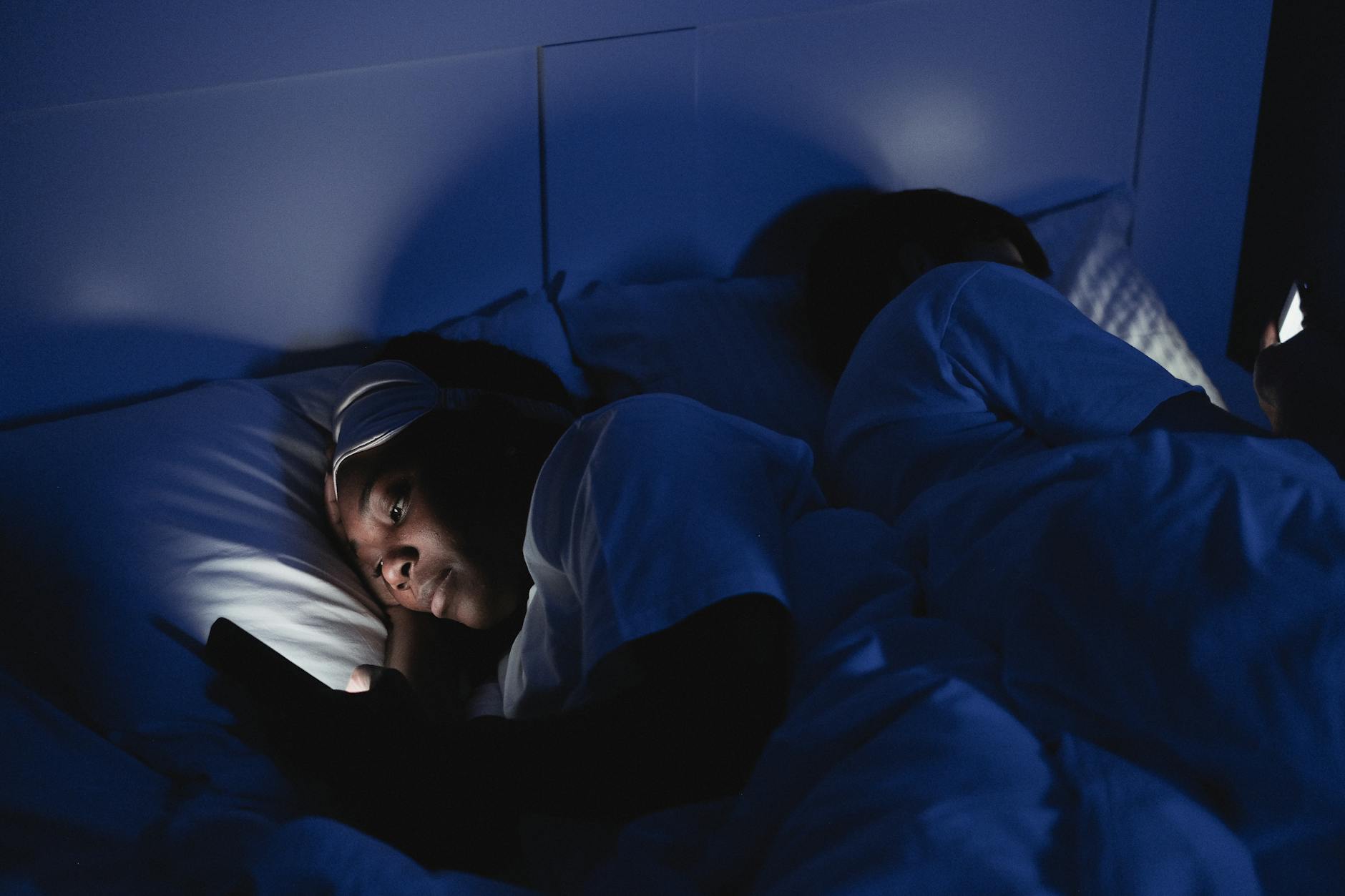
Your bedroom environment directly affects sleep quality. The three most important factors are temperature, darkness, and noise.
Temperature: The ideal bedroom temperature for sleep is 16-18°C, which feels cooler than most people expect. Your body needs to drop its core temperature by about 1°C to initiate and maintain sleep. A room that’s too warm prevents this cooling. In UK homes without air conditioning, managing bedroom temperature in summer can be challenging — a fan, breathable bedding (cotton or linen over polyester), and opening windows in the evening help. In winter, most UK homes are too warm overnight if the heating runs through the night. Setting the heating to switch off at bedtime usually improves sleep.
Darkness: Any light in your bedroom — including standby LEDs, street lights through thin curtains, and early morning dawn — can disrupt sleep quality even if it doesn’t fully wake you. Blackout curtains or blackout blinds are one of the most cost-effective sleep upgrades. Ready-made blackout curtains from Dunelm or John Lewis start from around £25-40 per pair. Alternatively, blackout roller blinds (£15-30 per window) fit inside the frame and block light more completely.
Noise: If you can hear traffic, neighbours, or a partner snoring, consider earplugs (Loop Quiet or Flare Audio Calmer are popular UK options at £15-25) or a white noise machine. Your phone can run white noise apps, but having a dedicated device means you’re not tempted to check notifications. The Lectrofan is a popular UK option at around £40-50.
What About Supplements?
The supplement industry loves to sell sleep solutions, but the evidence for most of them is weak. Here’s an honest assessment of the most popular options:
- Melatonin — available over-the-counter in many countries but prescription-only in the UK (as Circadin). Melatonin doesn’t make you sleepy in the way sleeping pills do — it signals to your circadian clock that it’s nighttime. It’s most effective for jet lag and shift work, and the evidence for general insomnia is modest. If your GP prescribes it, follow their dosing guidance. Low doses (0.5-1mg) taken 2-3 hours before desired bedtime tend to work better than higher doses
- Magnesium — magnesium glycinate is the most studied form for sleep. The evidence suggests it may help people who are magnesium-deficient (which is relatively common), but it’s unlikely to noticeably improve sleep if your magnesium levels are already adequate. At around £10-15 for a month’s supply, it’s low-risk to try. Take it in the evening
- Valerian root — traditional herbal remedy for sleep, available from any UK pharmacy. The clinical evidence is mixed — some studies show a modest benefit, others show none. It’s generally safe but can cause grogginess in some people
- CBD — widely marketed as a sleep aid in the UK, but the evidence is preliminary and inconsistent. Some people report benefits, but placebo effects are strong in sleep research. If you want to try it, buy from a reputable UK brand that provides third-party lab testing
- Antihistamines (Nytol, Sominex) — these work by making you drowsy, but they don’t improve sleep quality. Regular use can lead to tolerance, and they often cause next-day grogginess. They’re a short-term band-aid, not a solution
The honest truth: no supplement is a substitute for the behavioural changes described above. Fix your light exposure, caffeine timing, and consistency first. Supplements might add a marginal benefit on top of those foundations, but they won’t fix a broken schedule on their own.
The Two-Week Reset Plan
If your sleep schedule is notably off — you’re regularly falling asleep after midnight and waking at 10am, or your timing varies wildly — here’s a structured two-week plan to reset it:
Week 1: Anchor your wake time
- Set your alarm for your target wake time every day — even if you didn’t fall asleep until 2am
- Get outside within 30 minutes of waking — 10-15 minutes minimum
- No caffeine after 1pm
- No napping — you’ll be tired. That tiredness is building your sleep drive
- Dim lights from 8pm onwards
- Go to bed only when you feel truly sleepy — not at a forced “bedtime”
By the end of week 1, you should notice sleepiness arriving earlier each evening as your sleep drive accumulates from the earlier wake time.
Week 2: Establish the full routine
- Continue all Week 1 habits
- Add a 30-60 minute wind-down routine before your target bedtime
- Set a target bedtime — 7-8 hours before your wake time — and begin your wind-down at that time
- If you’re not asleep within 20 minutes, get up and read in dim light until sleepy
- Keep a simple sleep diary — note what time you went to bed, roughly when you fell asleep, and how you felt in the morning. Patterns will emerge that help you fine-tune
Most people see significant improvement within 10-14 days. The schedule won’t be perfect, but the trend should be clearly positive.
When to See Your GP
Self-help approaches work for the majority of sleep schedule issues, but some sleep problems need professional input. See your GP if:
- You’ve followed the steps above consistently for 3-4 weeks with no improvement
- You snore heavily or your partner reports you stop breathing during sleep — this could indicate sleep apnoea, which requires medical treatment
- You experience excessive daytime sleepiness despite adequate sleep hours
- You have restless legs or uncomfortable sensations in your legs at bedtime
- Your sleep issues are accompanied by anxiety or depression — sleep problems and mental health are deeply intertwined and often need to be addressed together
The NHS offers CBT-I (Cognitive Behavioural Therapy for Insomnia) through some GP practices, and it’s considered the gold standard treatment for chronic insomnia — more effective than sleeping pills in the long term, with no side effects. Ask your GP about a referral, or try the NHS-approved Sleepio app as a digital alternative.
The Bottom Line
Fixing your sleep schedule isn’t about finding the perfect supplement or buying the fanciest mattress. It’s about working with your body’s natural clock rather than against it. The three most powerful tools are free: consistent wake times, bright morning light, and dim evening environments. Everything else — the wind-down routine, caffeine management, bedroom optimisation — refines and supports those foundations.
Give it two weeks of genuine consistency. Not “mostly consistent” or “consistent except weekends.” Actual consistency. Your circadian rhythm is remarkably responsive when you give it clear, reliable signals — but it needs time and repetition to adjust. The first few days will be hard. By day 10, most people are falling asleep faster, sleeping more deeply, and waking up feeling actually refreshed. It’s not a miracle cure — it’s just biology working as intended when you stop fighting it.
If you are refining the same bedroom setup, compare this with Smart Mattresses Explained: Are They Worth It?, Best Mattresses 2026: UK Tested for Every Budget, How to Choose Curtains for Better Sleep, Feng Shui Bedroom Layout for Restful Sleep.
Frequently Asked Questions
What is the quickest useful check for How to Fix Your Sleep Schedule: A Science-Backed Guide? Start with the practical constraint: room size, sleeping position, heat level, budget or existing bed base. That usually narrows the decision faster than comparing every specification.
Does How to Fix Your Sleep Schedule: A Science-Backed Guide matter for most UK bedrooms? Yes, if it affects comfort, temperature, support or routine. It matters less when the change is mainly cosmetic or duplicates something your current setup already does well.
What should you avoid when deciding on How to Fix Your Sleep Schedule: A Science-Backed Guide? Avoid choosing only by price or marketing claims. Check measurements, materials, care instructions and return terms before buying or changing your setup.
What should I check first with How to Fix Your Sleep Schedule: A Science-Backed Guide? Start with the real use case, then check size, compatibility, running costs and maintenance. A product that looks good on paper can still be the wrong fit if it does not suit the room, routine or budget.
How do I avoid wasting money on How to Fix Your Sleep Schedule: A Science-Backed Guide? Avoid buying on one headline feature alone. Compare the practical details, read the warranty or returns terms, and choose the option that solves your main problem rather than the one with the longest specification list.