You’re getting dressed every morning in a dimly lit corner of the bedroom, pulling clothes from a crammed wardrobe while your partner is still asleep, and stacking shoes on a chair because there’s nowhere else to put them. The full-length mirror is behind the door so you can only see yourself with the door closed. It’s functional in the loosest sense of the word, and it’s been like this for years because “we don’t have space for a dressing room.”
Here’s the thing — you don’t need a whole room. A dedicated dressing area can fit into a corner, an alcove, or along one wall of a standard UK bedroom. With the right furniture, lighting, and layout, you can carve out a space that makes getting ready quicker, keeps your clothes organised, and genuinely improves how your morning starts.
In This Article
- What Counts as a Dressing Area?
- Assessing Your Space
- Layout Ideas for UK Bedrooms
- Storage Solutions That Actually Work
- Lighting: The Part Most People Get Wrong
- Mirrors and Vanity Setup
- Flooring and Rugs
- Keeping It Separate from the Sleep Zone
- Dressing Area Ideas by Budget
- Common Mistakes to Avoid
- Frequently Asked Questions
What Counts as a Dressing Area?
A dressing area is any defined space in your bedroom dedicated to getting dressed, groomed, and organised. It doesn’t need walls, doors, or a separate room. It’s a zone — mentally and physically distinct from where you sleep — that holds your clothes, shoes, accessories, and a mirror.
The Minimum Viable Dressing Area
At its simplest, you need four things:
- Clothes storage — a wardrobe, open rail, or chest of drawers within arm’s reach
- A full-length mirror — wall-mounted or freestanding, positioned where you can see your whole outfit
- Good lighting — enough to see colours accurately (that navy jumper that looks black under a warm bulb has caught us all out)
- A surface for accessories — jewellery, watches, wallet, keys. Doesn’t need to be a vanity table — a small shelf or tray works
Everything beyond this is a bonus: a seating area, a vanity with lights, custom built-in storage, a shoe rack. The basics above can fit in a space 1.5 metres wide.
Assessing Your Space
Before buying anything, measure your bedroom carefully and identify where a dressing area could work without making the room feel cramped.
Where to Put It
- Alcove beside the chimney breast — the classic UK bedroom opportunity. Most Victorian and Edwardian terraces have alcoves on either side of the chimney breast, typically 60-90 cm deep and 80-120 cm wide. Perfect for a built-in wardrobe or open rail with shelving above
- Along one wall — if your bedroom is rectangular (3.5m x 4m or larger), one short wall can become a dressing zone. A clothes rail, a chest of drawers, and a mirror along a 2-metre wall creates a functional space without encroaching on the bed area
- Behind the bed — in larger bedrooms (4m x 4.5m+), a partition or tall bookcase behind the headboard creates a walk-through dressing area. This works brilliantly in loft conversions where the bed faces the dormer window and the dressing area sits behind it under the eaves
- Corner of the room — an L-shaped arrangement in a corner using a rail on one wall and drawers on the adjacent wall. Needs about 1.5m x 1.5m of floor space
Clearance Rules
- Minimum 60 cm in front of any wardrobe or drawer unit for opening doors and drawers comfortably
- 90 cm if you want to stand and dress without feeling boxed in
- 120 cm for a walk-in style where two people might use the space simultaneously
What to Measure
- The available wall length and depth
- Ceiling height (important for rail heights and overhead shelving)
- Distance from the nearest window (affects natural light)
- Distance from the bed — you want the dressing area far enough that opening drawers at 6am doesn’t wake your partner
Layout Ideas for UK Bedrooms
The Alcove Wardrobe
UK houses are full of chimney breast alcoves that are either empty or holding a bookshelf nobody reads. Convert one into a dressing station:
- Install a clothes rail across the width at 170 cm height
- Add a shelf above at 200 cm for boxes, bags, or seasonal items
- Fit a narrow chest of drawers (40 cm deep) below the rail for folded items
- Mount a mirror on the inside wall of the alcove
- Cost: about £150-400 depending on whether you DIY or hire a carpenter
The Wall-Length Rail
If you prefer the open-wardrobe look (popular in Scandi and minimalist design), a single wall becomes your dressing area:
- Mount a sturdy clothes rail (the IKEA MULIG at about £6 is surprisingly solid) along 1.5-2 metres of wall
- Below the rail, place a low sideboard or KALLAX unit for shoes and folded items
- A freestanding full-length mirror at one end completes the zone
- Cost: about £80-200
The Partition Dressing Room
For bedrooms over 16 square metres, a low partition wall or tall bookcase (the IKEA KALLAX 4×4 at about £75 is popular for this) behind the bed creates a semi-enclosed dressing area:
- The partition doesn’t need to reach the ceiling — 140-160 cm is enough for visual separation without blocking light
- Behind the partition: a rail, drawers, and mirror
- This layout feels luxurious and costs relatively little if you’re using freestanding furniture rather than building a stud wall
- Cost: about £200-500
The Eaves Dressing Area
In loft conversions, the low-ceiling areas under the eaves are too short for standing but perfect for storage. Build in drawers, pull-out shoe racks, or low hanging rails for folded items. The standing-height zone (1.8m+) in the middle becomes your dressing and mirror area. This turns dead space into functional space — something a good bedroom layout plan should always consider.

Storage Solutions That Actually Work
Wardrobe Types
- Fitted wardrobes — built to your exact room dimensions. The gold standard for UK bedrooms where every centimetre matters. Expect to pay £800-3,000 depending on size and finish. Companies like Sharps, Hammonds, and Neville Johnson do home consultations
- Freestanding wardrobes — cheaper and moveable, but they waste the space above and beside them. The IKEA PAX system (from about £150) is the best modular option — you configure it to your dimensions
- Open rails — the cheapest option and visually appealing if your clothes are curated. Downsides: dust, no hiding messy sections, and clothes fade in direct sunlight
- Built-in alcove storage — the best use of UK bedroom alcoves. A carpenter can build shelving and a rail into an alcove for about £300-600
Drawer Organisation
Drawers without dividers become chaos within a week. Invest in:
- Drawer dividers — the bamboo adjustable kind from Amazon (about £10-15) transform a sock drawer from a pile into a grid
- The KonMari fold — folding clothes vertically so you can see everything at a glance. Sounds fussy, looks excellent, and you’ll find things in seconds instead of rummaging
- One drawer per category — underwear, socks, gym kit, loungewear. Mixing categories is how things get lost
Shoe Storage
Shoes on the floor look messy and collect dust. Options:
- Over-door shoe organiser — hangs on the back of a wardrobe door. Holds 12-24 pairs. About £10-15
- Stackable shoe boxes — clear plastic so you can see what’s inside. About £15-20 for a set of 10
- Pull-out shoe rack — fits inside a wardrobe. IKEA KOMPLEMENT insert at about £15
- A small shoe bench — doubles as a seating area for putting shoes on. The IKEA TJUSIG (about £50) works perfectly
Lighting: The Part Most People Get Wrong
Bad lighting is the single biggest reason dressing areas don’t work. If you can’t see colours accurately, you’ll end up wearing navy and black together (again) or discovering in the office bathroom that your shirt has a stain you missed.
What You Need
- Daylight-balanced light (4000-5000K) — this shows true colours. Warm bedroom lighting (2700K) makes everything look amber, which is great for sleep but terrible for getting dressed. Our guide on choosing curtains for better sleep covers how to manage light zones in a shared bedroom
- Overhead or directional light — not a lamp behind you casting shadows. A ceiling spot or LED strip above the mirror area works best
- Mirror-adjacent lighting — light hitting your face from the front, not the back. Hollywood-style vanity bulbs are popular but any forward-facing light source works
Budget Lighting Solutions
- LED strip behind the mirror — about £10-15 from Amazon UK. Self-adhesive, daylight colour temperature, plugs into USB. Gives an even glow around the mirror without hard shadows
- Battery-operated puck lights — about £8-12 for a pack of 3. Stick inside wardrobes for illuminated shelving. Motion-activated versions are even better
- A single adjustable spot — IKEA TERTIAL desk lamp (about £9) clamped to a shelf or rail, angled toward the mirror area. Cheap, effective, moveable
What to Avoid
- Downlighters directly overhead — they cast harsh shadows under your eyes and chin. Terrible for makeup and for seeing how clothes actually drape
- Warm bulbs only — you need at least one daylight-balanced source in the dressing area, even if the rest of the bedroom uses warm light
- No dedicated lighting at all — relying on the bedroom’s main light means compromising between sleep-friendly dimness and getting-dressed brightness
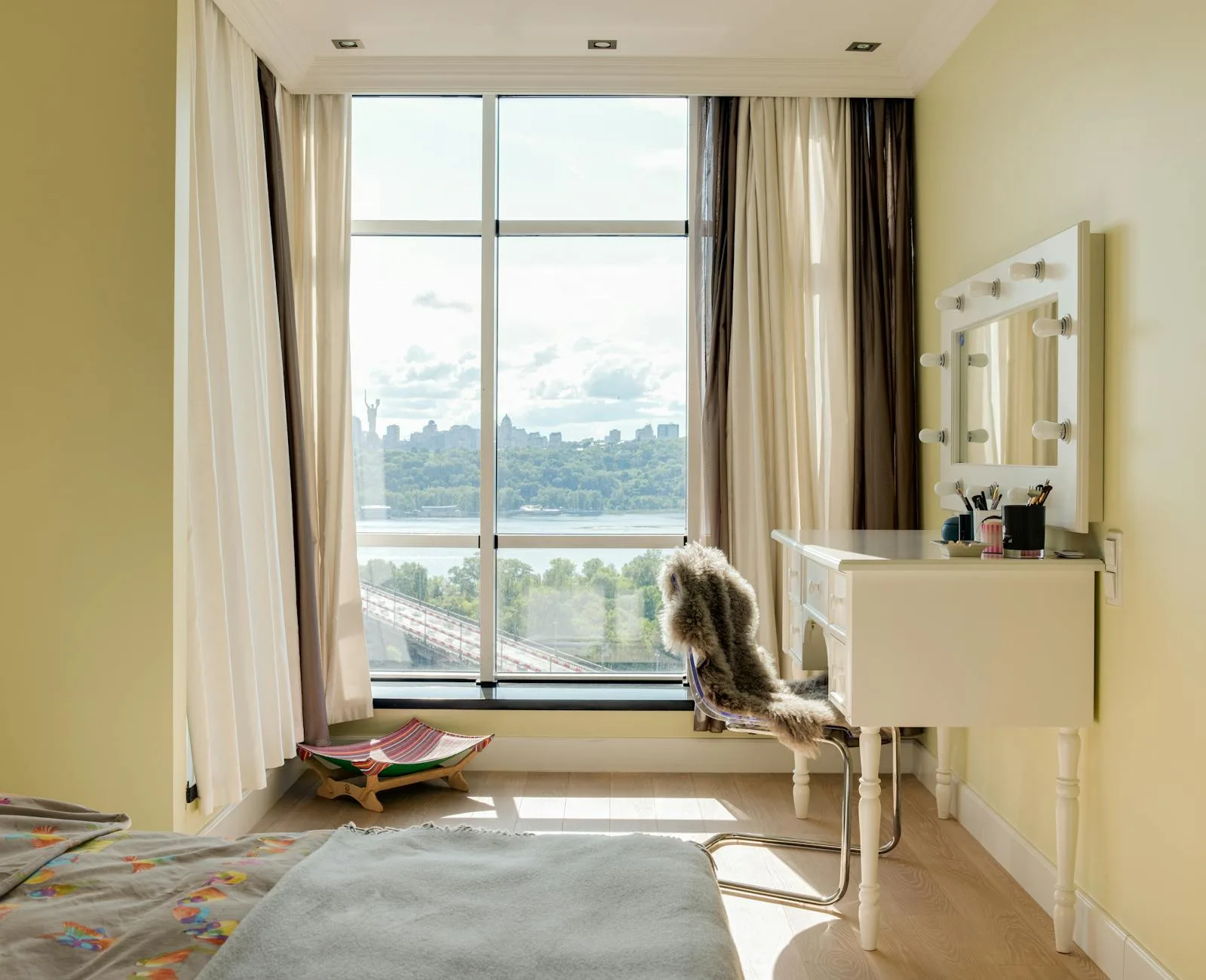
Mirrors and Vanity Setup
Mirror Size and Placement
A full-length mirror is non-negotiable. You need to see yourself from head to toe to assess an outfit properly. Wall-mounted mirrors save floor space; freestanding tilt mirrors are more versatile but take up about 50 x 40 cm of floor.
Minimum mirror dimensions: 40 cm wide x 140 cm tall. Larger is better — a 50 x 160 cm mirror gives you more perspective and makes the room feel bigger. Position it where you can step back at least 1 metre for the full view.
Adding a Vanity
If space allows, a small dressing table or wall-mounted shelf with a mirror above creates a grooming station for makeup, hair, and accessories. The bedroom colour scheme you’ve chosen matters here — make sure the vanity lighting shows true colours, not just the warm tones that dominate most bedrooms.
- Small vanity table — 80-100 cm wide, 40-45 cm deep. The IKEA MALM dressing table (about £100) fits most UK bedrooms
- Wall-mounted shelf — even simpler. A 60 cm floating shelf at seated height with a wall mirror above. Cost: about £30-50
- Key rule: keep the surface clear of clutter. A vanity buried under makeup bags, receipts, and water bottles defeats the purpose. Use small containers and trays to keep things organised
Flooring and Rugs
The dressing area floor takes more wear than the rest of the bedroom — standing, pivoting, dropping shoes, rolling chair wheels if you have a vanity stool.
Options
- A defined rug — visually separates the dressing zone from the sleep zone. Choose something flat-weave (easier to clean, won’t catch on drawers) in a colour that contrasts with the bedroom carpet or floor
- Hard flooring — if you’re renovating, consider extending hard flooring (engineered wood or LVT) into the dressing area and keeping carpet only around the bed. Shoes on carpet wear it faster
- A washable rug — from Ruggable or similar. Practical for an area where you’re standing in outdoor shoes sometimes
Keeping It Separate from the Sleep Zone
According to the NHS guidance on sleep hygiene, your bedroom should be associated with sleep, not activity. A dressing area doesn’t violate this if it’s visually and functionally distinct from the bed area.
How to Create Separation
- A curtain or room divider — a ceiling-mounted curtain rail with a light fabric panel. Closed at night, open in the morning. About £20-40
- Furniture as a divider — a tall bookcase, a chest of drawers, or a clothes rail with a back panel
- Different flooring or a rug — as mentioned above, a defined rug signals “this is the dressing zone” even without a physical divider
- Different lighting — the dressing area has bright, daylight-balanced light; the sleep zone stays warm and dim. Separate switches or smart bulbs make this effortless
Dressing Area Ideas by Budget
Under £100
- Freestanding clothes rail (£15-25)
- KALLAX 2×2 unit for shoes and folded items (about £29)
- Full-length door mirror (about £10-15)
- LED strip for behind the mirror (about £12)
- Drawer dividers (about £12)
£100-500
- IKEA PAX wardrobe system configured to your space (from £150)
- Freestanding full-length mirror (about £30-60)
- Small vanity table or floating shelf with mirror (about £50-100)
- Daylight LED spots (about £20-40)
- Flat-weave rug to define the zone (about £30-60)
£500+
- Fitted wardrobes built to your room dimensions (£800-3,000)
- Bespoke built-in drawers and shoe storage
- Professional lighting design with separate circuits for sleep and dressing zones
- Custom vanity with integrated mirror lighting
- Partition wall or glass screen for a semi-enclosed feel
Common Mistakes to Avoid
Blocking the Window
Putting a tall wardrobe or rail in front of the bedroom’s only window kills natural light for the whole room. Position storage along walls perpendicular to the window, not blocking it.
Forgetting About Doors and Drawers
Wardrobes and drawers need clearance to open. I’ve seen dressing areas where the wardrobe door hits the bed frame or the drawers can only open halfway because they’re too close to the wall. Measure the swing radius of every door and drawer before committing to a layout.
Over-Filling the Space
A dressing area crammed with furniture feels worse than no dressing area at all. Leave breathing room. If you have to choose between a vanity table and comfortable standing space, choose standing space.
Ignoring the Ceiling
The space above head height is often wasted. High shelving (200+ cm) stores seasonal items, luggage, and hat boxes. A single overhead shelf running the length of a clothes rail costs about £15 in timber and brackets and adds significant storage.
Making It Too Visible from Bed
If the first thing you see when you wake up is a rail full of clothes and an overflowing shoe rack, it creates visual clutter that undermines the calm bedroom environment. Use curtains, a screen, or strategic furniture placement to hide the dressing area from the sleeping area.
Frequently Asked Questions
How much space do I need for a dressing area? A minimum of 1.5 metres of wall length and 60 cm of depth gives you a functional dressing zone with a rail, drawers, and mirror. For a more comfortable setup with a vanity, aim for 2 metres x 1.2 metres. Most UK double bedrooms (3.5m x 3.5m) can accommodate a dressing area along one wall without feeling cramped.
Can I create a dressing area in a rented property? Yes — use freestanding furniture only. A clothes rail, a KALLAX unit, a freestanding mirror, and adhesive LED strips create a complete dressing area with no drilling, no wall damage, and everything moves with you. Budget about £80-120.
Will a dressing area make my bedroom feel smaller? Only if you over-fill it. A well-organised dressing area with a mirror actually makes the room feel more spacious by containing clutter in one zone instead of spreading it around the room. Use light colours, a large mirror, and good lighting to maintain an open feel.
What lighting colour temperature should I use? Use 4000-5000K (daylight/cool white) in the dressing area for accurate colour rendering. Keep 2700K (warm white) for bedside lamps and the sleep zone. Smart bulbs like Philips Hue let you switch between colour temperatures — daylight in the morning, warm at night.
Is it worth getting fitted wardrobes? If you own the property and plan to stay for 5+ years, fitted wardrobes are the best use of space in a UK bedroom. They maximise every centimetre, especially in rooms with alcoves, sloping ceilings, or awkward layouts. The cost (£800-3,000) is significant but adds value to the property.
If you are refining the same bedroom setup, compare this with Best Bedroom Lighting for Sleep Quality, Best Wardrobes for Small Bedrooms 2026 UK, Cooling Bed Sheets for Hot Summer Nights.